
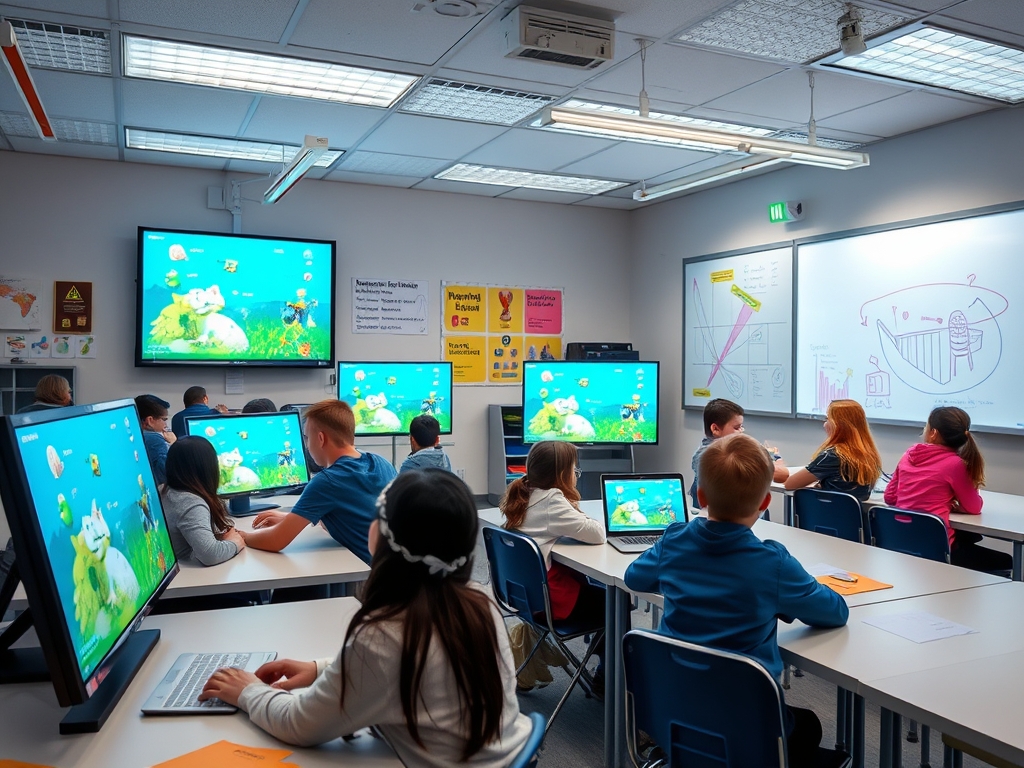
The global gamification market is projected to reach $32.4 billion by 2027, according to a report by Global Market Insights. Is your school or educational institution leveraging this powerful tool? Gamification in education is no longer a futuristic concept; it's a rapidly evolving methodology transforming how students learn and educators teach. The integration of game mechanics into the classroom is boosting student engagement, improving knowledge retention, and fostering a more dynamic learning environment. This article will explore the top ten ways gamification is revolutionizing education, providing actionable insights for educators and institutions.
Foundational Context: Market & Trends
The educational technology (EdTech) sector is experiencing exponential growth, fueled by the demand for engaging and effective learning solutions. Gamification is at the forefront of this trend. Market analysis indicates a strong correlation between gamified learning platforms and enhanced student participation.
Here’s a quick snapshot of the current market:
| Feature | Data Point |
|---|---|
| Market Growth (Annual) | Approximately 20% |
| Key Driving Factor | Increased Student Engagement |
| Primary Target Audience | K-12, Higher Education |
| Key Technologies Utilized | Mobile, Web-based Platforms |
Core Mechanisms & Driving Factors
Successful gamification implementations hinge on several key elements. Understanding these is crucial for effective integration.
- Points Systems: Awarding points for completing tasks, achieving milestones, or demonstrating mastery.
- Badges and Awards: Recognizing and celebrating achievements to motivate students.
- Leaderboards: Creating a sense of competition and encouraging students to strive for excellence.
- Progress Tracking: Visualizing learning progress through levels, quests, and challenges.
- Feedback Loops: Providing immediate feedback to students, reinforcing correct answers, and correcting mistakes.
The Actionable Framework: Implementing Gamification
Implementing a gamified learning environment can seem daunting, but it can be broken down into manageable steps:
Define Learning Objectives
- Begin by clearly articulating the learning outcomes you wish to achieve. What specific skills or knowledge should students gain? These objectives will guide your gamification design.
Select Appropriate Gamification Tools
- There's a wide range of platforms and tools available, from simple quiz-based applications to complex, immersive learning environments. Consider the age group, subject matter, and existing technology infrastructure of your educational institution.
Design Engaging Quests and Challenges
- Develop learning activities that are presented as quests or challenges with clear goals, rules, and rewards. These activities should align with your learning objectives.
Integrate Feedback Mechanisms
- Provide immediate feedback, explaining why an answer is correct or incorrect. Use this feedback to guide student learning.
Measure and Evaluate Outcomes
- Utilize data analytics to track student progress and engagement. Measure whether your gamification implementation is meeting its objectives and make adjustments as needed.
Strategic Alternatives & Adaptations
The beauty of gamification is its adaptability.
- Beginner Implementation: Start with simple quiz platforms or points-based systems to familiarize students with the concept.
- Intermediate Optimization: Incorporate badges, leaderboards, and collaborative elements like group challenges.
- Expert Scaling: Utilize advanced platforms with complex quests, personalized learning paths, and virtual world simulations.
Performance Optimization & Best Practices
To maximize the benefits of gamification, consider these steps:
- Align with Curriculum: Ensure all gamified activities directly align with the learning objectives of the curriculum.
- Personalize the Experience: Adapt challenges and rewards based on individual student needs and preferences.
- Foster a Culture of Play: Create a classroom environment where it’s safe to experiment, take risks, and learn from mistakes.
- Get Student Input: Encourage feedback from students to refine the gamification implementation.
Analytical Deep Dive
Research consistently shows that gamification positively impacts student engagement and retention. A study published in the Journal of Educational Psychology found that students in gamified learning environments demonstrated a 20% increase in information retention compared to traditional classrooms.
"Gamification, when implemented thoughtfully, allows for personalized, engaging, and data-driven learning experiences that resonate with the modern student." – Dr. Anya Sharma, Education Technology Consultant.
Risk Mitigation: Common Errors
Avoid common pitfalls:
- Focusing Solely on Points and Rewards: Ensure that the underlying learning content is engaging, not just the game mechanics.
- Ignoring Student Feedback: Regularly seek student input and adapt the gamification system based on their experiences.
- Overcomplicating the System: Start with a simple system and gradually introduce complexity as needed.
- Failing to Track and Analyze Data: Monitoring student progress is essential to determine whether or not a gamification initiative is effective.
Scalability & Longevity Strategy
Sustaining long-term success with gamification involves planning for scalability and ongoing maintenance.
- Choose Scalable Platforms: Select gamification platforms that can handle a growing number of users and accommodate new features.
- Automate Processes: Automate reward distribution, progress tracking, and other key functions to minimize administrative overhead.
- Regularly Update Content: Maintain the relevance of learning content by updating and adapting it to the curriculum and student needs.
Knowledge Enhancement FAQs
Q: What are the primary benefits of gamification in education?
A: Increased student engagement, improved knowledge retention, enhanced motivation, and the development of crucial skills like problem-solving and critical thinking.
Q: Is gamification appropriate for all subjects?
A: Yes, gamification can be adapted to almost any subject, from mathematics and science to history and languages.
Q: What are some examples of gamification in the classroom?
A: Points-based quizzes, awarding badges for completing projects, creating virtual worlds for exploration, and implementing collaborative challenges.
Q: How can teachers measure the effectiveness of gamification?
A: By tracking student engagement, assessing knowledge retention through quizzes and tests, and gathering feedback through surveys.
Q: What are some examples of gamification platforms?
A: Kahoot!, Quizizz, Classcraft, and Moodle with gamification plugins are a few examples.
Conclusion
Gamification in education represents a powerful shift in the way students learn and interact with the material. By leveraging the principles of game design, educators can create a more engaging, motivating, and effective learning experience. The integration of game mechanics offers an innovative approach to education. If you are not exploring gamification, you're potentially missing out on a significant opportunity to boost student engagement and academic outcomes.
Key Takeaways:
- Gamification is a proven methodology for increasing student engagement and knowledge retention.
- Careful planning, design, and implementation are crucial for success.
- Regularly assess and adapt the gamification strategy based on student feedback and performance data.
Ready to transform your classroom? Explore the latest gamification tools and resources available online. Begin your journey toward increased learning engagement today!