
Did you know that companies leveraging Virtual Reality (VR) training for soft skills are reporting a 20-30% increase in employee engagement and knowledge retention rates? This radical shift in training methodology, powered by immersive technology, is transforming the way businesses approach employee development. In this article, we’ll dive deep into how VR is revolutionizing soft skills development, offering actionable insights for businesses looking to gain a competitive edge in today's evolving landscape.
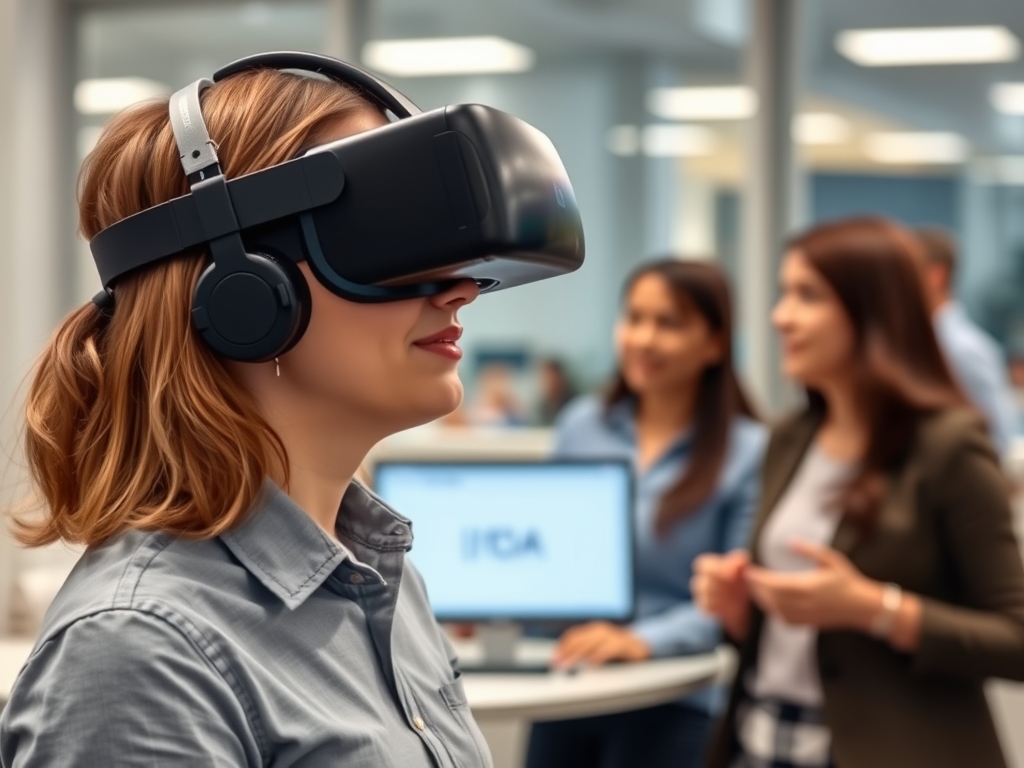
Foundational Context: Market & Trends
The market for VR training is experiencing exponential growth. According to recent reports, the global VR in education and corporate training market is projected to reach several billion USD in the next few years. This surge is fueled by several factors, including the increasing accessibility of VR headsets, the demand for more engaging training experiences, and the proven effectiveness of VR in improving skill acquisition.
Here’s a snapshot of key trends:
- Growth: The market is expanding at a Compound Annual Growth Rate (CAGR) significantly higher than traditional training methods.
- Adoption: Large enterprises and small-to-medium-sized businesses (SMBs) are equally embracing VR for diverse training applications.
- Focus: Training focuses shifting toward improving soft skills.
Core Mechanisms & Driving Factors
The success of VR soft skills training hinges on several key elements:
- Immersion: VR creates a fully immersive environment, allowing learners to experience realistic scenarios.
- Interaction: Users can actively interact with virtual environments and avatars, promoting active learning.
- Feedback: VR systems provide immediate feedback on performance, allowing for real-time adjustments and improvement.
- Repetition: VR makes practicing the same scenario repeatedly easy and cost-effective.
- Emotional Engagement: VR training can evoke emotional responses, enhancing learning and retention.
The Actionable Framework
Implementing a VR training program requires a structured approach. Here’s a framework:
Step 1: Needs Assessment and Goal Setting
Start by identifying the specific soft skills your employees need to improve. Are you looking to improve communication, leadership, or conflict resolution? Define measurable goals for your VR training program.
Step 2: Content Selection and Development
Choose or develop VR training modules that align with your needs. Consider off-the-shelf solutions or custom-built experiences. Ensure the content is relevant, engaging, and aligned with your organizational culture.
Step 3: Technology and Infrastructure
Invest in the necessary technology, including VR headsets, computers, and software. Decide whether to use standalone headsets, or tethered systems. Also, make certain your network can support the demands of VR training.
Step 4: Training and Implementation
Provide adequate training to your employees on how to use the VR system. Begin with pilot programs and scale up based on the results.
Step 5: Evaluation and Iteration
Regularly assess the effectiveness of your training program. Track key metrics, such as employee performance, feedback, and knowledge retention rates. Adjust your program as needed.
Strategic Alternatives & Adaptations
For Beginner Implementation: Start with ready-made VR modules focusing on simple skills like basic customer service or time management.
For Intermediate Optimization: Customize existing VR content or develop small modules to address specific company challenges.
For Expert Scaling: Create a comprehensive VR training platform that integrates with existing learning management systems and incorporates advanced features such as AI-powered feedback.
Analytical Deep Dive
Research highlights the impact of VR training on key soft skills. For instance, studies have shown that VR-based communication skills training can lead to a 40% improvement in public speaking ability.
- Source: A meta-analysis of VR training studies found a significant positive correlation between immersion and knowledge retention.
- Metrics: Measuring these results can be achieved by a 360 Degree review or by providing role-play scenarios.
Validated Case Studies & Real-World Application
Consider the case of a major retail chain using VR training to improve customer service skills. Employees practiced handling difficult customer interactions in a safe, simulated environment. The results were a 25% decrease in customer complaints and a notable increase in customer satisfaction scores.
Risk Mitigation: Common Errors
Avoid these pitfalls:
- Poor Content Design: Creating boring or irrelevant VR content.
- Technical Issues: Neglecting proper setup and maintenance of your VR hardware and software.
- Lack of Training: Failing to provide sufficient training for employees.
Performance Optimization & Best Practices
To optimize your VR training program:
- Keep it Short & Focused: Modules should be concentrated on one specific skill or concept.
- Gamify the Experience: Incorporate game-like elements to enhance engagement.
- Focus on Realism: Make the virtual environment as authentic as possible to maximize immersion.
- Regular Feedback: Incorporate feedback mechanisms to highlight areas for improvement.
Scalability & Longevity Strategy
For sustained success:
- Build a Library of Modules: Expand your VR training library over time.
- Integrate Feedback Loops: Continuously gather feedback to refine your program.
- Adapt and Evolve: Stay up-to-date with emerging VR technologies.
- Automate: Automate data collection and analysis to streamline the process.
Concluding Synthesis
Implementing VR training is more than a trend; it's a strategic investment. By embracing immersive technology, businesses can create more effective training programs, enhance employee skills, and improve business performance. This methodology ensures enhanced engagement, leading to a more skilled, confident, and high-performing workforce.
Knowledge Enhancement FAQs
Q: How does VR training differ from traditional methods?
A: VR offers a more immersive and engaging experience, which can lead to higher knowledge retention and improved skill acquisition.
Q: What are the major costs associated with implementing VR training?
A: Initial costs involve VR hardware, software, and content development or acquisition. Ongoing costs include maintenance and updates.
Q: What soft skills are best suited for VR training?
A: Communication, leadership, customer service, and conflict resolution are particularly well-suited for VR.
Q: How can businesses measure the success of their VR training programs?
A: Track key metrics such as employee performance, knowledge retention, and employee satisfaction.
Q: Is VR training suitable for all employees?
A: While VR is generally accessible, some employees may have specific physical or psychological concerns. Ensure proper support and training.
Q: How often should VR content be updated?
A: Update VR content to align with evolving training needs, technology advancements, and feedback from employees.