
Are you tired of watching your carefully planned budget unravel by the end of the month, even when you know the rational choice? Did you know that over 70% of consumer purchase decisions are influenced by subtle, environmental cues rather than cold, hard logic? This pervasive gap between intention and action is where the power of behavioral finance nudges steps in, offering scientifically validated strategies to recalibrate our money habit triggers toward greater fiscal health. We’re moving beyond rigid budgeting apps to explore the architecture of choice itself.
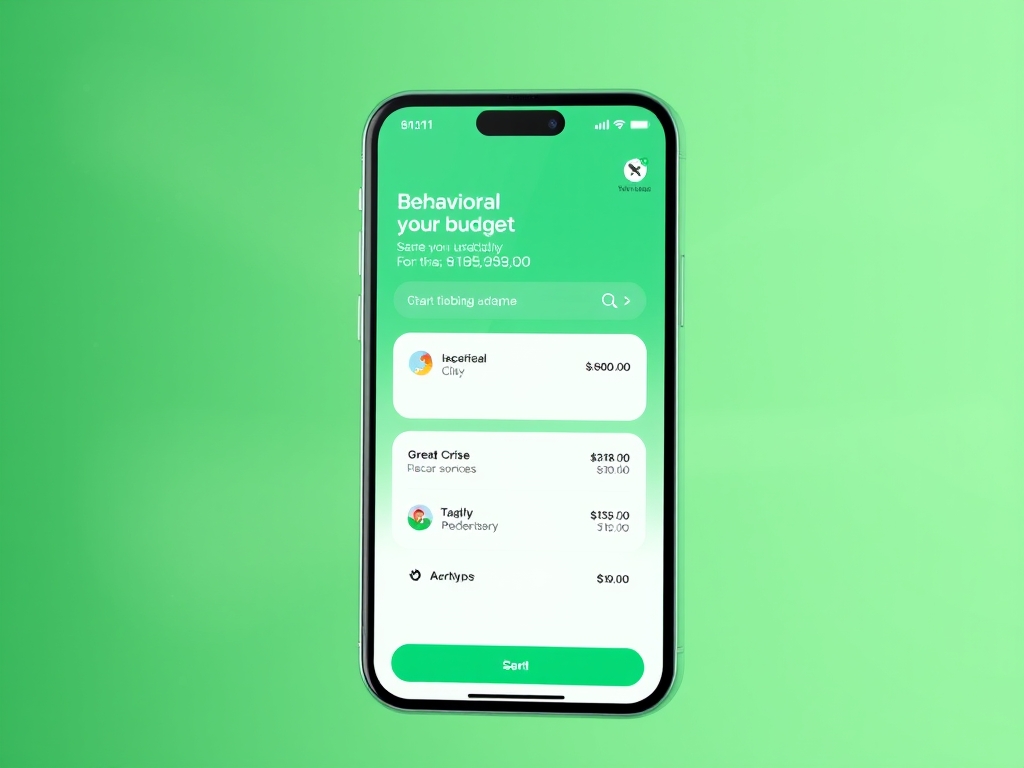
Decoding the Choice Architecture of Personal Economics
Behavioral finance—the intersection of psychology and economics—reveals that humans are not the purely rational agents classical economics assumes. Instead, we are prone to cognitive biases like hyperbolic discounting (favoring immediate gratification) and inertia. A "nudge," popularized by Thaler and Sunstein, is any aspect of the choice architecture that alters people's behavior in a predictable way without forbidding any options or significantly changing their economic incentives. In the realm of digital commerce and wealth management software, these nudges are transforming user interaction.
The market for financial wellness tools is rapidly integrating these concepts. Consider the shift from simple tracking to proactive intervention:
| Intervention Type | Traditional Approach | Behavioral Nudge Application |
|---|---|---|
| Savings Goal Setting | Input fixed target amount. | Default enrollment in automatic transfers (Opt-Out). |
| Spending Alert | General notification post-transaction. | Framing the cost relative to a larger, desired goal (e.g., "This coffee equals 0.5% of your vacation fund"). |
| Investment Review | Manual scheduled check-in. | Leveraging loss aversion by highlighting unrealized losses early. |
The Core Psychological Levers in Financial Nudging
Understanding why certain behavioral finance nudges work is crucial for implementation, whether you are developing a fintech product or seeking to automate your personal discipline. These levers tap directly into our ingrained heuristics and decision-making shortcuts.
- Defaults: Setting the desired action (e.g., saving 10% of every paycheck) as the pre-selected option. Humans exhibit high inertia, making the path of least resistance the preferred one.
- Framing Effects: Presenting the same information in different ways drastically alters perception. Framing a subscription cost annually versus monthly changes perceived value.
- Social Proof: Highlighting what peers or similar cohorts are doing. Seeing that 85% of users in your income bracket contribute to retirement actively drives participation.
- Salience and Visibility: Making abstract concepts tangible. Visualizing a savings goal with a progress bar is far more effective than just seeing a number in an account ledger.
- Pre-commitment Strategies: Getting individuals to commit to future actions now, locking in a decision before immediate temptations arise.
Executing a Multi-Stage Nudge Strategy for Digital Commerce
To move from theory to measurable results in managing digital spending and fostering sustainable online income habits, a structured approach is necessary.
Step 1: Audit the Current Choice Environment
Before deploying any intervention, map out the user journey or personal spending cycle. Where are the major decision points? For digital commerce, this often means cart abandonment screens, subscription renewal prompts, and post-checkout upsells. Identify moments where cognitive load is high or where biases are most likely to manifest (e.g., impulse buying late at night).
Step 2: Implement Proactive Default Settings
For personal finance, immediately set up automatic savings contributions that require an active unenrollment rather than an enrollment. In a business context, if you offer a recurring service, default to the slightly more valuable, but less expensive, annual tier rather than monthly, clearly marking the savings achieved by choosing the annual plan. This leverages inertia powerfully.
Step 3: Introduce Friction for Impulse Transactions
Friction is usually seen as negative, but judiciously applied friction can be a powerful tool against irrational spending. For non-essential online purchases, introduce a mandatory 24-hour "cooling-off period" prompt before the final checkout confirmation can be clicked. This slight delay allows the reflective, system-two thinking process to override the impulsive, system-one desire.
Step 4: Gamify Progress Toward Aspirational Goals
Translate complex financial goals into engaging, visible milestones. Use AI-driven personalization to suggest micro-goals based on spending velocity. Instead of "Save $10,000," the system promotes, "Unlock the first digital badge for completing 10% of your European Trip fund." This continuous feedback loop reinforces positive money habit triggers.
Performance Metrics in Nudge Implementation
When optimizing digital financial experiences, measuring the effectiveness of behavioral finance nudges requires looking beyond simple conversion rates to examine sustained behavioral shifts.
Research indicates that "Save More Tomorrow" programs—a classic pre-commitment nudge—have historically seen participation rates double compared to traditional savings campaigns. Furthermore, systems leveraging loss aversion (warning users of potential losses if they don't act) can see up to a 40% higher engagement rate on critical alerts than neutral notifications. The key performance indicator (KPI) shifts from immediate transactional metrics to long-term retention and portfolio growth velocity.
Scaling Nudges: From Personal Use to Platform Optimization
For the solo entrepreneur or the large-scale fintech developer, scaling these psychological insights follows different paths:
- Beginner/Personal: Focus solely on implementing one default setting (e.g., auto-save) and one framing mechanism (e.g., visualize savings as future purchases). Consistency is paramount.
- Intermediate/Small Business: Utilize A/B testing on primary calls-to-action (CTAs) on your digital storefront. Test "Save 20% Annually" versus "Pay Monthly." Analyze which framing reduces friction without sacrificing conversion volume.
- Professional/Enterprise (GEO Focus): Integrate generative AI to create dynamic, context-aware nudges. An AI engine can analyze a user’s recent purchase history and current market volatility to generate a perfectly timed, emotionally resonant prompt at the precise moment of highest influence—a hyper-personalized choice architecture.
Case Study Snapshot: Subscription Fatigue Intervention
A leading digital media platform struggled with high churn after the initial three-month promotional period for its premium tier. Instead of simply raising the price, they implemented a behavioral finance nudge:
- The Change: Thirty days before the standard rate kicked in, users received an email titled: "Don't Lose Your 5 Favorite Features!" (Loss Aversion Framing). The email highlighted the specific premium features they used most frequently (data derived from usage patterns) and emphasized that inaction meant losing access, not just paying more.
- The Result: Churn rates stabilized, with a 15% increase in users who consciously downgraded to a lower tier, successfully mitigating complete cancellation by appealing to the fear of loss associated with valuable services already integrated into their routine.
Critical Pitfalls to Sidestep When Applying Behavioral Economics
While powerful, misapplying these techniques can backfire, leading to user distrust or regulatory scrutiny.
- Sludge vs. Nudge: Avoid "Sludge"—design elements that deliberately make desirable actions difficult (e.g., burying the unsubscribe link). This erodes credibility.
- Over-Personalization: While data is key, bombarding users with constant reminders about their past failures or poor choices triggers defensive behavior rather than helpful alignment.
- Ignoring Context: A savings nudge that works in January (New Year’s resolutions) may fail spectacularly in December due to holiday spending spikes. Always test across cyclical business periods.
- Violation of Autonomy: Any nudge that feels coercive, rather than helpful, invalidates the core principle of libertarian paternalism upon which nudging is based.
Optimizing for Sustained Financial Self-Regulation
To ensure these interventions lead to long-term success, continuous optimization is required:
- Iterative Testing: Regularly refresh the phrasing and visualization of your nudges. What worked last quarter may suffer from cognitive fatigue this quarter.
- Incentivize Visibility: For personal finance apps, actively promote success stories fueled by nudges (with permission) to bolster social proof for new users.
- Integrate AI for Predictive Timing: Utilize machine learning models to determine the "peak susceptibility window" for a given user before they make a non-optimal decision, maximizing the impact of your intervention.
Maintaining Stability Through Automated Feedback Loops
Long-term stability in automated financial assistance relies on minimizing manual oversight. Once effective behavioral finance nudges are identified, they must be systemized. Use APIs to link user behavior data directly into your choice architecture engine. Schedule quarterly reviews focused solely on checking the integrity of the "default" settings—these are the settings most likely to drift or become outdated as user goals evolve. Automation preserves the effectiveness of the initial psychological calibration.
Conclusion: Mastering the Invisible Hand of Choice
The shift from brute-force budgeting to intelligently designed choice environments represents the frontier of personal finance management and digital monetization. By understanding and ethically deploying behavioral finance nudges, we move beyond simply advising people what to do, toward designing systems where doing the right thing—saving more, spending smarter, or investing consistently—becomes the easiest option. The future of successful digital commerce and wealth building lies in mastering these subtle money habit triggers.
Ready to stop fighting cognitive friction and start leveraging it? Explore our advanced modules on applying Generative AI to predict and automate personalized choice architecture in your operations today!
Frequently Asked Questions (FAQs)
Q1: Are behavioral nudges considered manipulative in digital commerce?
A: Ethical nudges are transparent and preserve freedom of choice (they are "opt-out," not "opt-in" coercion). Manipulation occurs when the goal serves the platform provider at the expense of the user's well-being, often by introducing "sludge."
Q2: How does generative AI enhance the power of financial nudges?
A: Generative AI allows for the creation of unique, context-specific messaging (text, visuals) tailored precisely to the individual's real-time psychological state and financial situation, far exceeding the capability of static, pre-programmed alerts.
Q3: What is the difference between a financial incentive and a behavioral nudge?
A: A financial incentive changes the economic outcome (e.g., a 5% fee reduction). A nudge changes the presentation or context of the decision without changing the underlying economics (e.g., framing the fee as a lost opportunity cost).
Q4: Can small businesses effectively use these complex behavioral finance concepts?
A: Absolutely. Even simple uses of social proof (e.g., displaying testimonials near a checkout button) or pre-commitment forms for service sign-ups yield measurable benefits without requiring complex data science infrastructure.
Q5: Which cognitive bias is the most common hurdle to overcome when saving money?
A: Hyperbolic discounting—the tendency to place excessive weight on immediate rewards over larger future rewards—is arguably the biggest hurdle, which is why automatic enrollment defaults are so successful at bypassing it.