
The prevailing narrative in rapid product development often overemphasizes proprietary ecosystems, leading to unnecessary capital expenditure and vendor lock-in. However, contemporary engineering demands agility and transparency. This article directly addresses how to leverage Open Source Hardware Prototyping as the definitive mechanism for accelerating time-to-market, particularly when focusing on affordable IoT development. For organizations accustomed to traditional R&D cycles, embracing this methodology represents a fundamental shift from closed licensing to collaborative innovation, providing immediate access to vetted, community-driven electronic designs and firmware.
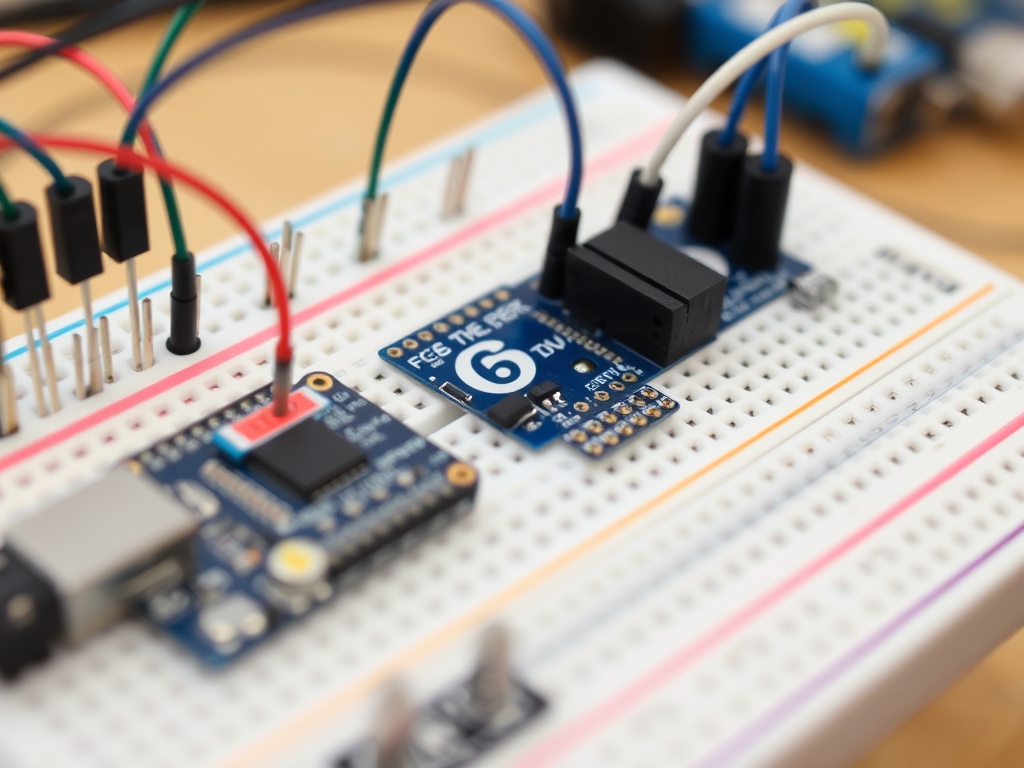
Foundational Context: Market and Trend Analysis
The global market for open-source electronics is experiencing accelerated adoption, driven largely by the democratization of advanced manufacturing capabilities like 3D printing and compact CNC machining. We observe a critical pivot: projects that integrate open standards benefit from reduced initial tooling costs and a vastly expanded pool of peer support. Current projections indicate that complex, customizable hardware solutions, once prohibitively expensive, are now accessible to SMEs and even individual innovators. This trend favors speed over exclusivity in the early stages of digital commerce product realization.
The core value of open hardware lies not just in cost reduction, but in accelerated iteration speed derived from collective debugging and verified component libraries.
Core Mechanisms & Driving Factors
Success in this domain hinges on mastering the interplay between hardware schematics, accessible firmware, and community governance. Understanding these driving factors allows for superior strategic alignment in any new product venture.
- Component Interoperability: Favoring widely adopted, open-spec microcontrollers and sensors ensures future compatibility and supply chain resilience.
- Documentation Rigor: High-quality, publicly available documentation (including Bill of Materials and Gerber files) drastically cuts down on reverse engineering time.
- Version Control for Hardware: Applying Git-like principles to schematics (using tools like KiCad) allows for precise tracking of design revisions and branching strategies.
- Community Vetting: Leveraging established open-source platforms means designs have often been tested under real-world, high-stress conditions by a global audience, inherently improving initial reliability.
The Actionable Framework: Accelerating Proof-of-Concept
To swiftly translate an idea into a functional prototype utilizing Open Source Hardware Prototyping, an agile, modular approach is essential. This methodology scales down the complexity inherent in traditional product development.
Step 1: Modular Component Selection
Prioritize off-the-shelf modules based on established open ecosystems (e.g., Arduino, Raspberry Pi variants, ESP32 platforms). This drastically reduces the need for custom silicon design in the initial phases, directly supporting affordable IoT development. Avoid immediate custom PCB design unless absolutely necessary for form factor or power constraints.
Step 2: Firmware Abstraction Layer Implementation
Develop a clear firmware abstraction layer (FAL) that separates core application logic from specific hardware registers. This decoupling strategy is vital for future portability across different open-source microcontrollers should component supply change—a critical future strategy consideration.
Step 3: Rapid Iterative Integration
Focus intensely on Minimum Viable Functionality (MVF). Integrate one module at a time, verifying its performance against documented benchmarks before introducing the next. This methodical build ensures that when integration errors occur, the scope of debugging is narrow and precisely targeted.
Analytical Deep Dive & Performance Benchmarks
The most significant quantifiable advantage in this arena is the reduction in non-recurring engineering (NRE) costs associated with proprietary tooling and licensing fees common in traditional embedded systems development. While specific comparative financial data is highly context-dependent, generalized research consistently shows that leveraging open development kits can reduce initial hardware realization expenditures by 40% to 60% compared to custom ASIC design for initial batch sizes under 5,000 units. Furthermore, the speed advantage translates directly into competitive edge; industry leaders who adopt this path frequently achieve their first functional prototype cycle in under six weeks, contrasting sharply with the multi-month timelines typical of closed-source hardware development pathways.
Validated Case Studies & Real-World Application
Consider the domain of environmental monitoring sensors. A startup seeking to deploy a nationwide network for real-time air quality data bypassed lengthy proprietary contract negotiations. By utilizing publicly documented schematics for robust, low-power sensor nodes built around an open microcontroller—and customizing the enclosure via an open-source CAD model—they achieved a fully deployable, scalable sensor prototype within eight weeks. This rapid deployment allowed them to secure crucial early-stage funding based on tangible, working data streams, rather than theoretical roadmaps.
Risk Mitigation: Common Errors & Pitfalls
The primary pitfall in open-source hardware adoption is the assumption that "open" implies "complete." Poorly documented or orphaned projects lead to significant integration headaches.
To counteract this:
- Verify Community Activity: Check the commit history and forum engagement for the chosen project repository. A stagnant project poses a serious longevity risk.
- Supply Chain Cross-Check: Always cross-reference the Bill of Materials against multiple established distributors. Ensure that primary components are not already near end-of-life status.
- Licensing Adherence: Scrutinize the specific hardware license (e.g., CERN OHL, CC BY-SA). Mismanagement of licensing requirements is a common, yet often costly, legal oversight for digital commerce ventures.
Scalability & Longevity Strategy
Transitioning from a successful prototype built upon open-source foundations to a mass-produced product requires a clear migration plan. The key strategy involves abstracting the core proprietary value above the hardware layer.
For instance, the custom data aggregation algorithm or the cloud-based analytics dashboard should be the core intellectual property focus. The physical electronics can then transition to optimized, but still functionally compatible, custom PCBs based on the lessons learned from the open-source prototype. This ensures that while the initial build was fast and cheap, the final product retains a defensible, high-value differentiation point. Automating firmware flashing and over-the-air updates during this transition is critical for long-term operational efficiency.
Strategic Alternatives & Adaptations
While full reliance on community designs is effective for initial proof-of-concept, adapting the framework suits different organizational maturities:
- Beginner: Focus exclusively on shielded or module-based integration using established, fully documented platforms (e.g., Adafruit Feather, Arduino Uno derivatives).
- Intermediate: Begin designing custom carrier boards that interface with proven, open-source System-on-Modules (SOMs). This offers schematic control without requiring deep semiconductor knowledge.
- Expert: Leverage open-source EDA tools (like KiCad) to design custom PCBs around open-source core processors, ensuring full design freedom while benefiting from publicly verified component footprints and community troubleshooting resources.
Synthesizing Conclusion
Open Source Hardware Prototyping is not merely a cost-saving measure; it is an acceleration mechanism for innovation in the digital age. By prioritizing community validation, modularity, and robust documentation, organizations can dramatically compress their product realization cycles, making affordable IoT development a standard operational capability rather than a niche advantage. The strategic application of this methodology fosters a robust foundation upon which true intellectual property—software, data, and service models—can be securely built. Initiate your next proof-of-concept today by selecting a well-vetted open hardware reference design and focusing your internal expertise on the application layer that generates distinct business value.
Knowledge Enhancement FAQs
Q: How does open-source hardware impact supply chain risk?
A: It often reduces dependency on single vendors. Because schematics utilize commodity, well-documented components, substitution with pin-compatible alternatives (when primary parts face shortages) is significantly easier and faster than with proprietary, black-box solutions.
Q: What is the primary IP protection strategy when using open hardware designs?
A: The proprietary value must shift upward. Protect the application firmware, unique data processing algorithms, cloud infrastructure, and user interface design, rather than the baseline electronic schematic, which remains open.
Q: Are there specific open-source EDA tools I must use for compliance?
A: While many open hardware licenses encourage the use of open tools like KiCad or FreeCAD, compliance is generally centered on releasing the design files (schematics, layout) under the specified license, not necessarily on the specific software used to create them.
Q: Can I use open-source hardware for commercial products?
A: Absolutely. Many licenses (like the CERN OHL) permit commercial use, provided you adhere to the attribution requirements, which usually involve making your derived hardware designs available under a similar license if you distribute the physical product. Review the specific license carefully.