
Are you aware that the average annualized volatility in the top 50 crypto assets remains nearly four times higher than the S\&P 500, even during relative bull market stability? The digital asset landscape, while promising astronomical returns, remains fraught with hidden perils—from smart contract vulnerabilities to sudden market liquidity crunches. For the sophisticated investor navigating this high-stakes arena, ai crypto risk scanners are no longer a luxury; they are foundational infrastructure. Integrating advanced computational intelligence is the definitive strategy to safeguard capital and enhance predictive modeling in decentralized finance (DeFi) and beyond.
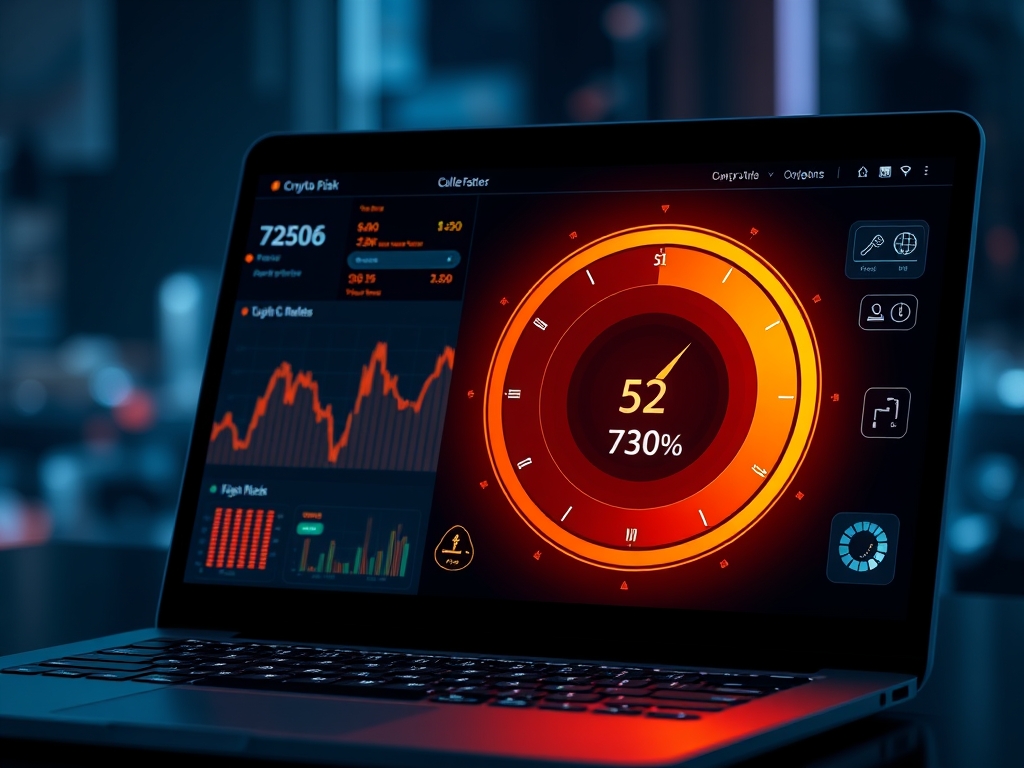
Decoding the Digital Asset Safety Imperative
The sheer complexity of decentralized applications (dApps), cross-chain bridges, and novel tokenomics creates an opaque environment where traditional due diligence often falls short. Regulatory shifts, oracle failures, and opaque governance mechanisms compound these issues. Digital asset safety requires proactive, dynamic monitoring, something human analysts alone cannot achieve at the necessary scale and speed.
The market demands tools that move beyond simple historical price analysis. We are transitioning from reactive portfolio management to preemptive risk mitigation, driven by machine learning algorithms capable of processing petabytes of on-chain data instantaneously.
| Risk Vector | Traditional Assessment | AI-Driven Assessment |
|---|---|---|
| Smart Contract Audit | Periodic review; snapshot in time | Continuous runtime analysis; behavioral pattern detection |
| Liquidity Risk | Current depth data | Predictive simulation across market stress points |
| Regulatory Exposure | Geographic jurisdiction mapping | Semantic analysis of global legislative proposals |
Core Pillars of AI-Enhanced Risk Profiling
Effective ai crypto risk scanners operate across several critical dimensions simultaneously. Understanding these components helps investors select and utilize these powerful technologies effectively.
- On-Chain Behavioral Analysis: Tracking wallet concentration, unusual transaction velocity, and large fund movements that signal potential insider activity or impending market manipulation (e.g., pump-and-dumps).
- Smart Contract Integrity Scoring: Utilizing natural language processing (NLP) to analyze code structure, identifying known vulnerabilities (like reentrancy attacks) even in non-audited or newly deployed protocols.
- Interconnectedness Mapping: Visualizing and quantifying the dependency graph between various protocols. If Protocol A relies on Protocol B, the scanner quantifies the systemic risk if Protocol B fails.
- Sentiment & Narrative Drift Detection: Scanning social media, developer forums (like GitHub), and news aggregators to gauge genuine market sentiment versus coordinated FUD (Fear, Uncertainty, Doubt).
Operationalizing Your AI Risk Assessment Framework
Implementing an ai crypto risk scanners solution requires a structured approach to derive maximum value and integrate the insights into your investment workflow.
Step 1: Define Your Risk Tolerance Matrix
Before connecting any scanner, clearly define what constitutes an ‘acceptable risk level’ for your specific investment thesis (e.g., DeFi yield farming vs. blue-chip HODLing). Assign weighted scores to the key risk vectors outlined above.
Tip: Treat this matrix like a regulatory framework for your personal capital. If a protocol scores below 70% on your weighted matrix, it is automatically flagged for deeper, human-led qualitative review.
Step 2: Integration and Data Ingestion Pipeline
Connect your chosen scanner tool (or internal system) to necessary data feeds: major blockchain explorers (Ethereum, Solana, etc.), established DeFi aggregators, and specialized vulnerability databases. Ensure low-latency data pipelines, as crypto markets move in seconds.
Step 3: Establishing Baseline Anomaly Thresholds
Run the scanner against your current portfolio passively for 7–14 days without executing trades based on its alerts. This process establishes the normal operating "noise floor" for your specific assets. This calibration prevents alert fatigue from minor, non-threatening fluctuations.
Step 4: Implementing Automated Alert Tiers
Categorize alerts based on urgency:
- Green (Informational): Minor deviation from historical norms; requires logging.
- Yellow (Cautionary): Potential centralization risk detected; requires analyst review within 12 hours.
- Red (Critical): Imminent exploit vector identified or massive liquidity drain detected; requires immediate action/exit strategy execution.
Step 5: Post-Incident Feedback Loop Optimization
Every time the scanner generates a high-priority alert, rigorously review the outcome. Did the alert correlate with actual market events? Use this feedback to fine-tune the underlying ML models, enhancing the accuracy of future digital asset safety predictions.
Performance Metrics: Quantifying the Value Proposition
The true measure of an ai crypto risk scanners tool isn't just preventing catastrophic loss (which is hard to quantify historically), but in measuring the avoided loss relative to a passive strategy.
Research into quantitative trading desks suggests that advanced predictive risk modeling can reduce portfolio drawdown events exceeding 20% by up to 40% over a three-year period, compared to heuristic-based stop-loss models. This translates directly into superior Sharpe Ratios and reduced time spent recovering from volatility spikes. The differential advantage comes from spotting latent risks that conventional due diligence overlooks until they become public knowledge.
Scaling Risk Management: From Solo Investor to Institutional Frameworks
For the individual investor, selecting a robust SaaS platform that offers customizable dashboards is often the best entry point. Professionals, however, often look towards building proprietary scoring models layered on top of commercial scanners.
- Beginner: Focus on scanners providing pre-packaged vulnerability scores for major DeFi protocols.
- Intermediate: Begin overlaying custom sentiment analysis derived from token holder distribution data.
- Professional/Enterprise: Develop proprietary graph neural networks (GNNs) to model complex, multi-protocol dependencies, moving far beyond basic token analysis to map the entire DeFi ecosystem's fragility.
Case Study Snippet: Preempting a Stablecoin De-Peg
A prominent lending protocol utilizing a lesser-known stablecoin experienced a sudden spike in collateralization ratio risk, flagged by an ai crypto risk scanners tool analyzing on-chain arbitrage movements. The AI detected that large token holders were systematically liquidating their underlying collateral on a peripheral exchange, a pattern inconsistent with normal yield farming behavior. The alert was triggered 90 minutes before the stablecoin officially lost its peg, allowing early users to shift positions, mitigating an estimated 8% loss compared to those who waited for official news.
Common Pitfalls When Adopting Predictive Risk Tech
Even the most advanced tools are subject to human misuse or misunderstanding. Beware of these common errors:
- Over-reliance on Black Box Scores: Never blindly trust a single score. Always perform qualitative validation on ‘Red’ alerts. The AI flags the probability of risk, not the certainty of failure.
- Ignoring Model Drift: The crypto space evolves rapidly (new chains, new attack vectors). If your scanner hasn't been updated or retrained in six months, its effectiveness against novel threats rapidly degrades.
- Insufficient Lookback Data: Feeding the AI with only recent market data leads to models blind to historical 'Black Swan' events. Ensure the training set spans multiple market cycles.
Optimizing Your Scanner Performance Parameters
To ensure your ai crypto risk scanners deliver peak precision:
Bold adjustments often yield the best results. Focus on tuning the sensitivity threshold for "whale concentration index" alerts, as this is often the precursor to significant liquidity events. Furthermore, mandate that the tool integrates real-time gas price fluctuations into its risk calculation, as high fees can signal network congestion indicative of unusual transaction volumes. Always prioritize low false-positive rates over catching every minor fluctuation.
Maintenance: Future-Proofing Your Digital Asset Safety Net
Maintaining an effective risk posture requires continuous upkeep. Automate the software patching process for any integrated tools. Schedule quarterly deep-dives into the AI's decision logs to identify systemic biases introduced by recent market anomalies. For scaling, look into decentralized oracle networks (like Chainlink) to feed verified, tamper-proof external data directly into your risk scoring engine, adding another layer of resilience.
Conclusion: The Inevitable Future of Intelligent Portfolio Defense
The relentless innovation and inherent volatility of the cryptocurrency market necessitate a technological countermeasure. Ai crypto risk scanners provide the computational edge required to convert massive data streams into actionable security intelligence, securing your position in the digital economy. Mastering these tools is paramount to achieving sustainable, risk-adjusted alpha in the volatile world of digital assets.
Ready to upgrade your financial fortifications? Explore specialized platforms today and make intelligent risk management the cornerstone of your digital wealth strategy.
FAQs on AI Crypto Risk Scanners
Q1: Can AI crypto risk scanners fully replace traditional security audits for smart contracts?
A: No. While AI excels at continuous, runtime behavioral monitoring and spotting deviations from known vulnerability patterns, traditional static code audits remain crucial for confirming the fundamental logic and structure before deployment. They are complementary.
Q2: What is the biggest challenge in deploying effective digital asset safety AI?
A: The primary challenge is data labeling and managing model drift. The crypto environment changes so quickly that models trained on last year's exploits may miss novel attack vectors emerging today.
Q3: How do these scanners handle governance risk in DAOs?
A: Advanced scanners use NLP to monitor governance proposal sentiment, track voting power concentration among top wallets, and flag rapid changes in voting allegiance, indicating potential takeover attempts or insider influence.
**Q4: Are *ai crypto risk scanners* only useful for high-frequency traders?**
A: Absolutely not. They are equally valuable for long-term holders by identifying slow-burn risks like protocol insolvency or sustained centralization before they manifest as immediate price shocks.
Q5: How quickly can an AI scanner react to a flash loan attack?
A: Reaction time depends heavily on integration speed. Top-tier systems can flag the anomalous transaction signatures associated with flash loan exploitation within milliseconds, often faster than centralized exchanges can pause operations.