
Are you still wrestling with traditional budgeting spreadsheets, feeling like your savings goals are perpetually just out of reach? What if I told you that the majority of proactive wealth builders are quietly shifting their reliance from manual tracking to sophisticated predictive saving engines? In an era where financial volatility is the norm, relying on historical data alone is akin to navigating a modern highway system using only a horse and buggy. These next-generation financial technologies are revolutionizing how individuals and businesses approach capital accumulation, moving from reactive expense management to proactive, AI-driven foresight. Understanding how these systems utilize machine learning to optimize automated budgeting strategies is no longer optional—it's essential for securing digital commerce success and long-term personal fiscal health.
The Digital Transformation of Capital Accumulation
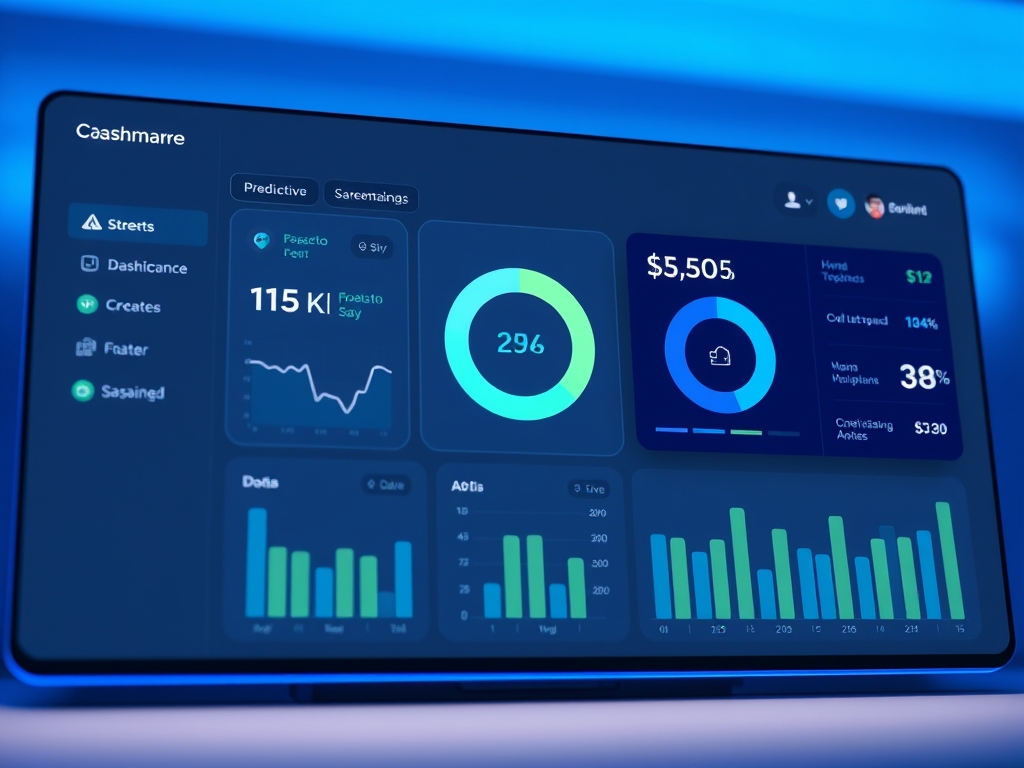
The financial technology (FinTech) landscape is undergoing a profound shift. Where traditional financial advice centered on retrospective analysis—"Here is where your money went last month"—the focus is now squarely on foresight. Predictive saving engines leverage massive datasets, incorporating everything from macroeconomic indicators to granular consumer spending habits, to forecast future cash flow requirements and optimal saving cadence. Market analysis suggests that AI-driven financial planning tools are experiencing double-digit annual growth, demonstrating a clear market demand for intelligent automation in personal finance management. This trend isn't just about convenience; it’s about algorithmic accuracy outperforming human bias.
The core shift involves moving away from rigid, pre-set allocations toward dynamic, adaptive funding streams.
| Metric | Traditional Budgeting | Predictive Saving Engine |
|---|---|---|
| Frequency | Monthly/Weekly Review | Real-Time/Continuous Adjustment |
| Data Input | Manual Entry/Simple Aggregation | Cross-Platform Transactional Analysis |
| Goal Achievement Likelihood | Highly Dependent on Willpower | Algorithmically Optimized Trajectory |
Key Components Fueling Algorithmic Financial Foresight
What exactly powers these intelligent systems, transforming complex data streams into actionable savings mandates? It’s a synergy of advanced computational methods tailored specifically for financial decision-making.
- Machine Learning (ML) Forecasting Models: These are the heart of the operation. They ingest years of transaction data, identify cyclical spending patterns (e.g., quarterly insurance payments, annual subscription renewals), and calculate the necessary incremental savings required to meet future liabilities without causing current-period liquidity stress.
- Behavioral Economics Integration: The best engines understand why we spend. They identify 'leakage points'—those small, discretionary expenditures that erode capital—and suggest micro-adjustments rather than punitive restrictions.
- API Connectivity and Data Synchronization: Seamless, secure integration across all financial accounts (checking, credit cards, investment platforms) is crucial. This real-time data feed ensures the predictions remain relevant minute-by-minute.
- Risk Tolerance Profiling: Advanced predictive saving engines don't just push savings; they align the pace of accumulation with the user's comfort level, often utilizing gamification or customizable alerts to maintain engagement without inducing burnout.
"The future of financial wellness is not about restricting consumption; it’s about intelligently scheduling consumption so that aspirational savings become an inevitable outcome."
Implementing the Predictive Saving Framework
Adopting a predictive saving engine requires a structured onboarding process to maximize its analytical power. Here is a framework to transition from guesswork to guaranteed trajectory:
Step 1: Comprehensive Data Aggregation and Synchronization
The engine is only as smart as the data you feed it. Ensure every relevant financial account is linked securely. This initial stage involves granting read-only access to historical transaction data, often spanning 12 to 24 months, allowing the ML models to establish baseline spending profiles.
Step 2: Defining Future Financial Milestones
Clearly articulate short-term (e.g., emergency fund completion), medium-term (e.g., down payment target), and long-term (retirement) goals within the platform. Be precise with required capital amounts and target dates. Tip: Quantify goals using current dollar values, allowing the engine to factor in conservative inflation estimates.
Step 3: Initial Algorithmic Calibration and Baseline Setting
Allow the system to run a 'shadow period'—typically two weeks—where it observes your real-time spending against its initial projections without automatically moving funds. Review the generated recommendations for anomalies or overestimations regarding discretionary spending limits.
Step 4: Enabling Dynamic Fund Allocation
Once calibrated, authorize the engine to execute automated transfers. This might involve setting 'safety thresholds' where funds above a certain daily checking balance are swept into designated savings or investment vehicles. This seamless transfer mechanism is what makes automated budgeting truly effective.
Step 5: Continuous Feedback and Model Refinement
Regularly review the system’s performance reports. Did it accurately predict a high utility bill? Did it over-save during a low-spending month? Use these interactions to further train the proprietary algorithms, enhancing future predictive accuracy.
Data & Insights: The Performance Uplift of Predictive Systems
Research comparing users employing standard, static budgeting versus those utilizing sophisticated AI-driven savings tools often reveals a significant advantage for the latter. Users leveraging predictive models report a 20% to 35% higher success rate in meeting predefined savings targets within the designated timeframe. This improvement stems directly from the system’s ability to handle volatility. When an unexpected expense arises, the engine recalculates the optimal path instantly, sometimes by slightly adjusting future contributions or reallocating non-essential pending transactions, thereby preventing savings derailment.
Bold insights show that systems which incorporate external market data (like interest rate fluctuations or expected investment returns) provide superior capital preservation strategies compared to those focusing solely on internal expenditures.
Alternatives & Variations: Tailoring Automation to Your Persona
While comprehensive predictive saving engines are ideal for those managing complex finances, alternatives exist based on user sophistication:
- For the Beginner (Manual to Semi-Automated): Start with simple rule-based transfers (e.g., "Save 10% of every paycheck"). Use basic apps that track spending vs. budget but require manual review. This builds foundational awareness.
- For the Intermediate (Behavioral Nudging): Utilize tools that employ 'round-ups' or 'save-the-change' features. While less predictive, these methods automate small contributions tied directly to spending behavior, minimizing the cognitive load associated with saving.
- For the Professional (Full Stack Integration): Integrate investment platforms directly. Here, the engine not only predicts saving needs but also optimizes the asset allocation strategy based on the expected time horizon for that specific pool of capital, making it a complete wealth optimization tool.
Real-World Examples: From Coffee Runs to Capital Growth
Consider Sarah, a freelance digital marketer. Previously, her savings ebbed and flowed based on client payment timing. By implementing a predictive saving engine, the system learned her inconsistent monthly income flow. When a large contract payout arrived, the engine calculated the immediate tax liability, allocated necessary operating capital, and swept the surplus into her home renovation fund before she even thought about discretionary spending. Conversely, during a slow month, the engine temporarily paused non-essential automated transfers, notifying her to cover upcoming fixed costs, thus avoiding overdrafts or missed payments—a true demonstration of adaptive financial modeling.
Common Mistakes to Avoid When Deploying AI Finance Tools
Harnessing advanced technology does not eliminate user error. Several pitfalls commonly impede the effectiveness of these powerful systems:
- Ignoring Data Hygiene: If your linked accounts contain outdated or miscategorized transactions, the ML models will learn faulty habits. Garbage in equals garbage out.
- Setting Overly Aggressive Targets Initially: Trying to save 50% of your income overnight will lead to immediate friction and likely cause you to deactivate the system. Start moderately and let the AI optimize the savings rate gradually.
- Failing to Define 'Emergency': Not clearly separating your emergency fund from your general investment pool confuses the engine’s priority matrix. Ensure distinct boundaries are set for liquid vs. long-term assets.
Optimization Tips / Best Practices for Maximizing Predictive Power
To truly maximize the return on investment from these financial technologies, focus on refining the input variables:
- Integrate Non-Income Flows: Include data from side hustles, rental income, or dividend payouts immediately. Wider data sets yield sharper predictions.
- Leverage Scenario Planning: Use the tool's 'what-if' features. Ask, "What if I want to retire two years earlier?" The engine will instantly calculate the required incremental daily saving adjustments.
- Review Automated Rules Quarterly: Economic landscapes change. Ensure that rules established during a low-interest rate environment are updated when rates shift significantly, allowing the predictive saving engines to adjust investment sweeps accordingly.
Maintaining Stability and Scaling Your Digital Wealth Strategy
The beauty of these systems lies in their persistence. Once set up correctly, maintenance is surprisingly low. For long-term stability, schedule an annual comprehensive review where you reassess major life events (marriage, new debt, job change) and feed those structural changes back into the model. Scaling involves integrating these savings streams into larger wealth-building objectives—perhaps linking the successful savings algorithm directly to an automated investment robo-advisor, ensuring that capital doesn't stagnate but actively seeks optimized growth pathways tailored to the forecasted timeline.
Navigating Toward Fiscal Foresight
The transition to predictive saving engines marks a critical evolution in personal finance, replacing tedious manual work with precise, adaptive automation. By understanding the underlying technology and committing to clean data input, you empower your financial journey with unparalleled foresight, moving beyond budget constraints toward guaranteed milestones.
If you are ready to move beyond reactive financial management and embrace the power of algorithmic wealth building, explore the leading platforms integrating these core AI capabilities today. Discover how one simple system change can unlock significant future stability—your next breakthrough in digital commerce success starts with optimized capital management.
Frequently Asked Questions
What is the core difference between automated budgeting and a predictive saving engine?
Automated budgeting generally moves fixed amounts based on pre-set rules (e.g., 15% of every paycheck). A predictive saving engine uses ML to analyze spending fluctuations and external factors to dynamically suggest or execute the optimal amount to move at any given time to hit multiple goals without jeopardizing liquidity.
Are predictive saving engines safe to use with my bank accounts?
Reputable platforms use bank-level encryption (often 256-bit) and OAuth protocols. They typically only require 'read-only' access for transaction analysis, or secure transfer permissions; they generally cannot initiate withdrawals outside of pre-approved, dedicated savings sweeps.
Can small business owners utilize predictive saving engines for operational capital?
Absolutely. Business development teams are adopting this concept to forecast working capital needs, predict seasonal dips in receivables, and ensure adequate capital reserves are built ahead of large planned expenditures like technology upgrades or inventory purchases.
How long does it take for an engine to become truly accurate?
While initial suggestions are available immediately, most providers suggest allowing 90 days of continuous data feed for the model to establish strong patterns, account for minor cyclical variations, and refine its accuracy substantially.