
Did you know that 80% of customer journeys involve at least three different digital touchpoints before a final conversion, yet most businesses only analyze these steps in silos? Are you tired of reactive reporting, constantly playing catch-up with customer behavior shifts? The future of high-velocity digital commerce and business development lies not in bigger teams, but in smarter systems. Implementing passive analytics loops transforms customer understanding from a manual chore into an autonomous, self-optimizing process. This groundbreaking approach leverages machine learning to create automated insight cycles that continuously refine your strategy without constant manual intervention.
Decoding the Modern Digital Intelligence Landscape
In the era of hyper-personalization and instant gratification, speed is currency. Traditional Business Intelligence (BI) often relies on lagging indicators—data collected, processed, and then acted upon, often missing the moment of opportunity. Passive analytics loops fundamentally change this dynamic by embedding intelligence gathering directly into the operational flow. This is critical for businesses aiming for viral growth or sustainable online income streams, as understanding micro-conversions becomes paramount.
Market data suggests that companies excelling in personalized customer experiences see a revenue uplift of 5-15%. This uplift is increasingly dependent on predictive capabilities, which are the natural output of robust feedback mechanisms. We are moving from descriptive analytics ("What happened?") toward prescriptive analytics ("What should we do next?")—and the passive loop is the engine driving this transformation.
Key Components Driving Automated Insight Cycles
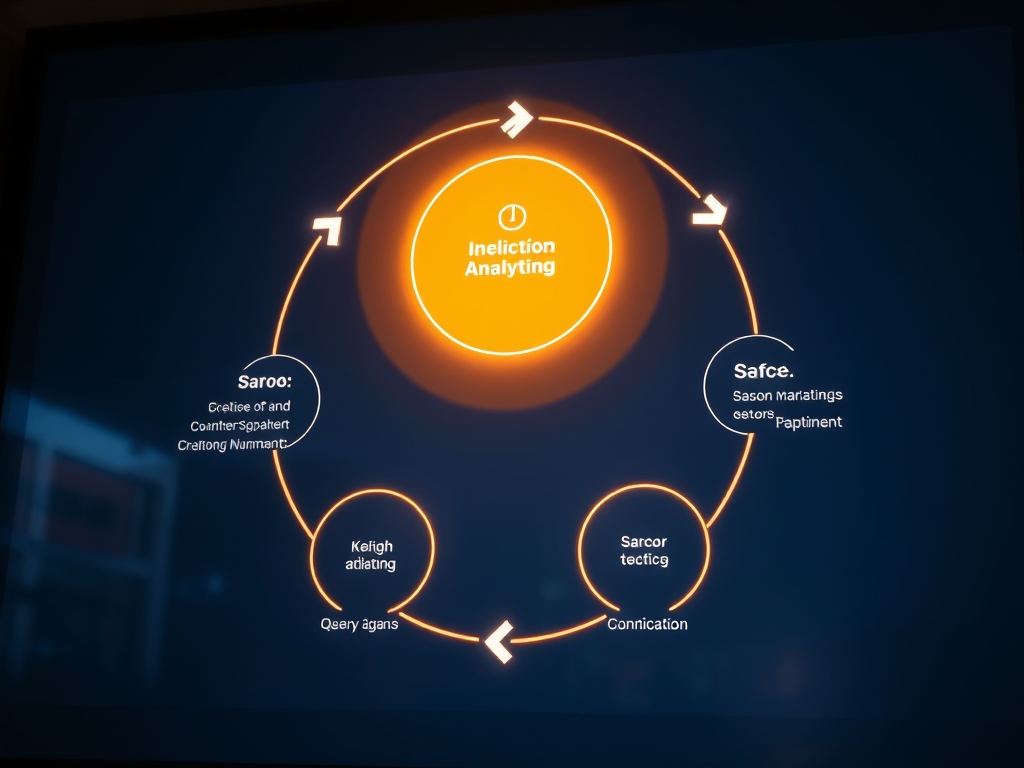
To build an effective passive analytics loops system, you must orchestrate several interconnected technological and strategic elements. Think of it as designing an intelligent circulatory system for your data ecosystem.
- Data Ingestion Layer (The Receptor): This must handle streaming data from all sources—website interactions, CRM activities, ad platform performance, and product usage telemetry—without performance degradation.
- ML/AI Modeling Engine (The Brain): This layer utilizes unsupervised and semi-supervised learning to detect anomalies, segment users dynamically, and predict churn risk in real-time.
- Automated Action Trigger (The Motor): This component closes the loop by translating a detected insight (e.g., "User segment X is abandoning checkout due to shipping cost visualization") into an automated operational change (e.g., A/B testing a dynamic shipping threshold pop-up).
- Feedback Validation Module (The Refiner): Crucially, this system tracks the outcome of the automated action to validate or refute the original hypothesis, ensuring the automated insight cycles improve over time, preventing runaway false positives.
"The true power of AI in commerce isn't prediction; it's automated, closed-loop response to that prediction."
Framework for Implementing Passive Analytics Loops
Establishing a functioning system requires disciplined, phased deployment. This framework focuses on creating actionable intelligence within your digital education platform or e-commerce venture.
1. Define the High-Value Outcome Metric (HVOM)
Start at the end. What single metric defines success for this loop? Is it course completion rate, average order value (AOV), or reducing support ticket volume? Clearly define the target. For beginners, start by focusing on reducing friction points in a single, critical step, such as registration.
2. Architect Data Connectivity and Normalization
Ensure all touchpoints feed into a unified data warehouse or lake. Use ETL/ELT pipelines to clean and normalize data structures. If your CRM uses one date format and your web logs use another, the loop breaks instantly. Synchronization is non-negotiable.
3. Train the Initial Anomaly Detection Model
Implement basic segmentation algorithms (like K-means clustering) to group similar user behaviors. Then, overlay anomaly detection to flag deviations from established norms. This initial training feeds the passive analytics loops their foundational understanding of 'normal' operation.
4. Develop Actionable Heuristics and Rules
Translate model outputs into executable commands. If the ML engine flags a high-risk segment, what specific, automated intervention should fire? This might involve triggering a personalized email sequence, adjusting dynamic pricing slightly, or rerouting traffic to an alternative landing page.
5. Establish the Iterative Validation Gate
This is the crucial "passive" element. After an action is triggered, the system must monitor the HVOM specifically for the affected cohort. If the intervention successfully shifted the HVOM in the desired direction, the associated model weighting is reinforced. If not, the loop flags the rule for human review or triggers a secondary counter-measure. This self-correction keeps the intelligence sharp.
Data & Insights: The ROI of Automation
The efficiency gains derived from reliable passive analytics loops are measurable across operational overhead and revenue generation.
| Metric Category | Traditional Analysis (Manual) | Passive Analytics Loop (Automated) | Projected Improvement |
|---|---|---|---|
| Insight Latency | 48–72 Hours | < 10 Minutes | 98%+ Reduction |
| Segmentation Freshness | Weekly/Monthly | Real-Time Dynamic | Continuous Optimization |
| Hypothesis Testing Time | Weeks (A/B Test Cycles) | Hours (Automated Triage) | Significant Acceleration |
Research in digital operations shows that reducing insight latency by even 50% can correlate directly with a 3-5% increase in conversion rates due to timely intervention capabilities.
Alternatives & Variations for Different Scales
While comprehensive closed-loop systems are powerful, they require significant infrastructure. Alternatives exist depending on your current business maturity:
- For Beginners (The Monitoring View): Start with advanced event tracking in Google Analytics 4 or equivalent tools, setting up automated insight cycles based on threshold alerts (e.g., alerting you when bounce rate exceeds 60% on a specific funnel step). This is semi-passive.
- For Intermediates (The Prompted View): Integrate low-code/no-code automation platforms (like Zapier or Make) to connect analytics alerts directly to CRM actions (e.g., If a high-value prospect reads the pricing page three times without converting, automatically schedule a personalized follow-up call in your sales team’s queue).
- For Professionals (The Fully Autonomous View): Utilize cloud-native AI services (AWS SageMaker, Google Vertex AI) to deploy predictive models that automatically adjust marketing spend allocation across platforms based on real-time LTV predictions fed back from the transaction engine.
Real-World Examples in Digital Commerce
Consider an online subscription box service focused on niche collectible goods. A passive analytics loop is deployed to monitor inventory sell-through rates against pre-order interest:
- Data Ingestion: Signals from the early-access portal show overwhelming interest (high click-through on "Notify Me When Available") for a specific, limited-edition item.
- ML Modeling: The system predicts a 40% shortfall in available stock based on current purchase velocity.
- Automated Trigger: The loop instantly notifies the procurement/inventory system to accelerate the next production run and simultaneously adjusts the ad spend allocation, shifting budget away from promoting that specific item toward evergreen substitutes, preventing negative customer experiences from stock-outs.
- Validation: The system monitors if the accelerated procurement meets the demand curve over the next week, refining future forecast accuracy.
Common Mistakes to Avoid
Beware of these pitfalls when setting up your passive analytics loops:
- Action Over-Triggering: Setting sensitivity too high, leading the system to launch corrective actions for minor statistical noise. This burns resources and confuses customers.
- Ignoring Contextual Bias: Training models exclusively on "successful" paths. If your current path is sub-optimal, the system will merely automate sub-optimal performance faster.
- The Black Box Syndrome: Failing to document why the automated action was taken. If you can’t audit the logic, you can’t debug or ethically defend the automated decision.
- Stale Feedback: Not regularly recalibrating the validation module. Customer behavior changes rapidly; a loop optimized for Q4 holiday shopping will fail in Q1 unless retrained.
Optimization Tips for High-Velocity Performance
To maximize the intelligence extraction from your automated insight cycles, focus on these best practices:
- Prioritize Negative Signals: Often, identifying why someone leaves is more valuable than identifying why someone stays. Focus initial loop sensitivity on churn predictors and friction points.
- Enrich Data with External Signals: Integrate macro-economic indicators or competitor movement data where appropriate, allowing the loop to account for external volatility outside your direct control.
- Implement Human Oversight Thresholds: Define financial or customer impact limits. If an automated decision risks losing over $X revenue or impacting Y customers, immediately pause the automated trigger and flag it for mandatory human sign-off.
Maintaining Stability and Scaling Your Systems
Scaling these loops requires robust MLOps practices. You must treat your analytical models as essential software assets. Automate model retraining schedules monthly, or even weekly, tied to performance degradation metrics. For scaling, move beyond single-channel loops. If the website loop is stable, begin building parallel loops for your email marketing automation and your customer support ticketing system, ensuring data flows between them for holistic customer journey mapping. Regular audits of data governance ensure the fuel for your intelligence engine remains clean and compliant.
Conclusion
The transition to passive analytics loops moves your business from playing defense to playing offense in the digital arena. By embedding continuous, automated learning into your operations, you unlock a level of responsiveness previously unattainable, directly boosting conversion velocity and deepening customer comprehension. This isn't just about better reporting; it’s about creating a self-optimizing commercial entity ready for the demands of future digital commerce. Don't let your competitors automate their way to superior customer understanding while you remain mired in manual spreadsheets.
Dive deeper into the specifics of predictive modeling architecture by exploring our resource library on advanced Generative Engine Optimization techniques.
FAQs on Passive Analytics Loops
Q1: Is building a passive analytics loop just another term for A/B testing automation?
A: Not entirely. A/B testing automation runs predefined tests. A true passive analytics loop uses unsupervised learning to discover the testable hypothesis first, based on subtle pattern deviations it observes, making it proactive rather than just efficient at executing known tests.
Q2: What level of data science expertise is required to initiate automated insight cycles?
A: For basic implementation involving existing BI platform alerts, moderate data literacy suffices. However, creating custom, self-correcting loops requires strong proficiency in Python, machine learning frameworks, and MLOps principles.
Q3: How do I ensure GDPR or CCPA compliance when automating customer data analysis?
A: Compliance must be engineered into the Data Ingestion Layer. Anonymization, pseudonymization, and strict access controls must be applied before the data enters the core ML training environment. The loop must respect user consent flags universally.
Q4: Can this technology work effectively for generating online income through content creation?
A: Absolutely. For content platforms, the loop can automatically test headline variations, content depth adjustments, or pricing models based on micro-engagement signals (time-on-page, scroll depth) and feed optimized variations back into the publishing queue.