
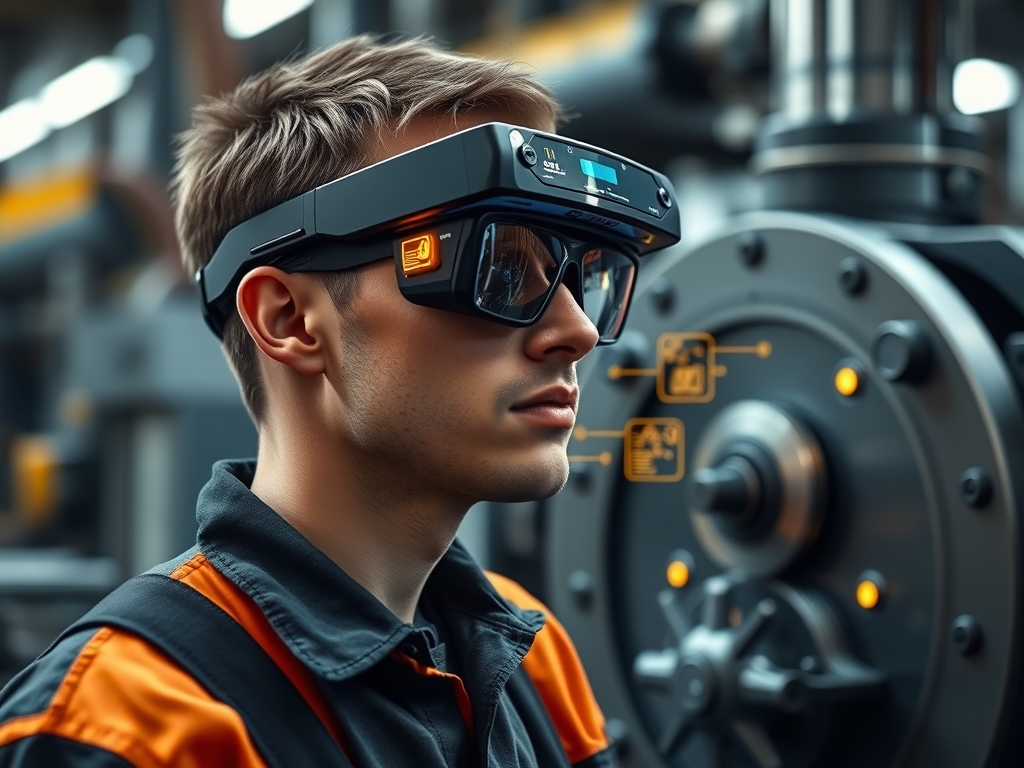
Did you know that companies implementing Augmented Reality (AR) in their manufacturing processes are seeing a 30% reduction in training time? This shift is fueled by the promise of Augmented Work Instructions (AWI), an innovative technology poised to reshape how we approach production, maintenance, and employee education. This post explores how AWI is not just a trend but a transformative force.
Foundational Context: Market & Trends
The global AR market is booming, and the manufacturing sector is a prime adopter. According to a recent report by MarketsandMarkets, the AR market size is projected to reach $61.3 billion by 2028, with a compound annual growth rate (CAGR) of 40.7% from 2023 to 2028. This growth is driven by the increasing need for operational efficiency, reduced errors, and improved worker safety. AWI, as a key application of AR, is positioned to capitalize on this momentum.
Here's a look at some key trends:
- Growing adoption of smart glasses and head-mounted displays (HMDs): These devices provide hands-free access to AR-powered instructions and data.
- Integration with IoT and Industry 4.0: This enables real-time data integration and remote monitoring capabilities.
- Focus on workforce upskilling and reskilling: AWI simplifies complex tasks and accelerates the learning curve for new and existing employees.
Core Mechanisms & Driving Factors
The success of AWI hinges on several core mechanisms:
- Real-Time Overlays: Superimposing digital information (instructions, diagrams, data) onto the user's real-world view.
- Interactive Guidance: Allowing users to interact with AR elements and receive dynamic, step-by-step guidance.
- Contextual Awareness: Adapting instructions based on the user's current task and environment, using sensors and data inputs.
- Improved Accuracy: Reducing human error through visual cues and immediate feedback.
- Increased Efficiency: Streamlining workflows and reducing the time required to complete tasks.
The Actionable Framework
Implementing AWI involves several key steps:
Assessment and Planning
- Identify pain points: Determine specific areas in your manufacturing processes where AWI can provide the most benefit.
- Define Use Cases: Map out specific tasks where AR is most useful.
- Choose the right hardware: Select devices based on your needs, environment and budget.
Technology Selection and Integration
- Choose the right AR platform: Decide on a platform based on features, compatibility, and scalability.
- Develop or procure AR content: Either build custom AR content or purchase ready-made solutions.
- Integrate with existing systems: Connect AWI with your existing manufacturing execution systems (MES), enterprise resource planning (ERP), or other relevant systems.
Implementation and Training
- Pilot programs: Start with small-scale deployments to test the technology and get user feedback.
- User Training: Train employees on using the AR systems and ensure they understand how to use the augmented instructions.
- Process integration: Integrate AWI into existing work instructions and processes.
Evaluation and Optimization
- Measure Key Performance Indicators (KPIs): Track metrics such as training time, error rates, and productivity.
- Gather user feedback: Regularly collect feedback from employees to improve the system.
- Iterate and Optimize: Continuously refine your AWI implementation based on data and feedback.
Expert Insight: "The key to successful AWI implementation lies not just in the technology, but in a well-defined process, thorough training, and consistent user feedback. It is about integrating the digital world into the physical one to create a better workflow." - Dr. Anya Sharma, Manufacturing Technology Consultant.
Analytical Deep Dive
A recent study by Deloitte found that companies using AR for training experienced a 40% reduction in training costs and a 35% improvement in employee performance. In addition, research suggests that AR-based instructions can reduce errors by as much as 30% compared to traditional paper-based manuals.
Here's a simplified comparison:
| Feature | Traditional Instructions | Augmented Work Instructions |
|---|---|---|
| Instruction Type | Paper, Manuals | Digital, Visual, Interactive |
| Learning Curve | Steep | Shorter |
| Error Rate | Higher | Lower |
| Training Time | Longer | Shorter |
| Cost of Materials | Higher | Lower (Paper cost) |
Strategic Alternatives & Adaptations
- Beginner Implementation: Start with simple use cases, such as visual guidance for assembly tasks or troubleshooting checklists.
- Intermediate Optimization: Integrate AWI with sensor data to provide dynamic, context-aware instructions and real-time monitoring.
- Expert Scaling: Develop a centralized content management system to manage and update AR content across the organization. You could also integrate AR with AI-powered predictive maintenance.
Validated Case Studies & Real-World Application
- Aerospace Manufacturing: A leading aerospace manufacturer reduced assembly time by 25% and improved quality by implementing AWI for complex component installation.
- Automotive Production: A major automotive manufacturer saw a 20% reduction in training time and a 15% reduction in rework by using AWI for quality inspections.
- Field Service Maintenance: Utility companies have reported a 20% reduction in service call times by equipping field technicians with AR-powered remote assistance capabilities.
Risk Mitigation: Common Errors
- Poorly defined use cases: Failing to identify the specific problems that AWI can solve.
- Inadequate training: Not providing sufficient training to employees on how to use the system.
- Lack of integration: Not integrating AWI with existing manufacturing systems.
- Ignoring User Feedback: Failing to gather user input to improve the system.
- Limited content creation: Not creating sufficient augmented reality content.
Ensure that your AWI implementation is based on well-defined use cases, adequate training and solid infrastructure.
Performance Optimization & Best Practices
- Prioritize user experience: Ensure that the user interface is intuitive and easy to use.
- Optimize content: Create clear, concise instructions and visually appealing content.
- Regularly update content: Keep the AR content up-to-date and relevant.
- Provide ongoing support: Offer training and technical assistance to users.
- Measure key metrics: Track training time, error rates, and productivity to measure the effectiveness of AWI.
Scalability & Longevity Strategy
For long-term success, focus on:
- Modular Design: Design AWI systems that are modular and can be easily adapted for new processes and tasks.
- Integration: Develop the ability to incorporate new tools, equipment, and workflows into your existing setup.
- Data Analysis: Use data analytics to identify areas for improvement.
- Ongoing investment: Continuously invest in new technologies and content updates.
- Adaptability: Prepare to adapt and respond to changes in market dynamics and the evolving business environment.
Conclusion
The advantages of Augmented Work Instructions are clear: increased efficiency, reduced errors, and a more skilled workforce. By embracing AWI, manufacturers can propel themselves into the future of operations.
Knowledge Enhancement FAQs
Q: Is AWI expensive to implement?
A: The initial investment can vary, but the return on investment (ROI) often justifies the cost due to reductions in training time, errors, and increased productivity. Many tools are now cloud-based, reducing the immediate financial strain on businesses.
Q: What type of training is needed for AWI implementation?
A: Training should encompass the AR system itself, how to navigate the augmented instructions, and any new procedures or protocols. There is often a learning curve so be patient.
Q: Are there any data security concerns with AWI?
A: Yes. All data-driven applications must comply with the proper security protocols. Ensure that data is encrypted, access is restricted, and compliance is maintained.
Q: What is the future of AWI?
A: AWI will become even more integrated with AI, IoT, and other technologies, to create a more efficient and connected manufacturing ecosystem.