
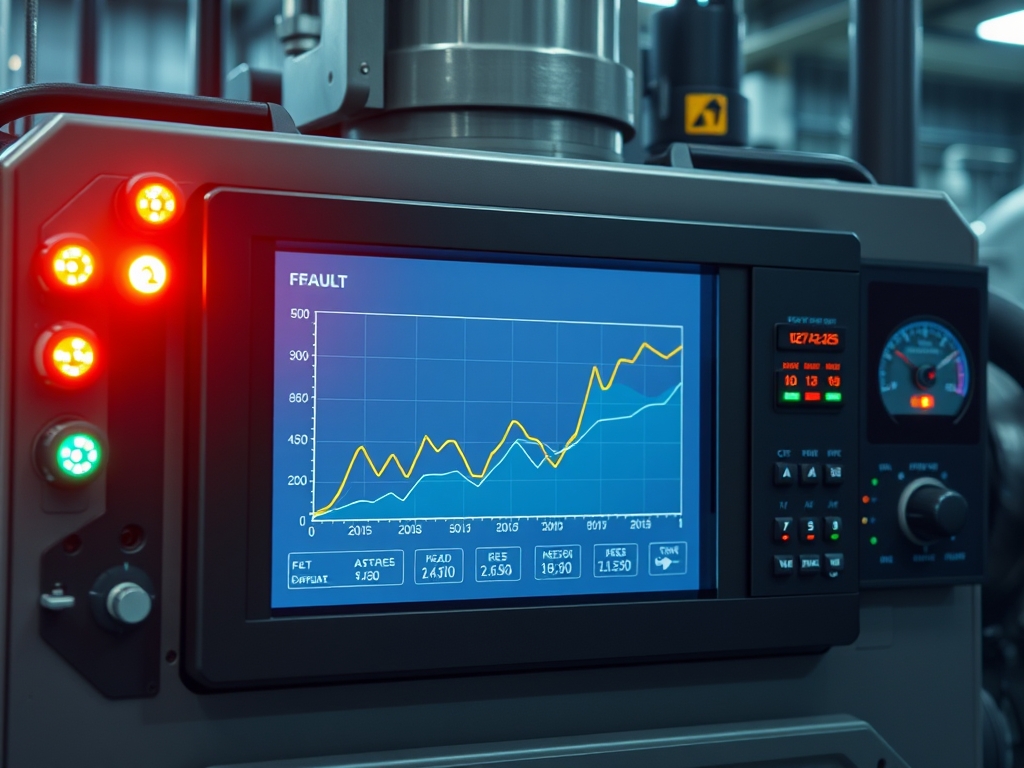
Did you know that predictive maintenance can reduce downtime by 30-50% and increase machine life by up to 40%? This is the power unleashed by Industrial Internet of Things (IIoT) solutions, a paradigm shift that's transforming how businesses operate across diverse sectors. In a world increasingly driven by data, the ability to anticipate equipment failure is no longer a luxury; it's a necessity for competitive survival. This blog post delves into the core of predictive maintenance, exploring how IIoT empowers businesses to optimize their operations, reduce costs, and drive efficiency.
Foundational Context: Market & Trends
The global predictive maintenance market is experiencing significant growth. Driven by the rising adoption of IIoT, increasing operational costs, and the need for enhanced equipment reliability, the market is projected to reach billions of dollars in the next few years. This growth is fueled by several key trends:
- Increased Investment in IIoT: Companies are investing heavily in sensors, data analytics platforms, and connectivity solutions to enable predictive maintenance strategies.
- Growing Adoption Across Industries: While initially prevalent in manufacturing, predictive maintenance is expanding into sectors like energy, healthcare, and transportation.
- Focus on Cloud-Based Solutions: Cloud platforms provide scalability, accessibility, and cost-effectiveness for managing and analyzing large datasets from industrial assets.
Key Takeaway: The predictive maintenance market is booming, with industries recognizing the immense value in proactive equipment care.
Core Mechanisms & Driving Factors
At the heart of predictive maintenance lies the power of data-driven insights. It's about shifting from reactive or preventive maintenance to a proactive, predictive approach. The key drivers are:
- Data Collection: Sensors deployed on machinery continuously gather real-time data on various parameters such as temperature, vibration, pressure, and operational performance.
- Data Analysis: Sophisticated algorithms and machine learning models analyze the data to identify patterns, anomalies, and potential failures.
- Predictive Modeling: Based on the analysis, predictive models forecast when equipment is likely to fail, allowing maintenance teams to schedule interventions proactively.
- Actionable Insights: These insights enable businesses to optimize maintenance schedules, reduce downtime, and improve overall equipment efficiency.
The Actionable Framework: Implementing a Predictive Maintenance Strategy
Implementing a successful predictive maintenance strategy isn’t just about deploying sensors. It’s about building a comprehensive ecosystem:
Step 1: Define Your Objectives
- What are your key goals? Reduce downtime? Improve asset lifespan? Lower maintenance costs? Defining objectives helps you focus your efforts.
Step 2: Identify Critical Assets
- Prioritize assets critical to your operations. These are the machines or equipment that, if they fail, cause the most significant disruption.
Step 3: Select Appropriate Sensors
- Choose the right sensors to monitor the relevant parameters. Consider factors like accuracy, durability, and compatibility with existing infrastructure.
Step 4: Implement Data Collection & Connectivity
- Establish a robust data collection system. Ensure reliable connectivity to transmit data to a central platform for analysis.
Step 5: Choose a Data Analytics Platform
- Select a platform that can handle your data volume and complexity. Consider machine learning capabilities, data visualization tools, and integration with your existing systems.
Step 6: Develop Predictive Models
- Build or deploy predictive models to analyze data and predict potential failures. Machine learning algorithms can be trained on historical data.
Step 7: Integrate with Your Maintenance System
- Integrate the insights from predictive models into your existing Computerized Maintenance Management System (CMMS) or Enterprise Asset Management (EAM) system.
Step 8: Monitor and Refine
- Continuously monitor the performance of your predictive maintenance system and refine your models and strategies as needed.
Analytical Deep Dive: Benchmarking the Impact
The benefits of predictive maintenance are quantifiable. Industry data consistently showcases the following improvements:
| Metric | Average Improvement |
|---|---|
| Downtime Reduction | 30-50% |
| Maintenance Cost Reduction | 25-30% |
| Equipment Lifespan Increase | Up to 40% |
| Productivity Gains | Up to 20% |
| Reduction in Unexpected Failures | 50-60% |
These figures underscore the significant ROI that businesses can achieve by embracing predictive maintenance.
Strategic Alternatives & Adaptations
Predictive maintenance can be adapted to suit varied needs. Here are several strategic applications:
- Beginner Implementation: Start with a pilot project focused on a single critical asset. Use off-the-shelf sensor kits and cloud-based analytics platforms to minimize initial investment.
- Intermediate Optimization: Integrate predictive maintenance across multiple assets and departments. Invest in advanced analytics tools and develop more sophisticated predictive models.
- Expert Scaling: Implement a comprehensive predictive maintenance program across your entire enterprise. Integrate with existing CMMS and EAM systems and leverage automation for optimal efficiency.
"Companies that embrace predictive maintenance are not just saving money; they are building a more resilient, efficient, and ultimately, a more profitable business model." - Dr. Emily Carter, Leading Expert in Data Analytics
Validated Case Studies & Real-World Application
Case Study: A major airline implemented predictive maintenance on its aircraft engines. By analyzing vibration data from onboard sensors, they were able to predict engine failures with high accuracy. This resulted in a 40% reduction in unscheduled engine maintenance, saving millions in costs.
Hypothetical Example: A manufacturing facility uses predictive maintenance to monitor its critical pumps. Through continuous monitoring and analysis, it detected early signs of wear in the pump bearings. By scheduling a maintenance intervention before failure, they avoided a production shutdown and associated losses.
Risk Mitigation: Common Errors
- Ignoring Data Quality: Garbage in, garbage out. Ensuring data quality is paramount.
- Underestimating the Complexity: Predictive maintenance involves complex systems and requires expertise. Don't underestimate the need for skilled personnel.
- Lack of Integration: A standalone system won't deliver optimal results. Integrate with your existing maintenance systems.
Performance Optimization & Best Practices
To maximize the impact of your predictive maintenance strategy:
- Prioritize the Critical: Focus on high-value assets and the data parameters most indicative of failure.
- Invest in Training: Equip your team with the skills and knowledge needed to operate and maintain the system effectively.
- Foster Collaboration: Encourage collaboration between maintenance, engineering, and IT departments.
- Embrace Continuous Improvement: Regularly review and refine your models, algorithms, and processes to improve accuracy and efficiency.
Scalability & Longevity Strategy
For sustained success with predictive maintenance:
- Automate Data Collection and Analysis: Automate the gathering and processing of sensor data to ensure efficient and timely information.
- Develop a Scalable Infrastructure: Choose a platform that can accommodate growth. Consider cloud-based solutions for scalability.
- Establish a Robust Monitoring System: Implement continuous monitoring to assess the performance of the predictive maintenance system and identify areas for optimization.
Conclusion
Predictive Maintenance, powered by IIoT, isn't just a trend—it's the future of industrial operations. By implementing a proactive, data-driven approach to maintenance, businesses can slash costs, increase uptime, and extend the lifespan of their assets. Embrace this transformative technology and gain a competitive edge in today's demanding environment.
Call to Action: Ready to transform your operations? Contact us today for a free consultation and discover how predictive maintenance can save your business millions. Explore our resources on [link to related content].
Knowledge Enhancement FAQs
Q: What is IIoT?
A: The Industrial Internet of Things (IIoT) refers to the network of interconnected devices, sensors, and machines used in industrial settings, which generate and exchange data to enable intelligent operations and decision-making.
Q: What are the primary benefits of predictive maintenance?
A: Key benefits include reduced downtime, lower maintenance costs, extended equipment lifespan, improved productivity, and increased safety.
Q: How do you choose the right sensors for predictive maintenance?
A: Sensor selection depends on the equipment and parameters being monitored. Consider factors like accuracy, environmental conditions, and the need for data integration.
Q: Can predictive maintenance be applied to all industries?
A: Yes, while initially concentrated in manufacturing, predictive maintenance is expanding into many industries including energy, transportation, and healthcare.
Q: What skills are needed to implement predictive maintenance?
A: Skills in data analysis, machine learning, sensor technology, and maintenance engineering are vital for successful implementation.