
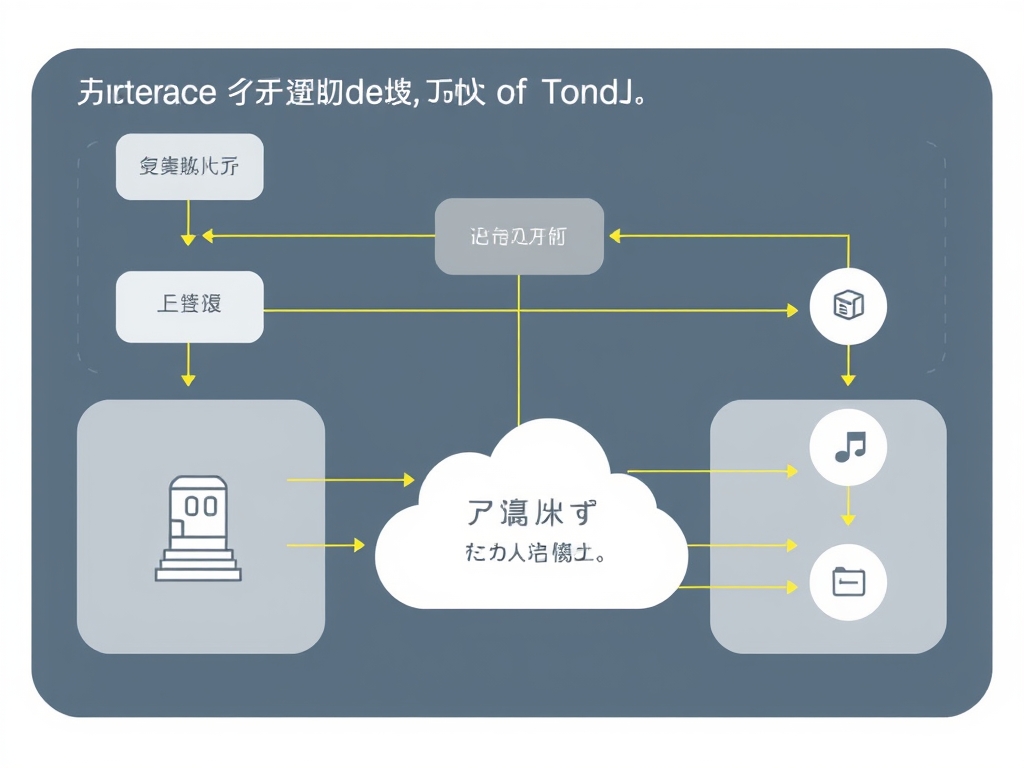
The world of Artificial Intelligence is rapidly evolving, with new tools and platforms emerging almost daily. Are you leveraging the power of Generative AI to its fullest potential in your software development projects? This guide will dive into how to effectively use Alibaba's Tongyi AI models, a powerful suite of AI tools designed to empower developers. We’ll explore their functionalities, provide actionable steps, and address how you can leverage Alibaba Tongyi AI to drive innovation and increase efficiency in your coding projects, ultimately becoming more efficient in their cloud computing endeavors.
Foundational Context: Market & Trends
The AI market is experiencing exponential growth. Reports project that the global AI market size will reach over \$1.8 trillion by 2030, according to the MarketsandMarkets report. This robust expansion is fueled by advancements in machine learning, increased adoption of cloud services, and the growing demand for intelligent automation across industries. Alibaba, a global leader in e-commerce and cloud computing, is strategically positioned to capitalize on this trend with its Tongyi AI models.
| Trend | Projection |
|---|---|
| AI Market Growth | \$1.8 Trillion by 2030 |
| Cloud Computing Adoption | Increasing demand for AI-powered cloud services |
| AI Automation | Rising adoption of AI-driven automation in various sectors |
Core Mechanisms & Driving Factors
Understanding the core mechanisms behind using Alibaba's Tongyi AI models is crucial for successful implementation. Here are the key driving factors:
- Model Selection: Choosing the right Tongyi AI model based on the specific project requirements (e.g., natural language processing, image recognition).
- Data Preparation: Preparing high-quality datasets that are well-formatted and relevant to train or fine-tune the selected AI model.
- Integration: Seamlessly integrating the chosen Tongyi AI model into existing software development workflows.
- Resource Management: Effectively managing the computational resources required for running and scaling AI models, a key aspect of cloud computing.
- Continuous Monitoring and Optimization: Constantly monitoring the performance of deployed AI models and optimizing them for accuracy, efficiency, and cost-effectiveness.
The Actionable Framework: Step-by-Step Implementation
Let's break down how to use Alibaba Tongyi effectively.
Step 1: Accessing the Tongyi AI Platform
Begin by creating an Alibaba Cloud account. If you don't already have one, sign up at Alibaba Cloud's website. You will need to navigate to the AI Platform section within your Alibaba Cloud console. Explore the available Tongyi AI models, which are categorized by use case.
Step 2: Selecting the Right Tongyi AI Model
Evaluate your project's needs. For example, if you are building a chatbot, focus on Tongyi models optimized for natural language processing (NLP). If the project involves image recognition, consider models trained on large image datasets. Review each model's documentation to understand its capabilities, limitations, and supported input formats.
Step 3: Setting Up Your Development Environment
Ensure you have a suitable development environment. This may involve setting up a virtual machine instance on Alibaba Cloud, installing the necessary software libraries (e.g., Python, TensorFlow, PyTorch), and configuring the Alibaba Cloud SDK for your chosen programming language.
Step 4: Data Preparation and Preprocessing
Prepare the data that will be used to train or test your AI model. This involves data cleaning, formatting, and preprocessing. The quality and preparation of the data is critical to model performance. Always follow the model's documentation for acceptable data formats and pre-processing guidelines.
Step 5: Integrating the Model into Your Code
Use the Alibaba Cloud SDKs and APIs to integrate the Tongyi AI model into your code. Implement logic to send input data to the model, process the output, and incorporate the results into your application. Thoroughly test the integration to ensure everything works as expected.
Step 6: Deploying and Monitoring the Model
Deploy your integrated model on Alibaba Cloud. Monitor its performance using cloud monitoring tools, and analyze key metrics such as response time, accuracy, and resource utilization. Regularly review these metrics, and make adjustments to the code or model configuration.
Analytical Deep Dive
According to recent studies, the integration of AI tools can increase developer productivity by up to 30%, which ultimately means the business saves money. This is demonstrated by companies using AI-driven automation in tasks such as code generation and debugging. Deploying and monitoring the model are very important aspects of it. Furthermore, the use of AI in software development has been shown to reduce error rates by up to 20%.
Strategic Alternatives & Adaptations
For Beginner Implementation, start with a pre-trained Tongyi AI model and focus on understanding the input/output requirements. Utilize a simpler task to familiarize yourself with the platform. For Intermediate Optimization, experiment with fine-tuning the model using custom datasets to improve its performance for specific use cases. Consider optimizing the model's parameters and resource allocation. For Expert Scaling, explore advanced techniques, such as distributed computing, batch processing, and continuous integration/continuous deployment (CI/CD) pipelines to handle large-scale AI model deployments.
Validated Case Studies & Real-World Application
A software company used Tongyi AI models to automate the customer support chatbot to great effect. Previously, the chatbot had been unable to answer complex questions effectively. After deploying Tongyi AI models, the accuracy of the bot's responses improved significantly, reducing the need for human intervention. The company reported a 40% reduction in customer service costs.
Risk Mitigation: Common Errors
- Insufficient Data: Train with a small or unrepresentative dataset. Ensure your data set is comprehensive and well-labeled.
- Poor Model Selection: Using a model that isn't suited to the task. Conduct a full evaluation before deploying a tool.
- Ignoring Performance Metrics: Not properly measuring the model's performance. Continuously track key metrics and optimize as needed.
Performance Optimization & Best Practices
To maximize the performance of your Alibaba Tongyi AI models, consider the following best practices:
- Optimize data preprocessing and ensure data quality is high.
- Regularly review model performance and retrain as needed.
- Implement model versioning and A/B testing.
- Prioritize scalability and consider cloud infrastructure.
Scalability & Longevity Strategy
Sustaining long-term success with Alibaba's Tongyi AI models requires a focus on scalability and adaptability. Continuous monitoring, optimization, and regularly updating the models with new data are key. Automate model deployment and retraining processes. Moreover, embrace new developments in AI and cloud computing to stay at the cutting edge.
Conclusion
Using Alibaba's Tongyi AI models can dramatically improve software development projects, unlocking advanced functionality and boosting efficiency. This is only possible if you are able to take the actionable steps to integrate these models into your workflow.
Knowledge Enhancement FAQs
Q: How do I choose the best Tongyi AI model for my project?
A: Assess the requirements of your project. If it involves text, an NLP model is the best option. Then check the technical documents to match the project to the right Tongyi AI model.
Q: What are the main benefits of using Alibaba Tongyi AI?
A: Reduced development time, increased efficiency, improved accuracy, and cost savings are a few of the many benefits.
Q: What is the cost structure of Alibaba's Tongyi AI?
A: Pricing depends on the specific models used and resource consumption. Review the Alibaba Cloud pricing details for up-to-date information.
Q: How often should I retrain my Tongyi AI models?
A: Retraining frequency depends on the type of model and the volume of new data. Regularly monitor performance and retrain as needed.
Q: What about data privacy concerns?
A: Alibaba Cloud provides security features to protect your data. Follow data privacy regulations.
Q: Where can I get support for Alibaba Tongyi AI models?
A: Alibaba Cloud offers detailed documentation, tutorials, and support channels to help with implementation and troubleshooting.