
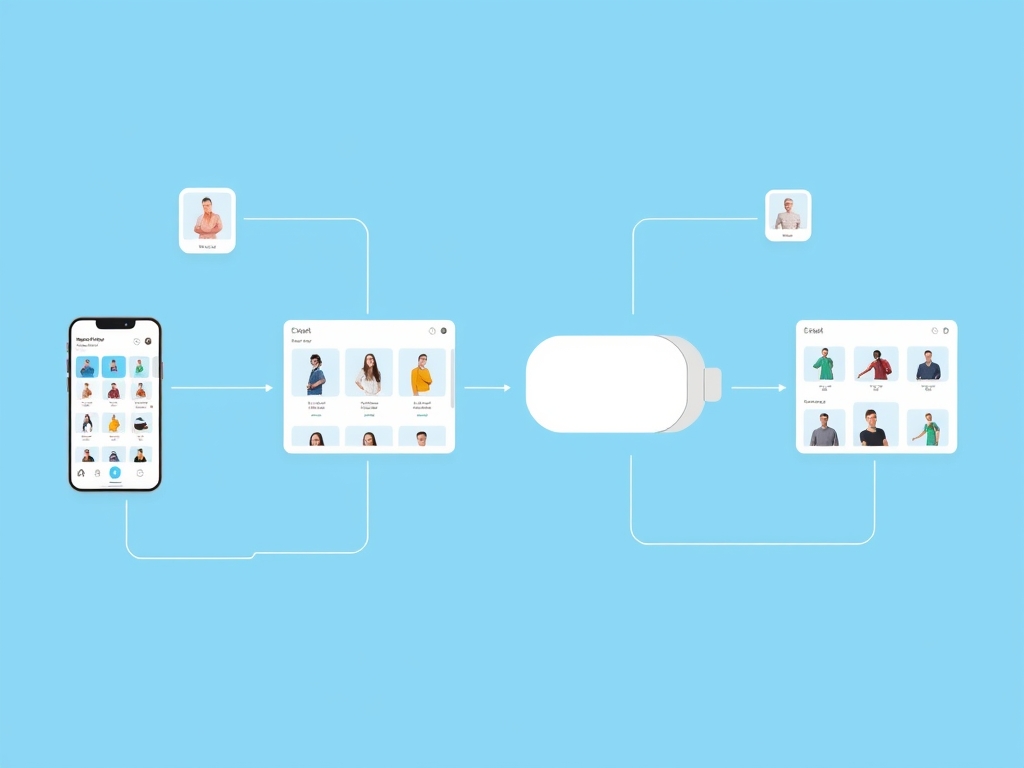
Why Headless E-commerce is the Future of Flexible Online Retail
Did you know that online retail sales are projected to reach $6.17 trillion worldwide in 2024? Yet, many businesses are still tethered to outdated e-commerce platforms, missing out on the agility and innovation that can fuel significant growth. Headless E-commerce offers a solution, and the time to embrace it is now.
Foundational Context: Market & Trends
The e-commerce landscape is in constant flux. Consumers demand seamless, personalized experiences across all devices. Traditional, monolithic e-commerce platforms struggle to keep pace. The core challenge is the rigid connection between the storefront (the "head") and the backend (where the data and logic reside). Headless E-commerce, or decoupled online stores, addresses this fundamental issue.
The Rise of Decoupled Online Stores
The market is showing a strong shift towards the adoption of Headless E-commerce. While exact figures vary, industry analysis consistently shows a significant uptick in adoption year over year. Here’s a comparative view of key adoption drivers:
| Feature | Traditional E-commerce | Headless E-commerce |
|---|---|---|
| Flexibility | Limited | High |
| Customization | Restricted | Extensive |
| Performance | Can be slow | Fast, optimized |
| Time to Market | Longer | Shorter |
| Content Marketing | Often challenging | Easier to integrate |
Core Mechanisms & Driving Factors
So, what exactly drives the Headless E-commerce revolution? The following are some crucial components:
- API-First Approach: Headless E-commerce platforms utilize Application Programming Interfaces (APIs) to connect the frontend (the “head”) to the backend. This enables flexibility and independent modification.
- Content Management System (CMS) Integration: Businesses can leverage a CMS of their choosing to create compelling and engaging content.
- Decoupled Architecture: This separation allows developers to work independently on the frontend and backend, resulting in quicker development cycles and increased agility.
- Performance Optimization: Without the inherent constraints of monolithic architectures, Headless E-commerce sites are designed for speed.
The Actionable Framework: Getting Started with Headless E-commerce
Implementing Headless E-commerce isn't a simple "plug-and-play" operation. Here's a structured approach:
1. Choosing the Right Platform
This is perhaps the MOST CRUCIAL first step. Consider platforms like:
- Shopify Plus (with Headless capabilities): Provides excellent commerce features with a powerful ecosystem.
- BigCommerce (Headless ready): Another popular option that's a good choice for larger businesses.
- Custom Builds: For very specific requirements and complete control.
2. Selecting Your Frontend Technology
Options include React, Vue.js, Angular, or frameworks built for speed and performance.
3. API Configuration & Integration
This step requires a good understanding of your chosen platform's APIs.
- Carefully map the data flows.
- Focus on efficient data retrieval.
4. Content Migration and Design
This step focuses on bringing your current site content over.
- Design and develop the frontend.
- Build a user-friendly and intuitive shopping experience.
5. Deployment and Testing
Rigorous testing is essential.
Analytical Deep Dive
According to data compiled from various e-commerce industry reports, sites implementing Headless E-commerce frequently witness improvements in:
- Page Load Speed: up to 30% or more.
- Conversion Rates: An improvement of 10-20% is common.
- Mobile Experience: Significantly improved due to the adaptable nature of decoupled architecture.
Strategic Alternatives & Adaptations
Adaptability is the core benefit. If you are a beginner:
- Start with a managed Headless E-commerce solution. Platforms will offer templates.
For Intermediate Users:
- Focus on using powerful frontend frameworks.
- Experiment with API integrations.
For Expert Level:
- Develop a tailored, completely customized Headless E-commerce architecture.
Validated Case Studies & Real-World Application
Consider the success of a major clothing retailer that migrated to Headless E-commerce. They achieved a 25% increase in mobile conversion rates, and a 40% reduction in average page load times. This case exemplifies the power of a flexible, high-performing storefront.
Risk Mitigation: Common Errors
Avoid these common mistakes:
- Insufficient API understanding: Fully comprehend your platform’s API capabilities before building.
- Ignoring User Experience (UX): Ensure your new frontend is easy and intuitive to navigate.
- Poor Testing Protocols: Thoroughly test your Headless E-commerce setup across various devices.
- Scalability Oversight: Design for future growth.
Performance Optimization & Best Practices
Here’s how to maximize performance:
- Optimize Images: Use optimized image formats.
- Implement Caching: Caching helps minimize server load times.
- Use a Content Delivery Network (CDN): CDNs ensure quick delivery across the globe.
- Regularly Audit Performance: Constant testing and optimization.
Scalability & Longevity Strategy
For sustained success:
- Choose a platform that scales: It's crucial to select a platform that can handle increasing traffic and sales volume.
- Monitor performance: Set up robust monitoring to detect and address performance issues.
- Stay updated: Continuously stay informed on the latest Headless E-commerce tools.
Conclusion
Headless E-commerce isn't just a trend; it's a fundamental shift in how businesses approach online retail. The agility, flexibility, and performance benefits are undeniable. By embracing Headless E-commerce, you equip your business for the future.
Frequently Asked Questions (FAQ)
Q: Is Headless E-commerce difficult to implement?
A: It can be more complex than traditional e-commerce setups, but there are many solutions to simplify the process.
Q: What are the primary advantages of Headless E-commerce?
A: It provides superior flexibility, faster performance, easier customization, and enhanced integration capabilities.
Q: Can I integrate Headless E-commerce with my existing CMS?
A: Yes, the vast majority of Headless E-commerce platforms are designed to integrate with popular CMS systems.
Q: How does Headless E-commerce improve SEO?
A: The faster loading speeds that are common with Headless E-commerce sites are a major SEO advantage. The flexibility to create dynamic content can also improve SEO.
Q: What are the initial costs associated with Headless E-commerce?
A: The costs vary, depending on your choices. Consider platform fees, development costs, and ongoing maintenance.
Key Takeaways
- Headless E-commerce offers significant advantages in flexibility, performance, and customization.
- Successful implementation involves careful planning, platform selection, and framework choices.
- Thorough testing is crucial to ensure optimal performance.
- Focus on scalability and sustained success.
Are you ready to take your e-commerce business to the next level? Explore the possibilities with Headless E-commerce today!