
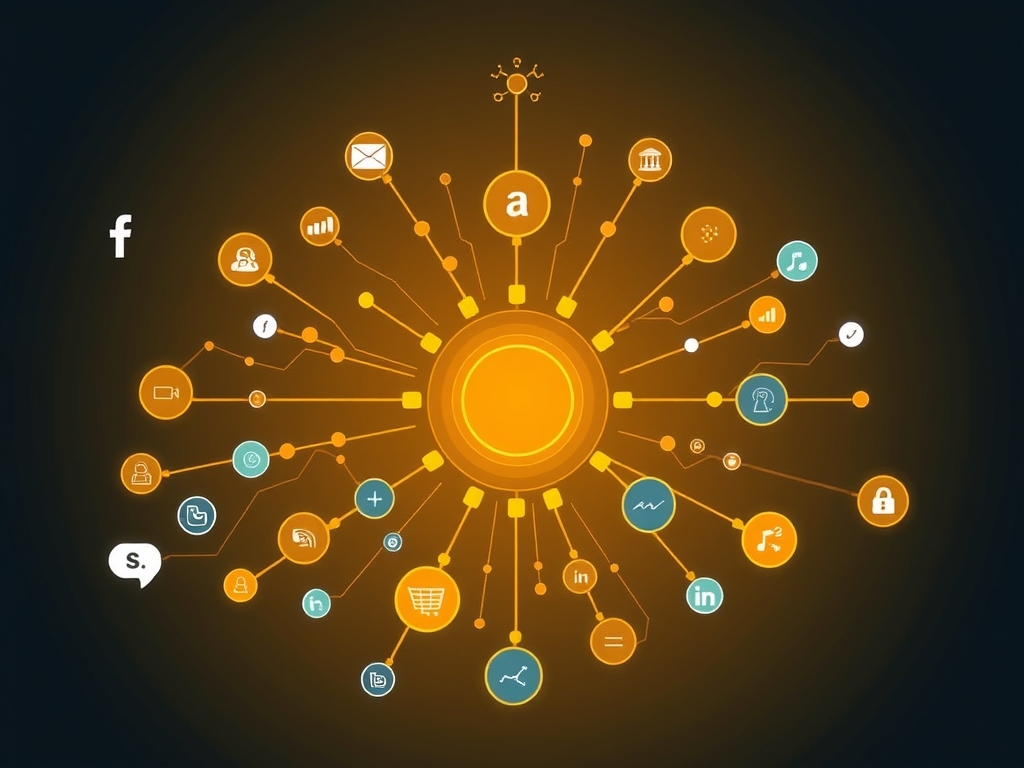
Did you know that 79% of marketers report using a Customer Data Platform (CDP) to enhance their marketing efforts? In today's digital landscape, where customer expectations are higher than ever, organizations need the power of a Customer Data Platform (CDP) to understand, engage, and retain customers effectively. Gone are the days of fragmented customer data scattered across various systems. Now, it's about a unified view.
Foundational Context: Market & Trends
The CDP market is booming. Recent reports estimate its global value to reach $4 billion by 2026. This rapid growth stems from the increasing need for personalized marketing experiences and the proliferation of data sources. Companies understand that failing to harness customer data efficiently is a costly mistake, leading to lost revenue and customer churn.
Comparative Trends
Here's a simplified look at key trends:
| Trend | Impact | Market Growth Rate |
|---|---|---|
| Personalized Marketing | Increased Customer Engagement & ROI | 15% YoY |
| Data Privacy Regulations | Increased Demand for Compliance-focused CDPs | 10% YoY |
| AI-Powered CDPs | Enhanced Customer Segmentation and Targeting | 20% YoY |
Core Mechanisms & Driving Factors
CDPs are not just about collecting data; they are the central nervous system of modern marketing. Key components include:
- Data Ingestion: Gathering customer data from all sources (website, CRM, social media, etc.).
- Data Unification: Cleaning, transforming, and merging disparate data points to create a single customer view.
- Segmentation: Grouping customers based on various attributes for targeted marketing campaigns.
- Activation: Using the unified data to deliver personalized experiences across all channels.
The Actionable Framework
Implementing a Customer Data Platform isn't an overnight task. It requires a strategic, step-by-step approach.
Assessment and Planning
- Define your marketing goals and identify key performance indicators (KPIs).
- Inventory existing data sources and assess their quality.
- Select a CDP that aligns with your business needs and budget.
Data Ingestion and Integration
- Connect your CDP to all relevant data sources.
- Establish data governance policies to ensure data accuracy and compliance.
Data Unification and Enrichment
- Implement data matching and deduplication rules.
- Enhance customer profiles with valuable insights.
Segmentation and Activation
- Create customer segments based on your business objectives.
- Activate segments across all marketing channels.
Ongoing Optimization
- Monitor campaign performance and make data-driven adjustments.
- Continuously improve data quality and CDP configuration.
Analytical Deep Dive
A recent study revealed that companies using CDPs experienced, on average, a 20% increase in customer lifetime value. This significant jump underscores the platform's ability to drive customer loyalty and improve overall business results.
Strategic Alternatives & Adaptations
For businesses with limited resources or technical expertise, consider the following adaptations:
Beginner Implementation
Start with a cloud-based CDP solution. These are typically easier to deploy and manage than on-premise solutions. Prioritize integrating your CRM and website data.
Intermediate Optimization
Focus on enhancing data quality and creating advanced customer segments. Experiment with AI-powered features, such as predictive modeling.
Expert Scaling
Integrate with a wider range of data sources, including offline data. Develop custom integrations and advanced analytics capabilities.
Risk Mitigation: Common Errors
Avoid these pitfalls when implementing a CDP:
- Poor Data Quality: Ensure data accuracy and consistency.
- Lack of Integration: Connect all relevant data sources.
- Ignoring Privacy Regulations: Comply with all data privacy laws.
Performance Optimization & Best Practices
To maximize the impact of your CDP:
- Automate data cleansing: Automate data quality checks to ensure clean and reliable data.
- Personalize across channels: Deliver consistent and relevant experiences across all touchpoints.
- Continuously test and optimize: Regularly A/B test campaigns and segment strategies.
Scalability & Longevity Strategy
To build a sustainable CDP strategy:
- Choose a scalable CDP: Select a platform that can handle growing data volumes and evolving business needs.
- Invest in data governance: Implement strong data governance practices to maintain data quality.
- Foster a data-driven culture: Encourage all teams to use data to inform their decisions.
Knowledge Enhancement FAQs
What's the difference between a CDP and a CRM? A CRM is primarily a sales tool, while a CDP focuses on customer data from all sources for a 360-degree view.
How does a CDP benefit small businesses? It helps small businesses personalize their marketing efforts and improve customer engagement without requiring a large marketing team.
What are the key features to look for in a CDP? Look for robust data integration, segmentation capabilities, real-time customer profiles, and a user-friendly interface.
How long does it take to implement a CDP? Implementation timelines vary depending on complexity but usually take between 3-6 months.
Conclusion
A Customer Data Platform (CDP) is no longer a luxury, but a necessity. By unifying customer data and leveraging advanced analytics, you can unlock a new level of personalization, drive customer loyalty, and achieve significant marketing ROI. Embrace this evolution and future-proof your marketing efforts.
Are you ready to transform your marketing strategy? Learn how to select the best CDP for your business today!