
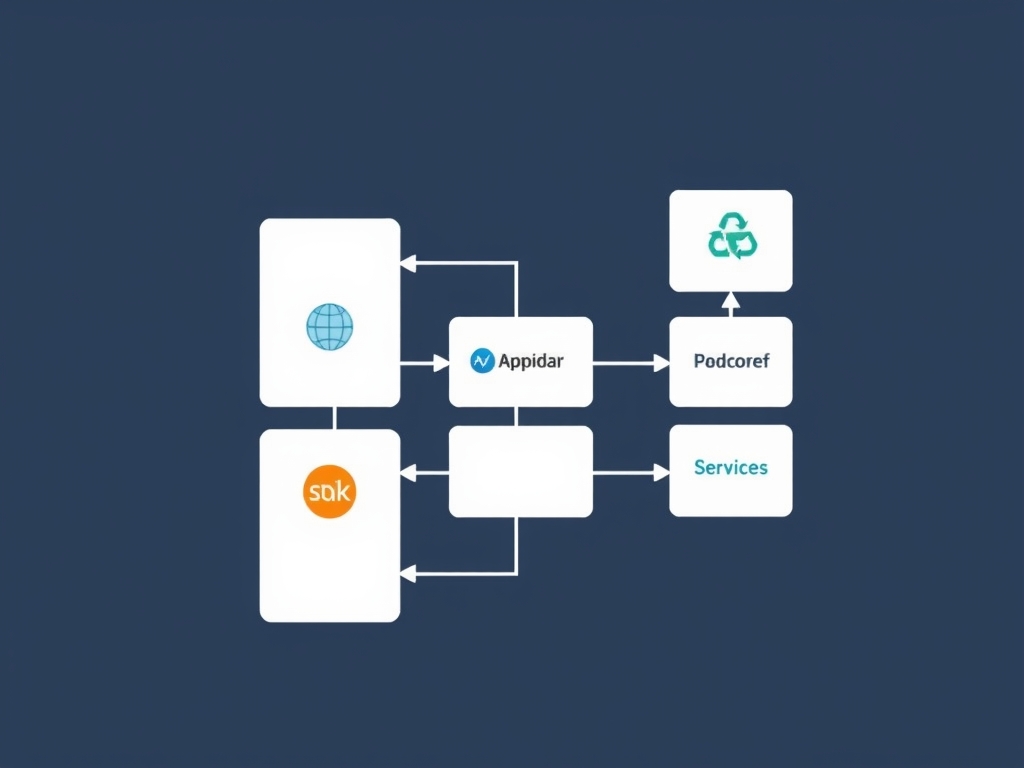
Did you know that 84% of IT leaders believe their current technology infrastructure hinders their ability to adapt to changing market demands? This stark reality underscores a critical need: the evolution of business systems from rigid monoliths to flexible, adaptable structures. This is where composable architecture comes into play, offering a path to future-proofing your business.
Foundational Context: Market & Trends
The business landscape is undergoing rapid transformation. Driven by advancements in digital technologies and shifting consumer expectations, organizations must be agile to stay ahead. The traditional monolithic approach to software development, where all components are tightly coupled, struggles to keep pace. The market is trending toward modularity and flexibility. Experts predict a significant increase in the adoption of composable architectures over the next five years, fueled by the need for speed, innovation, and cost-effectiveness.
Here’s a snapshot of the current trends:
| Trend | Impact |
|---|---|
| Microservices Adoption | Enables the development of independent, scalable services. |
| API-First Design | Facilitates the seamless integration of different applications and systems. |
| Cloud-Native Technologies | Provides the infrastructure for building and deploying composable applications. |
| Increased Emphasis on Business Agility | Drives the need for faster development cycles and the ability to adapt to changing business requirements. |
Core Mechanisms & Driving Factors
Composable architecture is built on core principles designed to facilitate agility and innovation. Understanding these mechanisms is essential for successful implementation:
- Modularity: Breaking down complex systems into independent, reusable components.
- API-Driven Connectivity: Using APIs to connect and orchestrate components, promoting interoperability.
- Headless Approach: Decoupling the front-end (presentation layer) from the back-end (data and logic), enabling greater design flexibility.
- Open Standards: Leveraging standardized technologies and protocols to ensure compatibility and portability.
- Automation: Automating key processes such as deployment, testing, and monitoring to accelerate development cycles.
These factors enable organizations to respond rapidly to changing business needs, innovate more quickly, and optimize resource allocation.
The Actionable Framework
Implementing a composable architecture isn't about a wholesale replacement; it's a strategic evolution. Here's a framework to guide your journey:
Step 1: Assess Your Current State
Begin by evaluating your existing technology landscape. Identify the monolithic applications that are bottlenecks and understand the integration challenges you face. Document your current business processes and pain points.
Step 2: Define Your Business Capabilities
Identify your critical business capabilities. What are the key functionalities that drive your business? Prioritize these based on their strategic importance and their potential impact on business agility.
Step 3: Identify Reusable Components
Determine which components can be reused, and which need to be built. Explore third-party components (SaaS applications, pre-built services) that can provide the functionality you require. Prioritize components with strong integration capabilities.
Step 4: Develop or Integrate Components
Build or integrate components to deliver the required functionalities. Design each component to be independent, scalable, and API-accessible. Ensure strong documentation and comprehensive testing.
Step 5: Orchestrate and Integrate
Use an API management platform or other integration tools to orchestrate and connect the various components. Implement a robust monitoring and management system to track performance and ensure system health.
Step 6: Iterate and Optimize
Composable architecture is not a one-time deployment; it is an ongoing process. Continuously monitor your systems, gather user feedback, and iterate to adapt to changing needs. Optimize the performance of individual components and the overall system.
Analytical Deep Dive
Research indicates that companies adopting composable architectures experience several measurable benefits. These include:
- Faster time to market: Reduced development cycles can lead to significantly quicker product releases.
- Increased business agility: Ability to respond quickly to market changes and opportunities.
- Reduced IT costs: Optimized resource utilization and reduced reliance on legacy systems.
- Improved scalability: Flexibility to scale components independently based on demand.
- Increased innovation: Enhanced ability to experiment with new technologies and business models.
Strategic Alternatives & Adaptations
The path to a composable architecture can vary depending on your organization's size, industry, and existing technology infrastructure. Consider the following adaptations:
- Beginner Implementation: Start small by composing a single business function. Focus on replacing a legacy system with an API-based component.
- Intermediate Optimization: Gradually expand the composable approach to include multiple business functions.
- Expert Scaling: Transform a large monolithic system to microservices.
Risk Mitigation: Common Errors
Navigating the transition to a composable architecture demands careful planning and execution. Beware of these common pitfalls:
- Lack of Clear Strategy: Failing to define the business objectives and goals.
- Poor API Design: Creating APIs that are difficult to use, maintain, or integrate.
- Ignoring Security: Neglecting security considerations during the design and implementation process.
- Insufficient Testing: Not adequately testing components and integrations.
- Lack of Governance: Failing to establish the necessary standards, processes, and tools.
Performance Optimization & Best Practices
To maximize the benefits of a composable architecture, consider these best practices:
- Prioritize API design. Well-designed APIs are the cornerstone of a composable architecture.
- Invest in automated testing. Ensure robust testing processes for each component and integration.
- Implement effective monitoring. Continuously monitor your systems.
- Encourage modularity from the beginning. Design components to be independent and reusable.
- Establish a strong governance model. Define clear roles and responsibilities.
Scalability & Longevity Strategy
Sustaining long-term success with a composable architecture requires strategies for both growth and stability:
- Automate key processes. Deploy automated tools for deployment, testing, and monitoring.
- Embrace continuous updates and iterations. Regularly update components and maintain tool efficacy.
- Foster a culture of experimentation. Encourage innovation and experimentation with new technologies and approaches.
- Provide a plan for business needs. Evaluate the business's current and future needs and establish a framework that will allow for growth and adaption.
Conclusion
Composable architecture is not just a trend; it's the future of business systems. By embracing modularity, flexibility, and agility, you can future-proof your business, drive innovation, and achieve sustainable growth. By embracing composability, you unlock the power to not just adapt, but to thrive in the constantly shifting technological and economic landscape.
Key Takeaways:
- Composable Architecture requires businesses to shift away from old, traditional, methodologies.
- Composable Architecture requires businesses to analyze current systems for better performance.
- Composable Architecture is an ongoing process that yields substantial results when implemented properly.
Knowledge Enhancement FAQs
Q: How does a composable architecture differ from a microservices architecture?
A: While microservices are a building block of composable architecture, the latter is broader. Composable architecture is about building an entire business system from independent, reusable, and interoperable components, which may include microservices, SaaS applications, and custom-built functionalities.
Q: Is composable architecture suitable for all businesses?
A: Yes, it is broadly applicable. Although the approach and extent of adoption might vary depending on the business context.
Q: What are the key benefits of using APIs in a composable architecture?
A: APIs are critical for communication, integration, and flexibility within a composable architecture. They enable various components to connect and exchange data easily, leading to greater agility and innovation.
Q: How can I measure the success of a composable architecture implementation?
A: Key performance indicators (KPIs) include time-to-market improvements, increased customer satisfaction, and lower IT costs.