
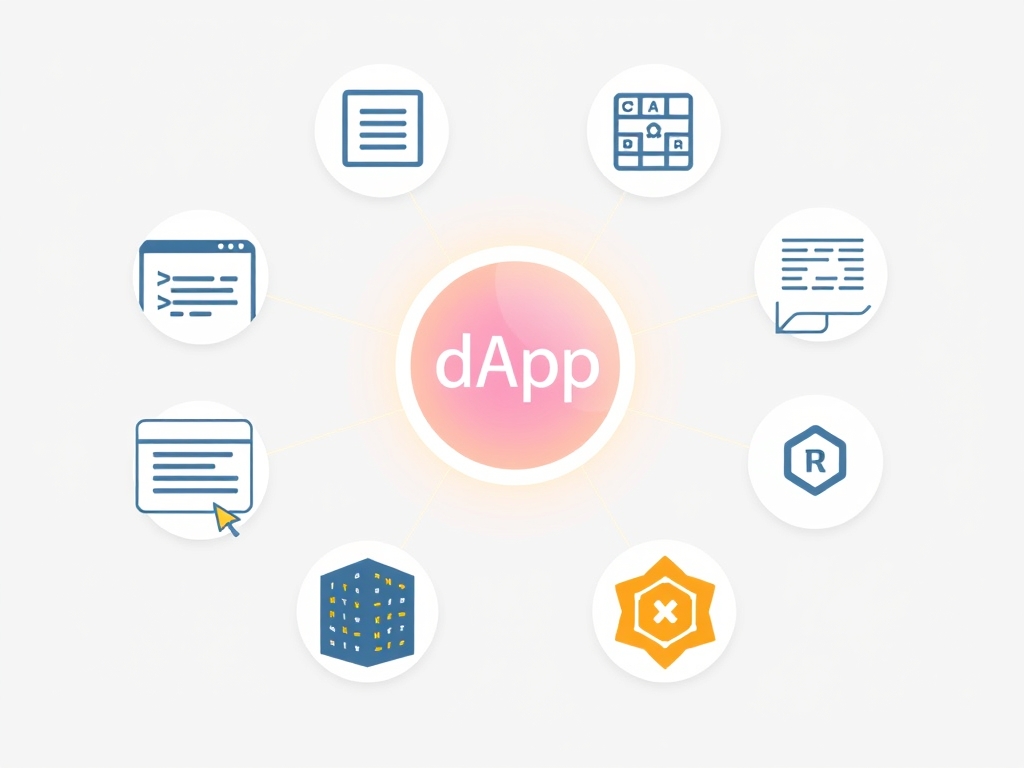
The rise of Web3 development represents a significant shift in how we interact with the internet. Rather than relying on centralized platforms, the vision of Web3 empowers users through decentralized applications (dApps). This opens up opportunities for greater control, security, and transparency. But where do you start? The market for Web3 development tools is booming, projected to reach billions in the coming years. Let’s dive into ten essential tools that are powering this revolution.
Foundational Context: Market & Trends
The Web3 space is currently experiencing explosive growth, although precise market valuations fluctuate. According to recent reports, the overall market capitalization of cryptocurrencies, the base layer for many Web3 applications, continues its upward trajectory. This growth is fueled by increasing institutional interest, retail adoption, and a growing ecosystem of dApps.
One of the most notable trends is the increasing adoption of blockchain technology beyond just cryptocurrencies. We are seeing more and more use cases for dApps across various industries, including:
- Decentralized Finance (DeFi): Lending, borrowing, and trading without intermediaries.
- Non-Fungible Tokens (NFTs): Representing ownership of unique digital assets.
- Decentralized Social Media: Platforms built on principles of user ownership and data control.
- Gaming: Play-to-earn models and in-game asset ownership.
Core Mechanisms & Driving Factors
Building a successful dApp requires a good grasp of the foundational elements. Here are the core factors driving Web3 development:
- Blockchain Technology: The distributed, immutable ledger that underpins dApps. Consider what blockchain features you need: Smart contract support? High Transaction throughput? Proof-of-Stake or Proof-of-Work?
- Smart Contracts: Self-executing agreements that automate processes on the blockchain. Written in languages like Solidity or Vyper.
- Decentralized Storage: Platforms such as IPFS (InterPlanetary File System) or Filecoin for storing data off-chain, enabling faster access and reduced costs.
- Front-end Development: Creating the user interface (UI) to interact with the dApp.
- Security Audits: Ensuring the smart contracts and applications are secure and protected against vulnerabilities.
The Actionable Framework
Let’s get our hands dirty. The following tools will help you build your dApps:
1. Hardhat
Hardhat is a development environment for Ethereum developers. It allows you to compile, test, and deploy smart contracts. It's an excellent choice for local development, debugging, and providing a streamlined workflow.
2. Remix IDE
Remix IDE is a browser-based IDE (Integrated Development Environment) for writing, compiling, debugging, and deploying Solidity smart contracts. It's a great starting point for beginners as it requires no setup. It's also suitable for quickly prototyping your ideas.
3. Truffle Suite
Truffle is a development environment and testing framework for building Ethereum dApps. It provides tools for project management, smart contract compilation, deployment, and testing, simplifying many of the common tasks developers face.
4. Ganache
Ganache is a personal blockchain for Ethereum development. It allows you to run your dApps in a local, isolated environment, simplifying testing without the need for real-world deployments on the public network, giving you a safe area to test.
5. OpenZeppelin
OpenZeppelin provides a library of secure, audited, and reusable smart contracts. They are an essential resource for securing your dApp. You will be able to implement critical functionalities such as ERC-20 tokens and access control.
6. Web3.js and Ethers.js
Both Web3.js and Ethers.js are JavaScript libraries that allow you to interact with the Ethereum blockchain from your dApp's front end. They handle the complex communication protocols and make it easier to read blockchain data. Ethers.js is known for being lighter weight and is often preferred.
7. IPFS (InterPlanetary File System)
IPFS is a decentralized storage network. Using IPFS allows you to store your dApp's assets (images, videos, etc.) off-chain, reducing storage costs and increasing availability.
8. The Graph
The Graph is a decentralized protocol for indexing and querying data from blockchains. It allows you to build efficient APIs for your dApp's front end.
9. Metamask
Metamask is a cryptocurrency wallet and browser extension that allows users to interact with dApps. Metamask simplifies connecting to Web3 applications and managing users' crypto assets.
10. Chainlink
Chainlink provides decentralized oracles that feed real-world data to smart contracts. This is essential for building dApps that interact with external data sources such as financial markets or weather conditions.
Analytical Deep Dive
The growth of dApps is significant, but a direct comparison of market size can be complicated by differing data interpretations. According to a 2023 report, the number of active users for decentralized applications continues to grow, with more than 1 million active wallets interacting with dApps daily. DeFi applications account for the highest share of the total number of transactions. Furthermore, the number of smart contracts deployed on the Ethereum blockchain continues to increase significantly. The market is becoming more mature, and the number of tools available to developers keeps growing, making it easier to build and deploy dApps.
Strategic Alternatives & Adaptations
The choices listed above provide a good starting point for building dApps, but the perfect combination depends on your project's needs. Here is a tiered approach:
- Beginner Implementation: Start with Remix IDE for its ease of use and immediate feedback.
- Intermediate Optimization: Graduate to Hardhat or Truffle for more complex projects. Integrate Web3.js or Ethers.js for front-end integration.
- Expert Scaling: Employ Chainlink to integrate external data, The Graph for efficient data retrieval, and OpenZeppelin for security.
Validated Case Studies & Real-World Application
Consider a DeFi lending platform. A team might use Hardhat to develop and test their smart contracts, OpenZeppelin for secure contract components, and Chainlink to obtain pricing data. This combination streamlines the development process, ensures the security of user funds, and provides real-time pricing data for accurate lending and borrowing rates. Another scenario is an NFT marketplace. They can use IPFS to store NFT images, Web3.js to enable user interaction, and Metamask for secure wallet integration.
Risk Mitigation: Common Errors
Navigating the Web3 landscape requires caution. Here are a few mistakes to avoid.
- Ignoring Security: Security breaches can be devastating. Audit your smart contracts, use established libraries (like OpenZeppelin), and prioritize security throughout the development lifecycle.
- Poor UI/UX: A complicated user interface can deter users. Design intuitive and user-friendly interfaces, especially important for the less tech-savvy users.
- Inefficient Data Management: The Graph is essential; however, sometimes direct on-chain querying is best. Understand your data requirements and pick the right indexers.
- Insufficient Testing: Thoroughly test your smart contracts before deployment.
Performance Optimization & Best Practices
To make the most of your Web3 project:
- Optimize Smart Contracts: Carefully optimize your Solidity code to minimize gas fees.
- Monitor Gas Costs: Track gas prices when deploying and executing transactions.
- Use Caching: Cache data to reduce the load on the blockchain.
- Adopt Modular Design: Break down your dApp into smaller components for easier management and updates.
Scalability & Longevity Strategy
For sustained success:
- Develop a strong community around your dApp and involve your users in development decisions.
- Prioritize security.
- Embrace innovation by staying on top of the latest developments.
- Continuously improve performance.
- Automate key processes, such as deployments, and the handling of transactions.
Conclusion
Building on Web3 can be complex, but with the right tools, you can successfully build your dApp. By using the platforms mentioned above, following security best practices, and embracing continuous learning, you can build applications that meet the demands of this emerging space. Now is the best time to be building in the Web3 space.
Frequently Asked Questions (FAQ)
1. What is the main difference between Web3 and Web2?
Web2 relies on centralized platforms, giving companies control over user data. Web3, on the other hand, is built on decentralization, empowering users with greater control over their data, and providing greater transparency.
2. Is building a dApp difficult?
Building a dApp can be complex, but with the right tools and guidance, it can be managed. The complexity depends on the scope of the project.
3. What are the main benefits of using dApps?
The main benefits of dApps include transparency, security, user control, and the potential for new business models and ownership structures.
4. Where can I find more resources on Web3 development?
There are numerous resources available for Web3 developers, including online courses, developer communities, documentation, and the websites of the tools listed above.
5. What is gas?
Gas is the unit used to measure the computational effort required to execute operations on the Ethereum network. Users pay gas fees to incentivize miners to process their transactions.
6. Do I need to know blockchain to build a dApp?
Although a thorough understanding of blockchain is beneficial, you can leverage tools and frameworks to simplify the development process, allowing you to focus on building the front end and smart contract logic.