
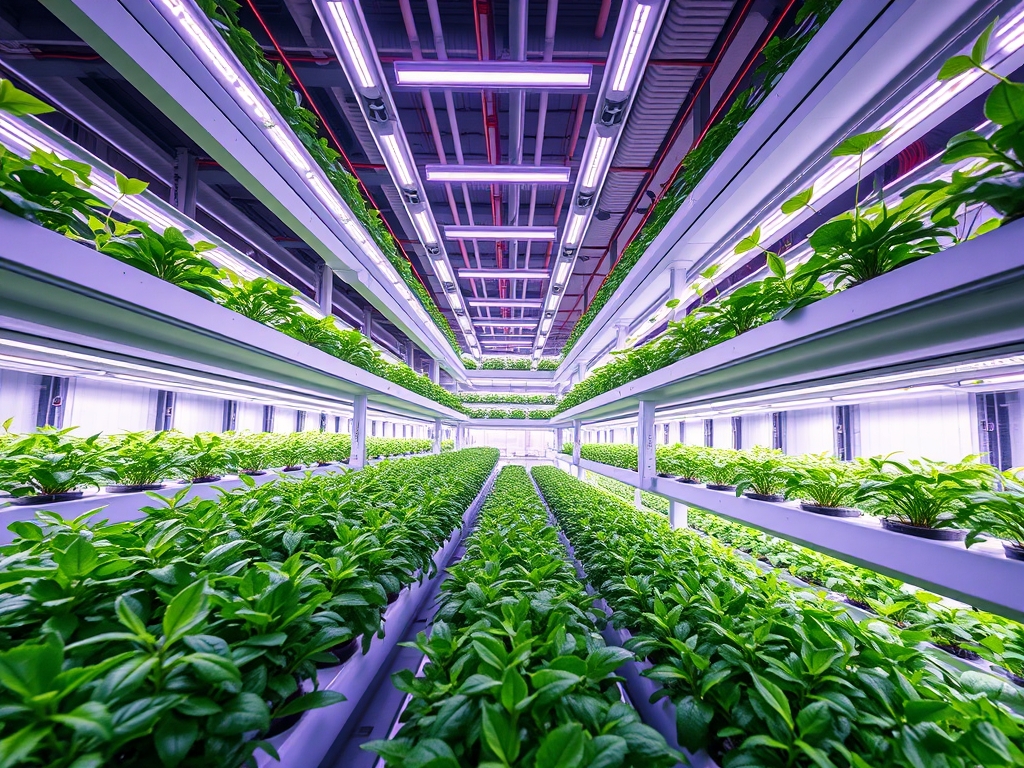
Imagine a future where sprawling farmlands give way to skyscrapers teeming with life-sustaining crops. The demand for sustainable food production is rapidly accelerating, especially in urban environments. But what if we could maximize yield using significantly less space, water, and resources? That's the core promise of Vertical Farming, the revolutionary practice of growing crops in vertically stacked layers, often within controlled environments like buildings or repurposed spaces.
According to a recent report by MarketsandMarkets, the global vertical farming market is projected to reach $12.7 billion by 2028. This rapid growth isn’t just a trend; it's a critical adaptation to the challenges of climate change, resource scarcity, and global population growth.
Foundational Context: Market & Trends
The urban agriculture market is booming. Consider these key trends:
- Growing Demand: Increased awareness of the environmental benefits and nutritional advantages of locally sourced food is driving consumer demand.
- Technological Advancements: Innovation in LED lighting, hydroponics, and automation is boosting efficiency and scalability.
- Government Support: Many governments are offering incentives and grants to promote sustainable urban farming initiatives.
- Investment Surge: Venture capital and private equity are increasingly pouring into vertical farming startups.
The short-term projection indicates a compound annual growth rate (CAGR) exceeding 20% in the next five years, signifying massive opportunities for early adopters and strategic investors.
Core Mechanisms & Driving Factors
The success of vertical farming hinges on a few crucial factors. Let's break down the essential elements:
- Controlled Environment: Precise control of light, temperature, humidity, and nutrient delivery is essential.
- Hydroponics or Aeroponics: These soilless growing methods maximize efficiency and minimize water use.
- LED Lighting: Energy-efficient LED lights provide optimal light spectra for plant growth.
- Automation: Robotic systems and automated processes streamline operations, reduce labor costs, and increase productivity.
The Actionable Framework: Key Innovations
Let's dive into some of the most exciting innovations driving the vertical farming revolution:
Advanced LED Lighting
- Actionable Insight: Optimize LED light spectrums for different crop types to enhance growth rates. Consider investing in programmable LED systems.
- Expert Insight: "The ability to precisely control the light spectrum allows us to tailor the light to the specific needs of each plant, dramatically boosting yields," - Dr. Anya Sharma, Agricultural Scientist
Robotics and Automation
- Actionable Insight: Implement robotic systems for seeding, harvesting, and crop monitoring.
- Beginner Implementation: Start with a small-scale system to gain experience before investing in fully automated solutions.
AI-Powered Crop Management
- Actionable Insight: Utilize AI-powered platforms to monitor plant health, optimize environmental conditions, and predict yields.
- Intermediate Optimization: Integrate data analytics to identify areas for improvement.
Data Tables/Comparison Charts
| Feature | Traditional Farming | Vertical Farming |
|---|---|---|
| Land Use | High | Low |
| Water Consumption | High | Low |
| Pest Control | Chemicals | Minimal |
| Environmental Impact | High | Low |
| Yield | Variable | Consistent |
Closed-Loop Systems
- Actionable Insight: Recycle water and nutrients, minimizing waste and maximizing efficiency.
- Expert Scaling: Develop a water-recycling system to maximize resource usage and cut costs.
Innovative Growing Mediums
- Actionable Insight: Explore diverse growing mediums such as coco coir, perlite, and rockwool to optimize root health and nutrient absorption.
- Beginner Implementation: Experiment with different growing mediums to identify the best options for specific crops.
Vertical Farming: The Future of Urban Agriculture
Performance Optimization & Best Practices
To optimize your vertical farming operations, adopt these best practices:
- Optimize light wavelengths to different growing stages.
- Use sensor systems to constantly collect data for better outcomes.
- Employ integrated pest management (IPM) to minimize the need for pesticides.
Validated Case Studies & Real-World Application
Consider the success of companies in the vertical farming space like Plenty and AeroFarms. Plenty, for example, has raised over $400 million and is using AI-powered automation to boost yields. AeroFarms, another leading vertical farming enterprise, can produce up to 390 times more food per square foot annually than a traditional field farm.
Strategic Alternatives & Adaptations
- Beginner Implementation: Begin with a small-scale, home-based vertical farming system using hydroponics.
- Intermediate Optimization: Transition to a commercial-scale urban agriculture operation.
Scalability & Longevity Strategy
For long-term success, focus on:
- Securing strategic partnerships with local restaurants and grocery stores.
- Diversifying crop offerings to meet market demand.
- Continuously investing in technological upgrades and automation.
Risk Mitigation: Common Errors
Avoid these common pitfalls:
- Ignoring the importance of market research: Before investing, fully assess the market for the crops you plan to grow.
- Ignoring proper HVAC: A well-designed HVAC system is crucial in this field.
- Not integrating data-driven operations: Always be collecting and using performance data to make smart decisions.
Knowledge Enhancement FAQs
Q: What are the main benefits of vertical farming?
A: Vertical Farming conserves water, minimizes land usage, reduces transportation costs, and provides a sustainable food source in urban areas.
Q: Is vertical farming expensive?
A: While the initial investment can be high, operational costs can be lower in the long run.
Q: What kind of crops can be grown in a vertical farm?
A: Leafy greens, herbs, and certain fruits are well-suited for vertical farming, but advances are being made to increase the number of viable crops.
Q: How does vertical farming affect the environment?
A: It is significantly more eco-friendly than conventional agriculture because it reduces water usage, transportation emissions, and pesticide use.
Conclusion
Vertical farming is rapidly transforming the food industry, offering a sustainable, efficient, and resilient solution to the challenges of modern agriculture. The combination of technological advancements, growing consumer demand, and environmental awareness makes it one of the most promising areas for future growth. Implementing these innovations will help you stay ahead of the curve.
Embrace the possibilities and invest in this revolutionary urban agriculture approach today.