
The digital world runs on APIs, the connective tissue that allows applications to communicate. But as microservices architectures become increasingly popular, the attack surface for API Security expands exponentially. According to a recent report, API-related attacks increased by 68% in the last year, costing businesses an average of $6.5 million. Are your microservices protected? This article will dive deep into the best practices for robust API security.
Foundational Context: Market & Trends
The API economy is booming. Analysts predict the global API management market will reach over $5 billion by 2027. This growth, however, comes with a corresponding rise in API security threats. The shift toward microservices, with their decentralized nature and frequent updates, presents new challenges. Organizations are increasingly adopting API gateways, but the protection still requires a layered approach. We're seeing a trend toward more sophisticated and automated security measures.
Core Mechanisms & Driving Factors
Effective API security hinges on a multi-faceted approach. Here are some of the key drivers:
- Authentication: Verifying the identity of users or applications accessing your APIs.
- Authorization: Defining and enforcing what authenticated users can access.
- Encryption: Protecting data in transit and at rest using protocols like TLS/SSL.
- Rate Limiting & Throttling: Preventing denial-of-service (DoS) attacks and managing API resource usage.
- Input Validation: Ensuring that all data entering the API is properly sanitized and validated.
The Actionable Framework
Implementing robust API security isn't just about deploying tools; it's about establishing a secure development lifecycle.
Step 1: Design Secure APIs from the Start
Think security from the outset. Employ the principle of least privilege – grant access only to the resources and data absolutely necessary. Use standardized API design principles like REST, and follow security best practices like the OWASP API Security Top 10.
Step 2: Implement Strong Authentication and Authorization
Use robust authentication mechanisms, such as OAuth 2.0 or OpenID Connect, to verify user identities. Implement granular authorization to control access to specific API endpoints and resources.
Step 3: Employ API Gateways and API Management Tools
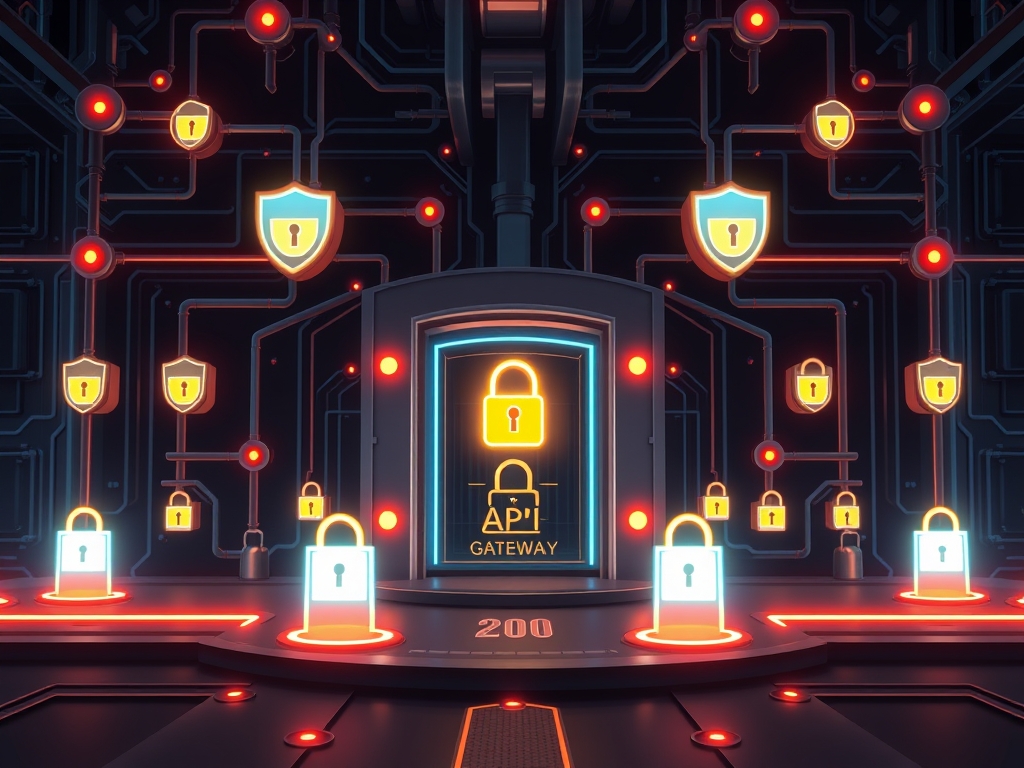
API gateways act as a front door, providing centralized security, traffic management, and monitoring. They help you to enforce policies, rate limit, and monitor API traffic.
Step 4: Validate All Input
Input validation is critical. Validate all data entering your API, whether from users or other systems. This includes data types, formats, and lengths. Protect against injection attacks, such as SQL injection.
Step 5: Encrypt Data in Transit and at Rest
Use TLS/SSL to encrypt all communication between clients and APIs. This protects data from eavesdropping. Also, encrypt sensitive data stored within your APIs, for example using encryption at rest.
Step 6: Monitor API Traffic and Logs
Implement robust logging and monitoring to detect suspicious activity. Use security information and event management (SIEM) tools to analyze logs and identify potential threats.
Step 7: Conduct Regular Security Audits and Penetration Testing
Regular security audits and penetration testing help identify vulnerabilities in your API security. Automate testing where possible and address vulnerabilities quickly.
Analytical Deep Dive
A 2023 study found that 76% of organizations have experienced an API security incident in the past year. Furthermore, the average cost to remediate an API security breach is $500,000. These figures underscore the importance of proactive security measures. The rapid adoption of DevSecOps practices is also gaining traction, enabling more seamless integration of security into the development lifecycle.
Strategic Alternatives & Adaptations
For Beginner Implementation, start by focusing on authentication, authorization, and basic input validation. Use an API gateway with built-in security features.
For Intermediate Optimization, automate security testing and implement more advanced logging and monitoring. Consider implementing threat intelligence feeds to proactively address new threats.
For Expert Scaling, automate vulnerability management, embrace a zero-trust security model, and integrate your API security into your overall security posture.
Risk Mitigation: Common Errors
Failing to properly validate input, leaving default credentials unchanged, and neglecting to update API dependencies are common mistakes that create vulnerabilities. Another often-overlooked area is lacking proper documentation, which results in more security vulnerabilities.
Performance Optimization & Best Practices
To maximize your API security efforts, consider these practices:
- Keep Software Updated: Regularly update all libraries, frameworks, and API gateway software to patch vulnerabilities.
- Automate Security Processes: Automate testing, deployment, and monitoring to reduce human error.
- Educate Developers: Train developers on secure coding practices and API security best practices.
- Implement Rate Limiting: Prevent DoS attacks and ensure API resources are used responsibly.
- Use API Versioning: Implement API versioning to allow for graceful updates and minimize disruptions.
Concluding Synthesis
Implementing these API Security Best Practices is not just a technical necessity; it's a critical aspect of building a trusted and reliable digital presence. By following the outlined framework and employing the latest security tools, organizations can effectively protect their microservices and their data.
Key Takeaway: API security is a continuous process that requires vigilance, automation, and a proactive security mindset.
Frequently Asked Questions
Q1: What are the biggest threats to API security?
A1: The most prevalent threats are injection attacks, authentication and authorization failures, and data breaches resulting from insecure design or implementation.
Q2: What is the OWASP API Security Top 10?
A2: The OWASP API Security Top 10 is a list of the most critical API security risks, providing a framework to identify and address common vulnerabilities.
Q3: Is API security only about technical implementations?
A3: No, it also involves people, processes, and policies. You need to develop a security-conscious culture, including security training, and strong security policies.
Q4: What role do API gateways play in API security?
A4: API gateways are essential for enforcing security policies, managing traffic, and monitoring API usage. They act as the first line of defense against attacks.
Q5: What are some examples of API security best practices to avoid?
A5: Examples include not enforcing strict authentication methods, failing to regularly test and audit your APIs, and neglecting to properly document API endpoints and their security implications.
Q6: What are the differences between API security and general network security?
A6: While API security leverages some of the concepts of network security, its scope is more focused on securing the interactions and data flows specific to APIs. API security targets vulnerabilities unique to APIs, such as injection attacks or broken authentication mechanisms.