
Did you know that B2B companies with optimized lead generation funnels see a 40% higher conversion rate than those who don't prioritize this aspect of their business? That's a staggering difference, and a clear indication of how vital it is to have a robust lead generation funnel in place. This guide is designed to help you not only understand the fundamentals but also master the techniques to optimize the entire journey and significantly improve your B2B lead generation results.
Foundational Context: Market & Trends
The B2B landscape is constantly evolving, with the rise of digital marketing transforming how businesses attract and convert leads. Current trends indicate a shift towards more personalized and data-driven approaches. Automation tools and AI-powered lead scoring are becoming increasingly prevalent, enabling businesses to prioritize high-potential leads.
Consider these projections:
- Market Growth: The B2B marketing automation market is predicted to reach $25.1 billion by 2028, reflecting a significant CAGR.
- Content Marketing Dominance: Content marketing continues to be a crucial element, with approximately 84% of B2B marketers using it.
- Emphasis on Personalization: Nearly 70% of businesses are investing in personalization strategies to improve lead engagement.
This data underscores the importance of a dynamic lead generation strategy.
Core Mechanisms & Driving Factors
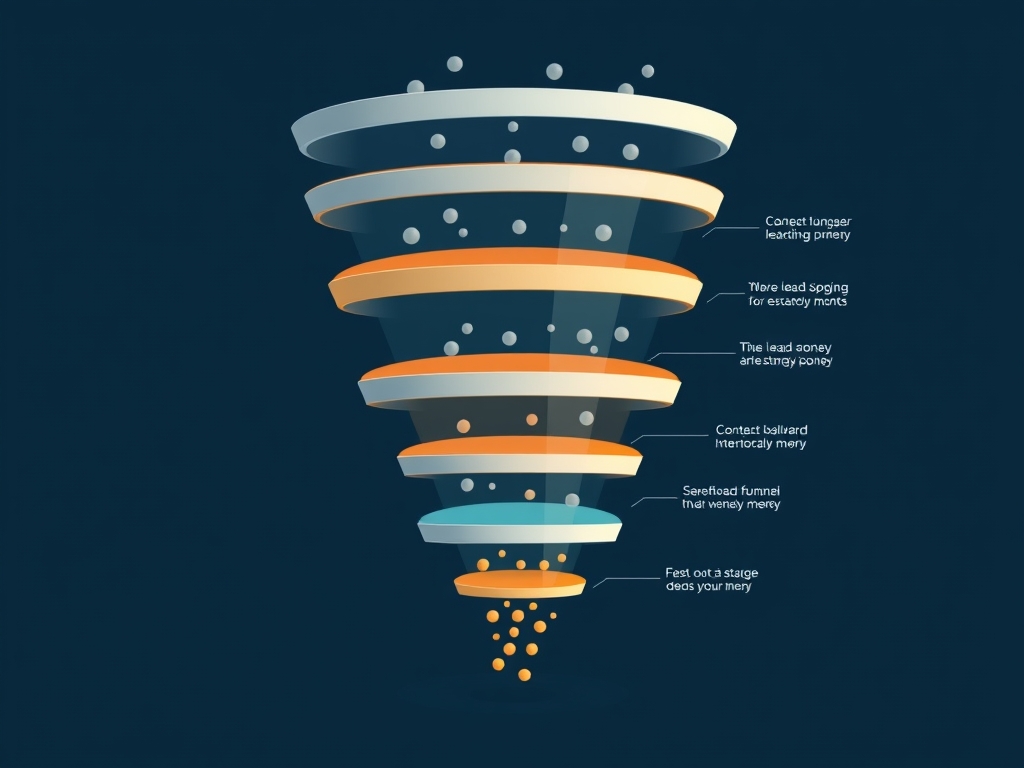
Understanding the core mechanisms of a lead generation funnel is paramount to its optimization. The driving factors behind a successful funnel encompass several crucial components:
- Awareness: This is the initial stage, where potential customers become aware of your brand.
- Interest: At this point, the lead shows interest in your offerings, often by downloading content or visiting your website.
- Decision: The decision stage sees leads evaluating your solution compared to competitors.
- Action: This is where the lead converts, becoming a customer.
- Retention: Ensuring customer satisfaction and encouraging repeat business.
The Actionable Framework
Optimizing your lead generation funnel involves a series of strategic steps. Here’s a detailed framework to enhance your performance:
Step 1: Define Your Target Audience
The foundation of any successful lead generation strategy is a thorough understanding of your ideal customer. Create detailed buyer personas:
- Demographics: Include age, job title, industry, and company size.
- Pain Points: Identify the challenges your target audience faces.
- Goals: Understand what your customers want to achieve.
- Behavioral Data: Analyze their online habits and preferences.
Step 2: Content Strategy Development
Create high-quality, valuable content tailored to your target audience. Consider formats like:
- Blog Posts: Informative content that addresses customer pain points.
- Ebooks/Whitepapers: In-depth resources that position you as an industry expert.
- Webinars: Interactive sessions to engage with leads directly.
- Case Studies: Showcase your success through real-world examples.
Step 3: Landing Page Optimization
Landing pages are crucial conversion points. Optimize these with:
- Compelling Headlines: Capture attention immediately.
- Clear Value Proposition: Communicate the benefits of your offering.
- Strong Call-to-Actions (CTAs): Encourage immediate action, such as "Download Now" or "Get a Demo."
- Mobile Responsiveness: Ensure your pages look and function well on all devices.
Step 4: Implement Lead Scoring
Use lead scoring to prioritize the leads with the highest potential for conversion. Consider these parameters:
- Demographic data: Job title, industry, company size.
- Behavioral data: Website visits, content downloads, email opens/clicks.
- Engagement data: Interactions with sales reps, webinar attendance.
Step 5: Nurturing Your Leads
Lead nurturing involves providing tailored content and communication to move leads through the funnel:
- Automated Email Sequences: Send a series of emails with valuable information.
- Segmentation: Group leads based on their behaviors and interests.
- Personalization: Tailor your messages to each lead's specific needs.
Analytical Deep Dive
Performance benchmarks vary widely based on industry, but key metrics include:
- Conversion Rates: The percentage of leads who convert into customers. The industry average is between 2-5%
- Cost Per Lead (CPL): The cost of acquiring a single lead.
- Customer Lifetime Value (CLTV): The projected revenue a customer will generate throughout their relationship with your company.
- Click-Through Rate (CTR): The rate at which people click on your ads or content.
- Bounce Rate: Percentage of visitors who land on a page and leave without interacting.
Strategic Alternatives & Adaptations
For Beginners: Focus on building a basic landing page with a clear value proposition and a single CTA. Start with simple lead magnets, such as a downloadable checklist.
For Intermediates: Experiment with A/B testing different landing page variations and email subject lines. Implement lead scoring to prioritize your sales efforts.
For Experts: Integrate advanced marketing automation tools to create personalized customer experiences. Explore advanced strategies like account-based marketing (ABM) to target specific high-value accounts.
Validated Case Studies & Real-World Application
Company X, a SaaS provider, implemented an optimized lead generation funnel. They focused on delivering highly targeted content and optimized their landing pages, leading to a 30% increase in qualified leads within six months. This proves that methodical optimization yields real results.
Risk Mitigation: Common Errors
Avoid these common mistakes to prevent your funnel from underperforming:
- Ignoring Analytics: Track everything, measure results, and make data-driven decisions.
- Poor Landing Page Design: Ensure your pages are visually appealing, easy to navigate, and mobile-responsive.
- Lack of Lead Nurturing: Failing to nurture leads is one of the biggest reasons for drop-off.
- Ignoring the Sales Team's Feedback: Your sales team can provide valuable insights into lead quality and pain points.
Performance Optimization & Best Practices
To elevate your lead generation efforts:
- Regularly A/B Test: Continuously test different elements, from headlines and CTAs to email subject lines and landing page design.
- Improve Website Speed: Slow-loading websites can negatively impact your conversion rates.
- Focus on SEO: Optimize your content for relevant keywords to attract organic traffic.
- Monitor and refine: Use a CRM to collect all the data and monitor the success or failure of strategies
Scalability & Longevity Strategy
For sustained success, focus on:
- Automating Processes: Automate tasks like email marketing and lead scoring to save time and resources.
- Building a Strong Brand: Develop a consistent brand message and voice to establish authority and trust.
- Staying Updated: Keep abreast of the latest marketing trends and adapt your strategies accordingly.
Conclusion
Mastering the art of lead generation is essential for long-term business growth. By following the framework, optimizing your funnels, and continuously refining your strategies, you can drive significant results. Take advantage of our expert advice to implement the techniques detailed above to boost your business prospects.
Knowledge Enhancement FAQs
Q: How do I measure the success of my lead generation funnel?
A: By tracking key metrics, like conversion rates, cost per lead (CPL), and customer lifetime value (CLTV). Regular analysis of these metrics helps identify areas for improvement.
Q: What are the best tools for lead generation?
A: Tools like HubSpot, Marketo, and Pardot are top-tier marketing automation platforms. Additionally, CRMs like Salesforce, lead scoring tools, and analytics platforms like Google Analytics are indispensable.
Q: How long does it take to see results from lead generation efforts?
A: Results vary, but it usually takes three to six months to see a noticeable impact. Consistency and data-driven adjustments are key to accelerating results.
Q: What is the most important element of a lead generation funnel?
A: Though each stage is vital, having a solid, value-driven offer and clear call-to-action is key.
Q: How do you stay compliant with privacy regulations (GDPR, CCPA)?
A: Implement data collection and processing policies that align with regulations. Always include easy options for opting-out.
Q: Is social media lead generation still viable?
A: Yes, it is! Social media can provide a rich source of potential new clients and lead generation. This channel is best when it's integrated with your wider marketing funnel.
**Get started today! Consider further reading the complete guide of AI-driven lead generation. Or, why not, schedule a free consultation to review your current funnel and uncover how to drive more qualified leads right away.