
Did you know that organizations using Learning Record Stores (LRS) to track their training data see, on average, a 15% increase in employee skill proficiency within the first year? This statistic underscores the fundamental shift occurring in the world of corporate training: a movement towards granular data analysis and personalized learning paths. In this article, we'll delve into the power of Learning Record Stores (LRS) and how they are revolutionizing the way we understand and leverage learning data.
Foundational Context: Market & Trends
The market for Learning Management Systems (LMS) and related technologies is experiencing substantial growth. This growth is fueled by increasing demand for digital skills, the need for continuous professional development, and the accessibility of online learning platforms. One key trend is the move away from generalized training to personalized learning experiences, a trend perfectly enabled by LRS. The need for measurable impact from learning initiatives is driving the adoption of tools that can precisely track and analyze learning outcomes. The market is projected to reach $45 billion by 2026, demonstrating its importance.
Core Mechanisms & Driving Factors
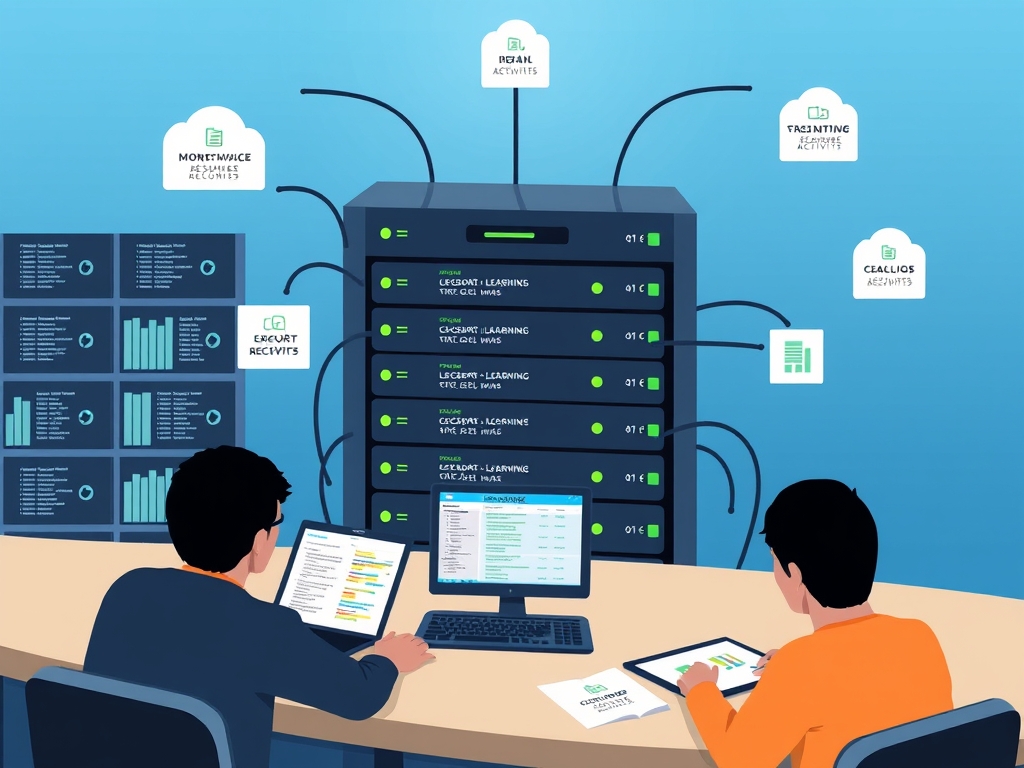
Understanding how LRS function is critical for any organization. These systems capture detailed data, known as Experience API (xAPI) statements, about learning activities. Here’s a breakdown of the core components:
- Statements: The basic unit of data, describing actions a learner takes (e.g., “John completed a module on cybersecurity”).
- Actors: The individuals performing the action (e.g., “John”).
- Verbs: The actions themselves (e.g., “completed,” “passed,” “attempted”).
- Objects: The content or resources involved (e.g., “cybersecurity module”).
Data tables/Comparison charts:
| Feature | LRS | LMS |
|---|---|---|
| Data Granularity | Highly detailed, xAPI statements | Limited, mostly course completions |
| Data Scope | Can track any learning activity | Primarily tracks course-based learning |
| Integration | Highly adaptable, integrates widely | Limited, may require custom plugins |
| Analysis Focus | Learner behavior, impact of learning | Course completion, assessment scores |
The Actionable Framework
Implementing an LRS effectively requires a structured approach. Here is how it works:
Step 1: Define Learning Objectives
Identify the specific learning outcomes you want to measure. What skills or knowledge do you want your employees to gain? Establishing well-defined objectives is crucial for effective data analysis.
Step 2: Choose and Configure Your LRS
Select an LRS that fits your organization’s needs. Consider factors like data storage capacity, integration capabilities, and reporting features. Several vendors offer a range of solutions, from open-source options to enterprise-grade platforms. Configure the system correctly by implementing standards and formats.
Step 3: Integrate with Learning Tools
Ensure your learning platforms (LMS, online courses, simulations, etc.) are xAPI-enabled or can be integrated with your LRS.
Step 4: Develop an Analysis Plan
Create a plan to analyze the data. Decide what metrics you'll track (e.g., course completion rates, time spent on tasks, performance scores), and how you'll present the information (dashboards, reports).
Step 5: Iterative Refinement
Continuously review and refine your learning programs based on the data you collect. Adjust training content, modify learning paths, and address any performance gaps you discover.
Strategic Alternatives & Adaptations
For organizations new to LRS, starting with a pilot project is advisable. Implement the LRS with a single training program and then expand its usage after evaluating the results. For more advanced users, consider integrating your LRS with other business intelligence tools to generate a more comprehensive view of learner performance and its impact on business outcomes.
Risk Mitigation: Common Errors
- Insufficient Data Integration: Failing to connect all relevant learning tools to your LRS limits the completeness of your data.
- Lack of Clear Objectives: Without clearly defined learning goals, you won't be able to extract meaningful insights from the data.
- Ignoring User Privacy: Ensure compliance with data privacy regulations (like GDPR) when collecting and storing learning data.
Performance Optimization & Best Practices
Optimizing your use of an LRS requires ongoing attention. Here are a few best practices:
- Establish a Data Governance Policy: Implement clear guidelines about data collection, storage, and access to maintain data integrity and security.
- Prioritize Actionable Metrics: Focus on metrics that will directly inform decisions, such as those related to course content effectiveness and learner engagement.
- Automate Reporting: Automate your reporting process by using dashboards and scheduled reports to save time and provide insights.
Scalability & Longevity Strategy
For long-term success, focus on a scalable LRS infrastructure that can handle growing data volumes and evolving learning needs. Consider the following:
- Scalable Infrastructure: Choose an LRS that can handle increasing data volume without performance degradation.
- Integration Frameworks: Employ standards-based learning analytics and reporting to facilitate integration with additional learning tools and data sources.
- Continuous Improvement: Regularly review and update your LRS configuration to meet the changing demands of your learning programs and the evolving needs of your learners.
Concluding Synthesis
In conclusion, Learning Record Stores are transforming the landscape of corporate training. Their ability to deliver data-driven insights enables organizations to design more personalized learning experiences, improve training effectiveness, and drive better business results. By embracing LRS technology, you can create a culture of continuous learning and data-driven improvements.
Key Takeaways/Summary Boxes
- LRS are designed to capture a more comprehensive picture of learning than the simple metrics provided by LMS.
- xAPI data helps provide the context of the user’s actions and results.
- Successful LRS implementation requires a clear strategy and ongoing refinement.
Call to Action (CTA): Ready to take your training to the next level? Explore [insert link to a relevant resource/product related to LRS or data analytics].
Knowledge Enhancement FAQs
Q: What is the difference between an LMS and an LRS?
A: An LMS (Learning Management System) is primarily focused on managing course enrollment, assignments, and grades. An LRS (Learning Record Store) is designed to capture a more complete picture of learning. It provides detailed data tracking with a more granular view of individual learning experiences.
Q: Can an LRS track learning activities outside of formal courses?
A: Yes, one of the key advantages of an LRS is its ability to track almost any learning activity, whether it's completing a module, participating in a simulation, or even reading an article.
Q: What are some real-world applications of LRS data?
A: LRS data can be used to improve course effectiveness by identifying areas of difficulty, personalizing learning paths based on learner performance, and demonstrating the ROI of training programs.
Q: How do you ensure the privacy of learner data in an LRS?
A: Ensure the privacy of learner data by anonymizing it, adhering to compliance standards (like GDPR), and providing learners with control over their data and related options.