
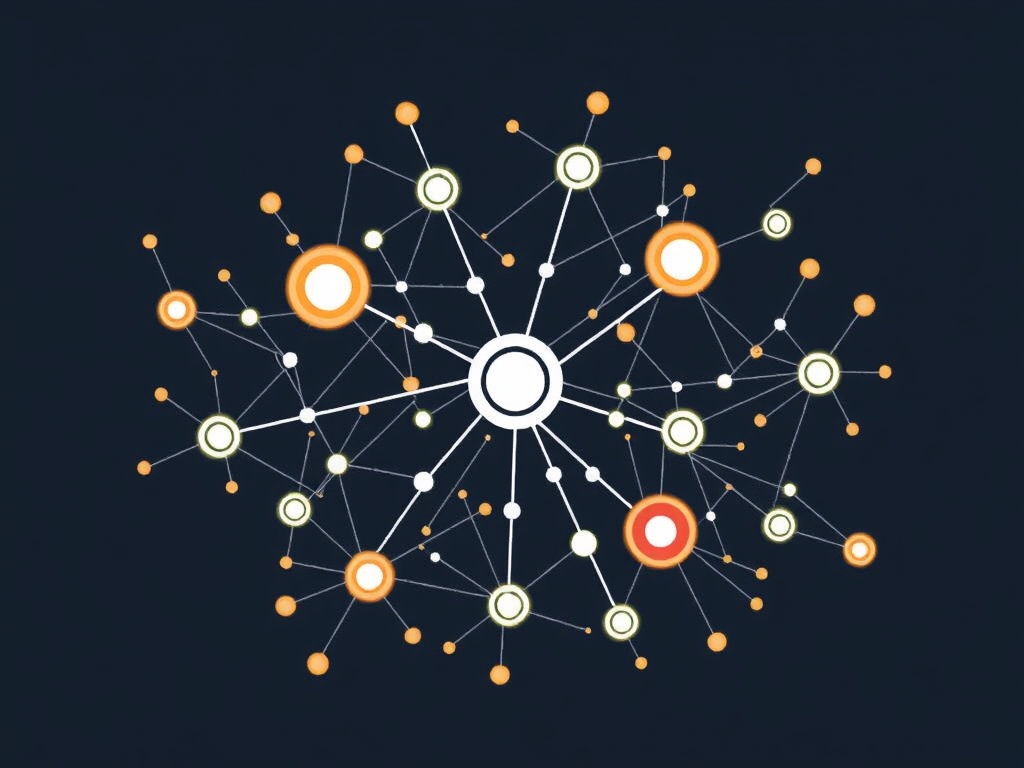
Globally, the Artificial Intelligence (AI) market is projected to reach nearly \$2 trillion by 2030. However, the centralized nature of most AI systems raises critical questions about data privacy, algorithmic bias, and the potential for misuse. The solution? Decentralized AI (DeAI). This emerging paradigm promises to reshape how we build, deploy, and utilize AI, offering greater transparency, security, and control to individuals and organizations alike.
Foundational Context: Market & Trends
The demand for AI is booming, with venture capital pouring into the sector at unprecedented rates. A significant trend is the increasing recognition of the vulnerabilities of centralized AI. The Cambridge Analytica scandal and concerns over facial recognition bias have fueled the drive for more trustworthy AI systems. Market research indicates a sharp rise in interest in technologies that ensure data privacy.
Core Mechanisms & Driving Factors
DeAI operates on several key principles.
- Decentralization: Distributing AI models and data across a network, rather than a single central server.
- Transparency: Open-sourcing algorithms and datasets to enable public scrutiny.
- Data Sovereignty: Empowering users with control over their data.
- Increased Security: Minimizing the risk of single points of failure and malicious attacks.
- Enhanced Collaboration: Allowing developers to collaborate on a model, incentivized by economic models.
The Actionable Framework: Building a DeAI Network
Building a DeAI network is a complex undertaking, but understanding the steps involved is key. Here's a framework:
Step 1: Selecting a Decentralized Platform
Choose a blockchain platform that supports Web3 machine learning. Popular options include Ocean Protocol, Fetch.ai, and SingularityNET. Consider factors like scalability, transaction costs, and community support.
Step 2: Data Acquisition and Preprocessing
Gather and prepare your data. Data privacy is a prime concern, so exploring privacy-preserving techniques like federated learning and differential privacy is crucial.
Step 3: Model Development and Training
Build your AI model using programming languages like Python with libraries like TensorFlow or PyTorch. Ensure that models are trained on decentralized datasets.
Step 4: Deployment and Governance
Deploy your model to the chosen DeAI platform. Define governance mechanisms to address updates and any emerging problems.
Analytical Deep Dive
A recent report by Deloitte highlights that companies investing in ethical AI see a 15% improvement in customer trust. Moreover, Gartner predicts that by 2025, 60% of organizations will adopt at least one privacy-enhancing computation technique.
Strategic Alternatives & Adaptations
For those beginning with DeAI, start with federated learning. This allows AI models to be trained on decentralized data without transferring the data itself. For advanced users, focus on building and contributing to open-source DeAI projects to leverage the collective capabilities.
Beginner Implementation
Utilizing readily available pre-trained models on platforms such as those mentioned can offer a gentle introduction to DeAI.
Intermediate Optimization
Explore more complex data privacy techniques.
Expert Scaling
Build your own DeAI models.
Validated Case Studies & Real-World Application
Consider a healthcare example: Patients' medical records are kept in a decentralized database that utilizes AI to diagnose diseases. Because patient data is anonymized, it ensures compliance with strict data protection guidelines.
Risk Mitigation: Common Errors
- Ignoring data governance: DeAI requires robust governance to manage data access, usage, and updates effectively.
- Neglecting scalability: Some decentralized platforms can struggle with high transaction volume.
- Overlooking the user experience: Ensuring an intuitive user interface is critical to widespread adoption.
Performance Optimization & Best Practices
To maximize the benefits of DeAI:
- Prioritize privacy: Employ robust data encryption and privacy-enhancing technologies.
- Embrace open-source principles: Collaborate with the DeAI community to improve models.
- Monitor performance: Regularly assess the performance of your AI models.
Conclusion
DeAI represents a paradigm shift. It brings forth enhanced data transparency, trust, and more user-centric AI solutions. Decentralized AI is a complex field. However, early adoption is the only way to tap into the potential that will transform many industries.
Key Takeaways
- DeAI offers solutions to the limitations of centralized AI.
- Understanding the framework is crucial.
- There are solutions for all levels of experience.
Frequently Asked Questions
Q: How does DeAI differ from traditional AI?
A: Traditional AI often relies on centralized data storage and processing, while DeAI decentralizes these components for increased transparency and security.
Q: What are the benefits of DeAI?
A: Higher data privacy, enhanced security, more control, and greater trust are key benefits.
Q: Are there any challenges associated with DeAI?
A: Yes, challenges include scalability issues, data governance complexities, and the evolving technological landscape.
Q: Where can I find out more about Web3 machine learning?
A: Explore online courses, research papers, and discussions within the DeAI community.
Q: Can DeAI be applied to any industry?
A: Yes, DeAI has the potential to transform numerous sectors, including healthcare, finance, and supply chain management.
Q: What are the primary technologies involved in DeAI?
A: It is common to see blockchain technology, federated learning, and various data privacy tools.
Ready to explore the power of DeAI? Dive deeper and discover the possibilities today. Explore our related resources for the latest AI tools and trends.