
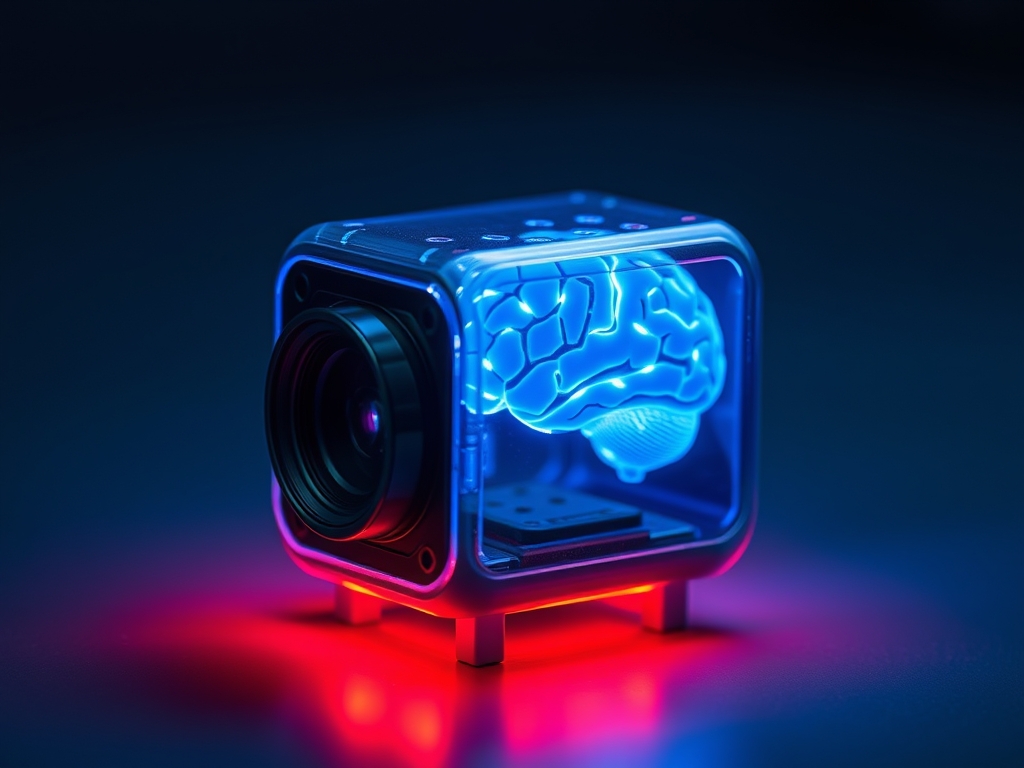
Did you know that by 2027, the global Edge AI market is projected to reach a staggering $41.8 billion? (Source: Statista). This rapid expansion highlights a critical paradigm shift: the move away from centralized cloud processing and towards powerful, local processing capabilities. This blog post delves into the transformative potential of Edge AI, exploring its mechanics, advantages, and real-world applications across various industries.
Foundational Context: Market & Trends
The relentless growth of the Internet of Things (IoT), coupled with the increasing demand for real-time data analysis, is fueling the Edge AI revolution. Traditional cloud-based AI systems suffer from latency issues and bandwidth constraints, making them unsuitable for applications requiring instant decision-making. Edge AI, conversely, brings the processing power closer to the data source (e.g., devices, sensors), enabling rapid analysis and action.
| Feature | Cloud-Based AI | Edge AI |
|---|---|---|
| Processing Location | Centralized Data Centers | Device/Sensor |
| Latency | High (due to network delays) | Low (real-time) |
| Bandwidth Usage | High | Low |
| Security | Potentially vulnerable | Enhanced, localized |
| Scalability | Potentially complex | Simplified, distributed |
Projections indicate that the growth of edge computing will continue at an accelerated rate, driven by factors like the rising adoption of 5G, the proliferation of connected devices, and the increasing need for data privacy. The shift towards real-time local processing is no longer a futuristic concept; it's a current reality.
Core Mechanisms & Driving Factors
Several key components are driving the adoption of Edge AI:
- Miniaturization of Hardware: Advances in chip design have led to more powerful and energy-efficient processors that can be embedded in devices.
- AI Algorithm Optimization: Algorithms are being specifically designed to run efficiently on edge devices, with a focus on low power consumption and optimized inference.
- Improved Connectivity: The deployment of 5G networks provides the necessary bandwidth and low latency for seamless data transfer between edge devices and the cloud, where needed.
- Data Privacy Concerns: Local processing allows sensitive data to remain on-device, mitigating privacy risks and complying with data protection regulations.
The Actionable Framework: Implementing an Edge AI Workflow
This framework provides a simplified, yet comprehensive approach to implementing an Edge AI workflow.
Step 1: Define Your Objective
Before integrating Edge AI, clarify the problem you're trying to solve. What decisions do you need to make in real-time? What data is crucial? This helps determine the type of AI model needed.
Step 2: Select Your Hardware
Choose the appropriate hardware based on your needs. Consider processing power, memory, energy consumption, and environmental factors. Popular options include microcontrollers, single-board computers, and specialized AI accelerators.
Step 3: Choose Your AI Model
Select an AI model suitable for your task. This might involve object detection, speech recognition, or anomaly detection. Pre-trained models can be a great starting point. Consider the model's size and computational requirements.
Step 4: Deploy and Test
Deploy the AI model to your chosen edge device. Thoroughly test the model in a real-world environment. Monitor performance metrics like accuracy, latency, and resource utilization.
Step 5: Iteration and Refinement
Edge AI deployment is rarely a "set-it-and-forget-it" scenario. Continuously collect data and retrain your model. Optimize the hardware and software for continuous improvement.
Analytical Deep Dive
The ability of Edge AI to analyze data locally offers several advantages. For instance, in manufacturing, edge-enabled systems can detect defects in real-time on the assembly line, thus saving time and reducing waste. A study by McKinsey & Company reveals that smart factories incorporating AI can increase overall equipment effectiveness by up to 20%. Such gains highlight the immense potential of localized processing in driving operational efficiencies.
Strategic Alternatives & Adaptations
For those beginning their Edge AI journey, consider these alternative approaches:
- Beginner Implementation: Start with a simple model. Explore pre-built AI solutions designed for edge devices.
- Intermediate Optimization: Investigate the optimization of models to work more efficiently, reducing their size while maintaining accuracy.
- Expert Scaling: For larger deployments, explore the integration of multiple edge devices and the development of centralized management systems to monitor and control AI applications.
Validated Case Studies & Real-World Application
- Smart Agriculture: Sensors with embedded AI analyze environmental data (humidity, temperature, etc.) in real-time to optimize irrigation and improve crop yields.
- Autonomous Vehicles: Edge AI enables rapid decision-making to recognize road conditions and other obstacles.
- Healthcare: Wearable devices with Edge AI can continuously monitor vital signs, detecting anomalies that may signify a health risk and alerting medical professionals.
Risk Mitigation: Common Errors
Avoid these common pitfalls:
- Overestimating Hardware Capabilities: Select hardware appropriate for your task to prevent performance bottlenecks.
- Ignoring Energy Consumption: Optimize your models and hardware choices to minimize power consumption.
- Neglecting Data Quality: Ensure the data used to train the model is clean and representative of the real-world conditions.
- Overlooking Security: Implement robust security measures to protect your Edge AI system from unauthorized access.
Performance Optimization & Best Practices
To maximize the impact of Edge AI, adopt these best practices:
- Model Optimization: Employ techniques such as pruning and quantization to reduce model size and improve performance on edge devices.
- Hardware-Specific Tuning: Tailor your AI models to the specific hardware capabilities of your target edge device.
- Continuous Monitoring: Implement real-time monitoring of key performance indicators (KPIs) to identify and address performance bottlenecks.
- Data Preprocessing: Perform data preprocessing to clean and normalize the data that you're using.
Scalability & Longevity Strategy
For long-term success, focus on these strategies:
- Modular Design: Design your Edge AI system with a modular architecture to allow for easy updates and future expansion.
- Automated Deployment: Automate the deployment process to quickly update or adapt your AI models across your edge devices.
- Regular Model Retraining: Set up a process for periodic retraining to maintain accuracy.
- Adaptation to New Hardware: Have a plan in place to integrate any newer hardware technologies as they become available.
Conclusion
The future of AI is undeniably decentralized. Edge AI empowers businesses and organizations to leverage real-time insights for enhanced operational efficiencies, improved user experiences, and substantial cost savings. By understanding the core mechanics and implementing a strategic framework, you can capitalize on the vast potential of real-time local processing and position yourself as an innovator in this rapidly evolving landscape.
Call to Action: Explore the latest tools to implement your own edge processing strategy. Learn more about the future of this space by reading related articles.
Knowledge Enhancement FAQs
Q: What are the key benefits of using Edge AI?
A: Lower latency, increased data privacy, enhanced reliability, reduced bandwidth costs, and the ability to process data in remote locations.
Q: Which industries are most likely to benefit from Edge AI?
A: Manufacturing, healthcare, retail, transportation, agriculture, and smart cities.
Q: What skills are required to develop and deploy Edge AI applications?
A: Experience in AI/machine learning, embedded systems, data analysis, and programming languages (Python, C++).
Q: Is Edge AI secure?
A: Edge AI can enhance security by processing data locally, thus minimizing the risks of data breaches.
Q: Can Edge AI completely replace cloud computing?
A: No, Edge AI is not meant to replace cloud computing but rather to complement it. Many applications will benefit from a hybrid approach.
Q: How does Edge AI impact the future of business?
A: It offers opportunities to innovate, improve decision-making, enhance real-time responses to challenges, and boost efficiency, leading to more responsive, adaptable business models.