
Did you know that companies implementing Augmented Reality (AR) solutions in manufacturing report up to a 30% reduction in training time? This is just the tip of the iceberg when considering the transformative potential of Augmented Work Instructions (AWI). Leveraging AR technology to overlay digital information onto the real world is rapidly reshaping how businesses operate, train employees, and maintain equipment. This article delves deep into the power of AWI, exploring its benefits, applications, and strategies for successful implementation.
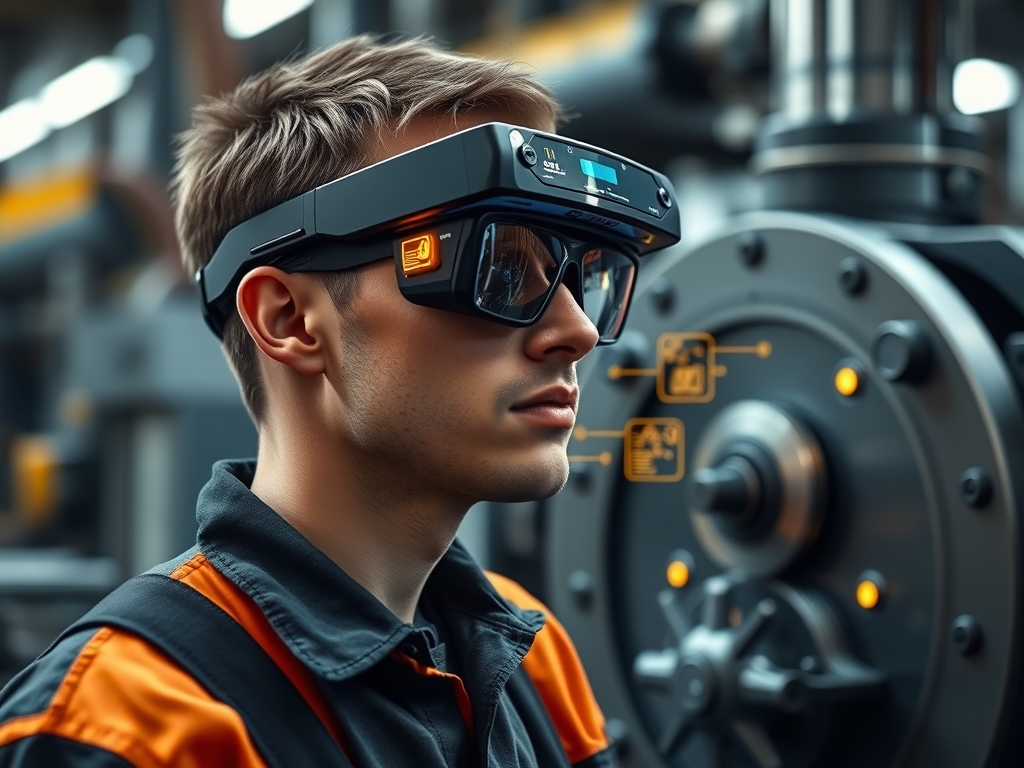
Foundational Context: Market & Trends
The market for AR in manufacturing is experiencing explosive growth. According to a recent report by MarketsandMarkets, the global AR in manufacturing market is projected to reach \$8.7 billion by 2027, growing at a CAGR of 39.5% from 2022 to 2027. This growth is fueled by several key trends:
- Increased Productivity: AR-powered AWI significantly reduce errors and improve the speed of tasks.
- Enhanced Training: Immersive AR experiences provide more effective and engaging training methods.
- Reduced Downtime: Remote assistance capabilities using AR minimize downtime by enabling faster troubleshooting.
- Improved Safety: AR can be used to highlight safety hazards and provide real-time guidance to workers.
| Trend | Projected Impact |
|---|---|
| Productivity Improvement | Up to 25% Increase in Efficiency |
| Training Time Reduction | Up to 30% Reduction in Training Time |
| Reduced Downtime | Up to 20% Reduction in Maintenance Costs |
| Enhanced Safety | Up to 15% Reduction in Workplace Accidents |
Core Mechanisms & Driving Factors
The success of AWI hinges on several core mechanisms:
- Hardware: AR headsets, tablets, or smartphones are required to visualize the augmented content.
- Software: Specialized software platforms are needed to create, manage, and deliver the AR experiences.
- Content Creation: Developing accurate, easy-to-understand work instructions and 3D models.
- Connectivity: Reliable internet connectivity or local networks.
- Integration: seamless integration with existing manufacturing processes and enterprise systems.
The driving factors behind AWI adoption include: a skilled labor shortage, the demand for greater operational agility, and the need to streamline complex processes.
The Actionable Framework
Here's a step-by-step framework for implementing AWI:
1. Identify Opportunities
Begin by assessing your manufacturing processes. Identify tasks and processes that are time-consuming, error-prone, or require extensive training. These are the prime targets for AWI implementation.
2. Choose the Right Technology
Select the appropriate AR hardware (headsets, tablets, etc.) and software platform. The choice depends on your specific needs, budget, and the complexity of your use cases. Consider factors like: field of view, resolution, battery life, and integration capabilities.
3. Create AR Content
Develop clear and concise AWI. This may include 3D models, step-by-step instructions, diagrams, and videos. Ensure the content is intuitive and easily understood by your workforce.
4. Integrate AWI into Your Workflow
Integrate the AWI system into your existing manufacturing workflow. This requires proper testing, calibration, and training.
5. Training and Deployment
Provide thorough training to your employees on how to use AWI. A well-trained workforce is essential for realizing the full benefits of AWI.
- Always test and validate AWI content before deployment.
- Gathering user feedback and iterating on the design is also critical.
Analytical Deep Dive
Several data points support the transformative power of AWI. Studies show that AWI can reduce error rates by up to 40% in certain manufacturing tasks. This reduction in errors translates directly into significant cost savings, by decreasing the waste of material and reworking.
Strategic Alternatives & Adaptations
For those new to AR, begin with beginner implementation. Start with a pilot project focused on a single, well-defined task, such as machine maintenance or equipment assembly.
- Intermediate Optimization: As your team becomes more comfortable, integrate AWI into more complex processes, and expand to multiple departments.
- Expert Scaling: Consider the integration of AWI with IoT devices to enable real-time data collection and analysis. Use this to improve quality control and process automation.
Validated Case Studies & Real-World Application
Consider a scenario where a manufacturing company used AWI to improve its quality control process. By implementing AR for inspecting complex products, the company reduced its defect rate by 35% in the first quarter, substantially boosting both product quality and client satisfaction.
Risk Mitigation: Common Errors
Avoid these common mistakes to ensure success:
- Lack of Proper Training: Insufficient training can lead to worker frustration and reduced adoption.
- Poor Content Design: Overly complex or confusing instructions will negate the benefits of AWI.
- Hardware Issues: Ignoring the need for comfortable and durable equipment.
- Integration Challenges: AWI must integrate seamlessly with existing systems. Failing to do so can create workflow disruptions.
Performance Optimization & Best Practices
To maximize results:
- Invest in High-Quality Content Creation: Use skilled designers and engineers.
- Gather Feedback: Continuously collect feedback from users to improve the AWI system.
- Prioritize User Experience: Design AWI with the user in mind.
- Ensure all steps are easily followed and intuitive.
Scalability & Longevity Strategy
Sustaining long-term success with AWI involves several key strategies:
- Regular Updates: Keep your AWI content up-to-date.
- System Maintenance: Regularly maintain AR hardware and software.
- Automation: Automate updates.
Knowledge Enhancement FAQs
Q: How does AWI differ from traditional work instructions?
A: AWI overlays digital information directly onto the user's view of the real world, providing immediate, context-aware instructions and guidance. Traditional work instructions rely on written documents, diagrams, or videos, which can be less intuitive.
Q: What are the key benefits of using AWI?
A: AWI helps by reducing training time, boosting productivity, lowering error rates, improving safety, and enabling remote assistance.
Q: What are some potential challenges of implementing AWI?
A: There may be initial costs associated with hardware, software, and content creation. It is also important to consider the need for proper training and the importance of user feedback.
Q: Can AWI be used in different industries?
A: While AWI is very powerful within manufacturing, it is also applicable in other industries such as healthcare, construction, and logistics.
Q: What type of hardware is needed for AWI?
A: AR headsets, tablets, and smartphones are all used for AWI. The choice depends on the specific use case and the needs of the workforce.
Q: How important is content design in AWI?
A: Content design is extremely important. It is important to create clear and concise instructions, as well as ensure the 3D models and diagrams are accurate.
Conclusion
Augmented Work Instructions are reshaping the manufacturing landscape. By embracing this technology, businesses can drastically boost productivity, efficiency, and worker safety.
Ready to revolutionize your manufacturing processes? Explore AR software solutions and learn more about Augmented Work Instructions. Consider investing in AR hardware. Read additional articles on the subject.