
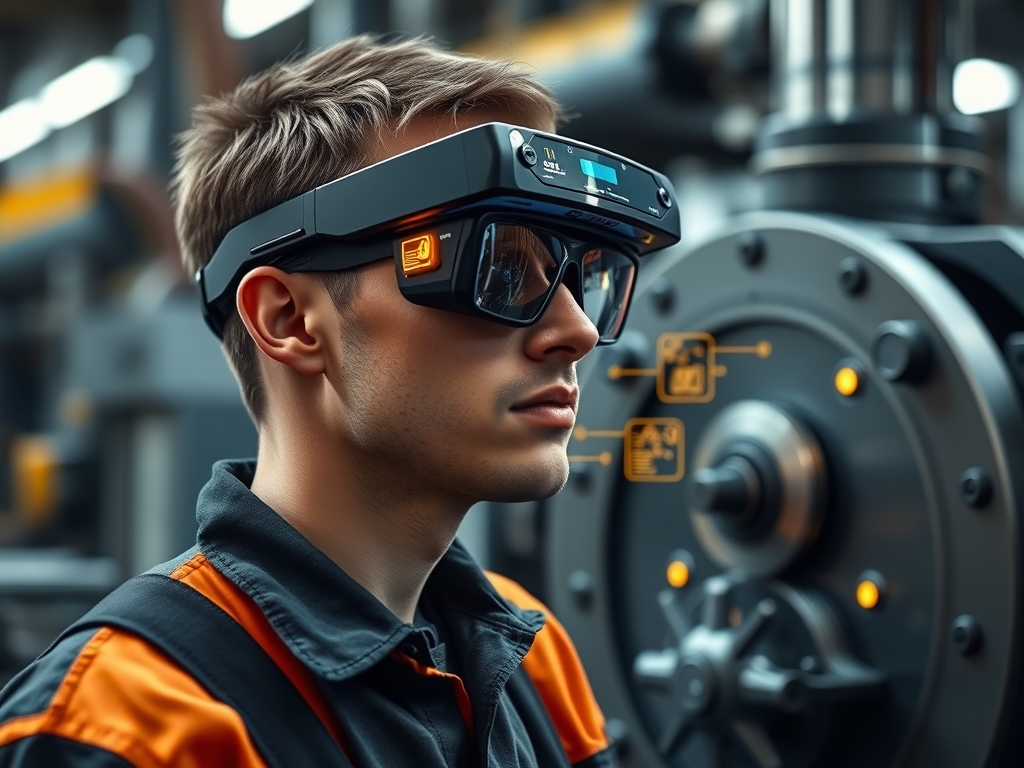
Did you know that by 2030, the global augmented reality (AR) market is projected to reach a staggering $100 billion? That's right – and at the heart of this explosive growth lies Augmented Work Instructions (AWI). But is your manufacturing process truly optimized to harness this powerful technology? This article will delve into how AWI, powered by AR, is reshaping the manufacturing and training landscape, and most importantly, how to integrate it into your current workflow.
Foundational Context: Market & Trends
The manufacturing sector is undergoing a rapid digital transformation, driven by the need for increased efficiency, reduced costs, and improved worker safety. The adoption of AR is directly responding to these needs. Market analysis clearly demonstrates a growing demand for AR solutions within manufacturing due to its ability to streamline processes and reduce human error. AR’s ability to overlay digital information onto the real world makes it perfect for complex tasks.
Key trends include:
- Increased Integration: Growing the incorporation of AR with other technologies, such as Internet of Things (IoT) devices, for seamless data exchange.
- Focus on Training: AR-powered training programs are becoming more prevalent, offering immersive, interactive learning experiences.
- Cost Efficiency: AR is being used to optimize assembly processes, reduce rework, and improve overall operational efficiency.
The short-term projection is clear: increased investment in AR solutions and a push towards standardization of implementation.
The Actionable Framework: Implementing AWI in Your Factory
Implementing AWI doesn't have to be a daunting task. Follow this practical framework to integrate AR into your manufacturing and training programs:
Step 1: Assessment and Planning
Before you begin, thoroughly assess your current processes. Identify areas where errors occur most frequently, where training is a significant bottleneck, or where efficiency could be improved. You will also need to:
- Identify Appropriate Use Cases: Focus on tasks that benefit most from AR's overlay capabilities.
- Define Objectives: What specific goals do you have for AWI implementation (e.g., reduce assembly time, improve first-pass yield)?
- Select AR Hardware: Choose the right AR devices (smart glasses, tablets, etc.) for your environment and use cases.
- Software Development: Decide whether to develop custom AR applications or use off-the-shelf solutions.
Step 2: Content Creation
Creating effective AWI content is crucial to its success.
- Develop 3D Models: Create or acquire 3D models of components, machinery, and workstations.
- Generate Interactive Instructions: Design instructions that are clear, concise, and visually intuitive. Use animations and step-by-step guidance.
- Integrate Data: Connect AWI with real-time data from sensors and other sources to provide dynamic, context-aware information.
Step 3: Pilot Implementation
Start with a pilot program in a limited area of your facility. This allows you to test the AWI system, gather feedback, and make necessary adjustments before a full-scale rollout.
Step 4: Training and Deployment
Proper training is vital. Ensure that employees understand how to use the AWI system and how to interpret the instructions. It can be a steep learning curve. The following steps should be taken:
- Provide hands-on training for all users of the AWI system.
- Roll out the system across relevant departments and roles gradually.
- Document the entire process.
Step 5: Monitoring and Improvement
Monitor the performance of your AWI system. Track key metrics such as assembly time, error rates, and training effectiveness. Use this data to continually improve the system, refine the instructions, and identify new use cases.
“The key to success with AWI is to focus on simplicity and clarity. Avoid overwhelming users with excessive information. Instead, provide precisely what they need, when they need it,” emphasizes Dr. Elena Ramirez, a leading expert in AR application within manufacturing.
Analytical Deep Dive
The benefits of integrating AWI are well-documented. Consider this: Studies show that companies using AR-powered work instructions have seen a 20-30% reduction in assembly time and a 15-25% decrease in error rates. Further, training time for complex tasks can be reduced by up to 40%.
- Increased Efficiency: Streamlined processes lead to faster completion times.
- Reduced Costs: Fewer errors and less rework translate to significant cost savings.
- Improved Quality: Accurate, step-by-step instructions ensure consistent quality.
- Enhanced Safety: AR can guide workers safely through potentially hazardous tasks.
- Knowledge Retention: Training will be increased as employees will now be taught in a way that’s easier to recall.
Risk Mitigation: Common Errors
Avoid these pitfalls to ensure a successful AWI implementation:
- Lack of Planning: Failing to define clear objectives and a well-thought-out implementation plan.
- Poor Content Design: Creating confusing or overwhelming instructions.
- Inadequate Training: Failing to provide sufficient training to employees.
- Ignoring User Feedback: Not listening to user feedback and not making adjustments based on their experience.
- Overspending: Choosing overly complex and costly AR solutions.
Scalability & Longevity Strategy
To ensure the long-term success and scalability of your AWI implementation, consider the following strategies:
- Choose a Scalable Platform: Select an AR platform that can grow with your needs.
- Establish a Robust Content Management System: Implement a CMS to easily manage and update work instructions.
- Embrace Automation: Automate the process of updating and distributing AWI content.
- Foster Innovation: Encourage continuous improvement and explore new uses for AR technology within your organization.
- Integration: Seamlessly integrate with external systems, ensuring accurate data flow.
Knowledge Enhancement FAQs
Q: What is the primary advantage of AWI over traditional work instructions?
A: AWI provides real-time, interactive, and context-aware guidance that can significantly reduce errors, improve efficiency, and enhance training effectiveness compared to static or paper-based instructions.
Q: What hardware is required for AWI implementation?
A: The hardware requirements can vary depending on your specific needs, but typically include AR-enabled devices such as smart glasses, tablets, or smartphones.
Q: How do you choose the right AWI software platform?
A: Select a platform that suits your needs. Consider ease of use, ability to scale, compatibility with your existing systems, and cost-effectiveness.
Q: How do I measure the success of an AWI implementation?
A: By monitoring key metrics such as assembly time, error rates, training time, and overall operational efficiency.
Q: How can I ensure the safety of employees using AR devices?
A: Ensure that you're using proper eyewear, safe use, and follow all safety protocols when implementing AR technology.
Conclusion
Augmented Work Instructions offer an unparalleled opportunity to transform manufacturing and training practices. By adopting AWI, your organization can increase efficiency, reduce errors, improve safety, and empower your workforce. Embrace the future by implementing AWI and reap the rewards of a more agile, productive, and competitive business.
Ready to revolutionize your manufacturing process? Explore leading AR solutions and request a consultation today to discover how AWI can propel your business to the forefront of Industry 4.0.