
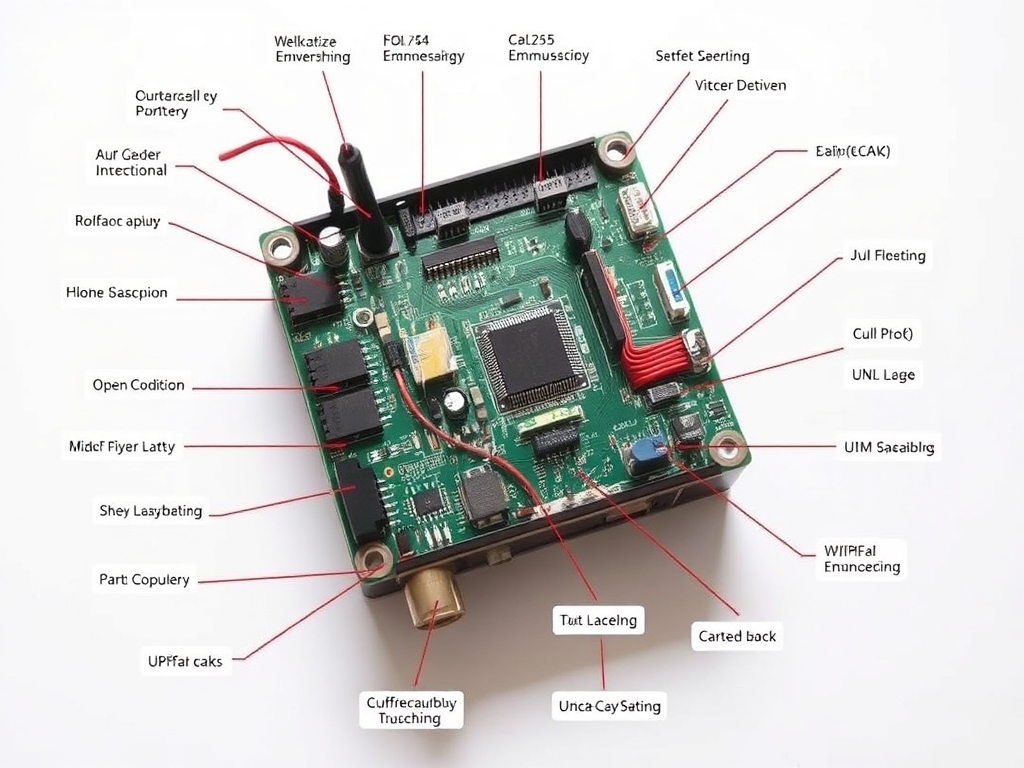
The open-source hardware (OSH) movement is not just a niche trend; it's a rapidly expanding revolution. According to recent market analysis, the global market for open-source hardware is projected to reach $5.2 billion by 2028. This represents a significant shift in how we design, build, and interact with technology. But what fuels this growth, and how can businesses and individuals capitalize on the burgeoning DIY tech economy? This article delves deep into the core mechanisms, strategies, and future implications of OSH, offering actionable insights for those looking to get involved.
Foundational Context: Market & Trends
The rise of OSH and the DIY tech economy is interwoven with several pivotal trends. Firstly, there’s a growing demand for customization and personalization. Consumers no longer want generic products; they desire solutions tailored to their needs. Secondly, the costs of manufacturing and prototyping have significantly decreased due to advancements like 3D printing and readily available electronic components. Finally, there's a heightened awareness of sustainability and the ethical implications of technology, with individuals increasingly favoring products and practices that are transparent and socially responsible.
Here's a glimpse at the anticipated market growth:
| Year | Open Source Hardware Market (USD Billions) |
|---|---|
| 2024 | 3.5 |
| 2026 | 4.4 |
| 2028 | 5.2 |
It's crucial to understand these underlying market dynamics to effectively navigate the OSH landscape.
Core Mechanisms & Driving Factors
Several key components are driving the OSH movement:
- Accessibility: Open-source platforms like Arduino and Raspberry Pi have democratized access to technology, making it easier for anyone to experiment with hardware design.
- Collaboration: OSH thrives on collaboration. Communities share designs, code, and insights, accelerating innovation and reducing development costs.
- Cost-Effectiveness: OSH often offers a more affordable alternative to proprietary solutions, particularly for prototyping and small-scale production.
- Customization: OSH allows for far greater customization than traditional hardware, enabling users to create solutions perfectly tailored to their needs.
These factors combine to create a dynamic ecosystem where innovation flourishes, and the boundaries between consumer and creator blur.
Strategic Alternatives & Adaptations
The OSH philosophy offers avenues for diverse user profiles.
- Beginner Implementation: Begin with readily available OSH kits and tutorials. Start with simple projects such as a beginner weather station, experimenting with coding and hardware components. This provides foundational experience without requiring advanced engineering skills.
- Intermediate Optimization: Explore specific hardware projects that align with your interests. Focus on integrating pre-existing open-source hardware with your workflow, developing customization as you become more familiar with project structure.
- Expert Scaling: Launch a business based on OSH. Explore niche market opportunities, and contribute to the OSH ecosystem by sharing your knowledge, designs, and innovations. The creation of a fully open-source smart home system is one such opportunity.
Analytical Deep Dive
The impact of OSH is increasingly evident in various sectors. For instance, in education, it’s revolutionizing STEM learning. Manufacturing is also witnessing a shift, with OSH platforms enabling rapid prototyping and flexible production runs. The medical field benefits from OSH, where solutions can be designed and adapted much quicker and cheaper.
Performance Optimization & Best Practices
To maximize the benefits of OSH, consider the following best practices:
- Embrace Openness: Share your designs and code openly. This fosters collaboration and contributes to the ecosystem.
- Prioritize Documentation: Document your projects thoroughly, including step-by-step instructions, schematics, and code. This makes it easier for others to replicate and build upon your work.
- Engage with Communities: Join online forums and communities related to OSH. Learn from others, seek advice, and contribute your knowledge.
- Stay Informed: Keep abreast of the latest developments in OSH, including new platforms, tools, and best practices.
Risk Mitigation: Common Errors
- Lack of Documentation: Insufficient documentation hinders collaboration and limits project usability. Always be as clear as possible.
- Ignoring Copyright: Avoid repurposing any code without attribution.
- Ignoring Security: Address vulnerabilities to prevent your project from being compromised.
- Underestimating Time: Design and construction are time-consuming.
Validated Case Studies & Real-World Application
Consider the story of a small farming cooperative in a rural area. Lacking access to advanced agricultural technology, they used open-source hardware to create their own smart irrigation system. This resulted in a 30% reduction in water usage and a 15% increase in crop yield. This is just one example of the transformative potential of OSH.
Conclusion
The open-source hardware movement offers a powerful model for innovation, sustainability, and economic opportunity. By embracing its core principles, from democratizing hardware to building communities, businesses and individuals can unlock a world of possibilities. Embrace the power of open source to drive innovation, reduce costs, and create solutions that serve your needs and benefit the world.
Knowledge Enhancement FAQs
Q: What is the main difference between open-source hardware and software?
A: Open-source hardware provides source code as well as the physical design of a hardware product, allowing users to modify, share, and build upon it, whereas open-source software provides only the code.
Q: Where can I find resources to get started with open-source hardware projects?
A: Platforms like Arduino, Raspberry Pi, and websites like Hackaday offer tutorials, project ideas, and resources to get started.
Q: What are the biggest challenges in the open-source hardware movement?
A: The main challenges include ensuring interoperability, addressing intellectual property concerns, and scaling production.
Q: How does the open-source hardware movement affect digital commerce?
A: OSH enables digital commerce by facilitating the creation of new products, reducing production costs, and fostering a community of makers and innovators.
(CTA) Take Action Today: Dive deeper into the world of OSH! Explore platforms like Arduino and Raspberry Pi. Join online communities to learn from experienced members. Consider your first OSH project today!