
Did you know that the global virtual production market is projected to reach $6.4 billion by 2027? This explosive growth is a testament to the transformative power of virtual production, rapidly reshaping the landscape of filmmaking.
Foundational Context: Market & Trends
The film industry is constantly evolving, and currently, virtual production is at the forefront of that evolution. It is not just a technological advancement but a fundamental shift in the way films are made. Traditional filmmaking often requires extensive location scouting, logistical challenges, and the limitations of physical sets. Virtual production overcomes these hurdles by integrating real-time computer-generated imagery (CGI) with live-action filming.
The market's current trends are clear:
- Increased adoption: More studios are embracing virtual production techniques, leading to a surge in demand for specialized equipment and skilled professionals.
- Cost Efficiency: While the initial investment can be significant, virtual production can reduce long-term costs by minimizing location expenses, post-production rework, and travel.
- Creative Freedom: Virtual production grants filmmakers unparalleled control over the environment. Directors can now shoot in any location, at any time, with incredible flexibility.
- Technological Advancements: Game engines like Unreal Engine and Unity have become integral to virtual production, offering real-time rendering capabilities that allow for dynamic interaction between actors and the virtual environment.
These trends highlight a positive forecast for this burgeoning technology.
Core Mechanisms & Driving Factors
Understanding the core components of virtual production is critical. Here's what makes this cinematic revolution possible:
- Real-time Rendering: The core of virtual production lies in real-time rendering, powered by game engines like Unreal Engine. These engines generate photorealistic environments that update in real time, reacting to camera movements and actor performances.
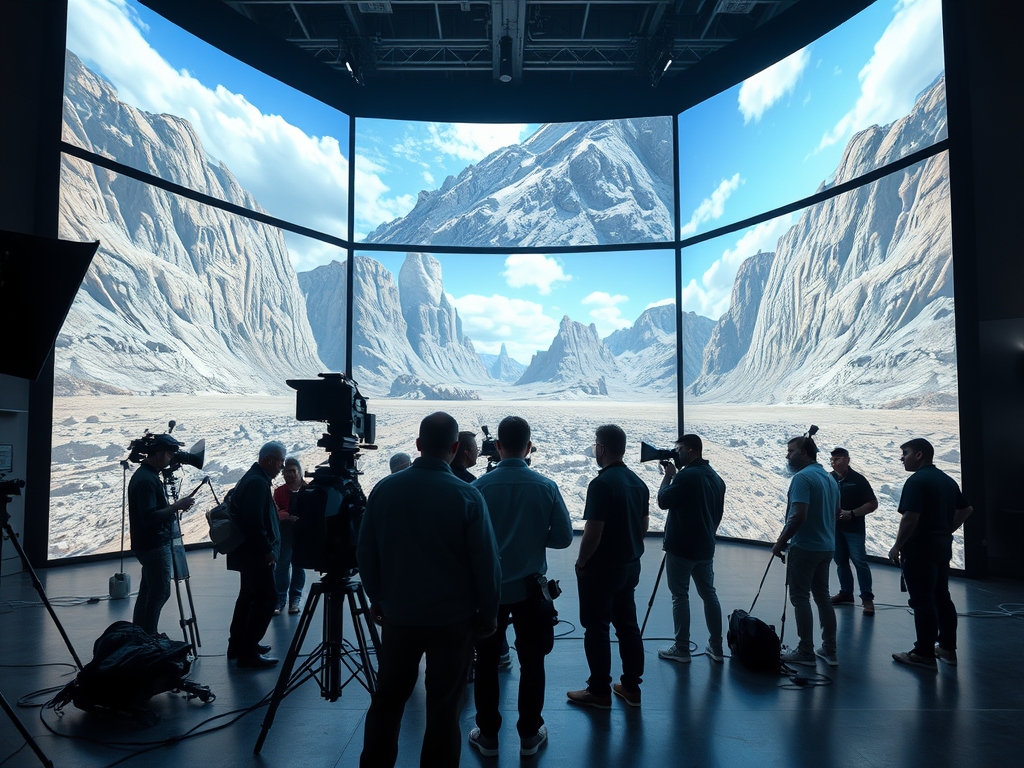
- LED Walls and Ceilings: These displays serve as the backdrop for the actors, creating immersive virtual environments. They not only show the background but also provide dynamic lighting and reflections, enhancing realism.
- Motion Capture: This technique captures the movements of actors and objects, allowing them to interact seamlessly with the virtual environment.
- Camera Tracking: Sophisticated tracking systems precisely track the camera's position, allowing the virtual environment to respond accordingly, creating a sense of depth and perspective.
- On-set Collaboration: Virtual production demands a new level of collaboration between the director, cinematographer, visual effects (VFX) supervisor, and other key personnel.
The Actionable Framework: A Step-by-Step Guide
Step 1: Planning and Pre-Visualization
Successful virtual production starts with meticulous pre-production. This phase involves creating storyboards, pre-visualization (previz) of scenes, and designing the virtual environment. Detailed planning is crucial to optimize resources and avoid costly revisions later.
Step 2: Virtual Environment Creation
This step involves building the virtual set, which is rendered in real-time. This could involve creating highly realistic landscapes, futuristic cityscapes, or any environment imaginable. The level of detail and realism will significantly impact the final product.
Step 3: LED Stage Setup and Calibration
The setup of the LED walls and ceiling is paramount. Correctly calibrating the displays, ensuring the camera tracking is accurate, and integrating the lighting system are critical for achieving an immersive and believable environment.
Step 4: Filming and Performance Capture
The actors perform on the stage, interacting with the virtual environment rendered on the LED walls. Real-time compositing allows the director and crew to see the final shot as it unfolds, providing instant feedback and opportunities for adjustments.
Step 5: Post-Production Integration
While virtual production streamlines the filmmaking process, it doesn’t eliminate post-production entirely. Fine-tuning the visuals, adding extra visual effects, and sound design will be handled in post-production.
Analytical Deep Dive
A comparison of the impact of virtual production on various aspects of filmmaking:
| Feature | Traditional Filmmaking | Virtual Production | Impact |
|---|---|---|---|
| Location | Limited by practicality and budget | Unlimited; any location possible | Significantly reduces location scouting and expenses |
| Set Design | Physical sets, often costly and time-consuming | Virtual sets, easily modified and re-used | Dramatically reduces set construction time and costs |
| Visual Effects | Post-production, often expensive and slow | Real-time, integrated with live-action | Streamlines VFX workflow and reduces post-production rework |
| Creative Control | Limited by physical constraints | Extensive; real-time adjustments possible | Greater artistic freedom and control for filmmakers |
| Cost | Variable, often high | Potentially lower, especially long-term | Can lead to significant budget savings in the long run |
Strategic Alternatives & Adaptations
- Beginner Implementation: Begin with smaller-scale projects or green-screen setups.
- Intermediate Optimization: Gradually integrate LED walls and virtual environments to learn the technology incrementally.
- Expert Scaling: Develop a dedicated virtual production pipeline, investing in high-end equipment and building a skilled team.
Adaptability is a key factor. Whether you are a beginner or a seasoned professional, the adoption curve is manageable.
Validated Case Studies & Real-World Application
The film The Mandalorian is a striking example of the power of virtual production. The show utilized extensive LED volume technology, allowing the filmmakers to create immersive and highly realistic environments that reacted to the actors' movements and camera angles in real time.
Another noteworthy example is the use of virtual production in car commercials. The ability to switch backgrounds quickly and easily allows for more creative flexibility and reduces the need for location shoots.
Risk Mitigation: Common Errors
- Insufficient Pre-Production Planning: Failing to thoroughly plan and pre-visualize scenes is a recipe for costly mistakes during shooting.
- Inadequate Lighting: Proper lighting is crucial for blending the actors with the virtual environment. Incorrect lighting can break the immersion.
- Poor Collaboration: Virtual production requires seamless teamwork between the director, VFX supervisor, and other key personnel.
- Ignoring Technical Limitations: Understanding the technical limitations of the technology is essential to set realistic expectations and avoid overspending.
Performance Optimization & Best Practices
To maximize the benefits of virtual production:
- Invest in Training: Ensure the crew has the necessary training on the technology and workflows.
- Prioritize a Strong Pre-Visualization Process: Thoroughly plan each scene to reduce on-set problems.
- Use the Right Equipment: Invest in quality equipment that meets the needs of your project.
- Build a Skilled Team: Surround yourself with professionals who understand virtual production.
- Embrace Iteration: Encourage experimentation and continuous improvement.
Conclusion
The future of filmmaking is undoubtedly intertwined with virtual production. Its ability to merge the physical and virtual worlds offers unprecedented creative freedom, efficiency gains, and cost-effectiveness. By understanding the core mechanics, embracing best practices, and avoiding common pitfalls, filmmakers can harness the power of this technology to create compelling stories. The revolution is here; are you ready to be a part of it?
Knowledge Enhancement FAQs
Q: What are the main benefits of virtual production?
A: The primary benefits are increased creative control, cost savings (especially in the long run), and the ability to film in any location, regardless of its physical accessibility.
Q: Which software are most commonly used for virtual production?
A: The most popular software is Unreal Engine, known for its real-time rendering capabilities, and Unity.
Q: Does virtual production require post-production?
A: While virtual production streamlines the filmmaking process, some post-production work is generally still needed for finishing touches like adding visual effects or enhancing audio.
Q: What are some practical uses of virtual production outside of film?
A: Virtual production is also used in advertising, live events, virtual concerts, and even architectural visualization, offering enhanced creative control for varied industries.