
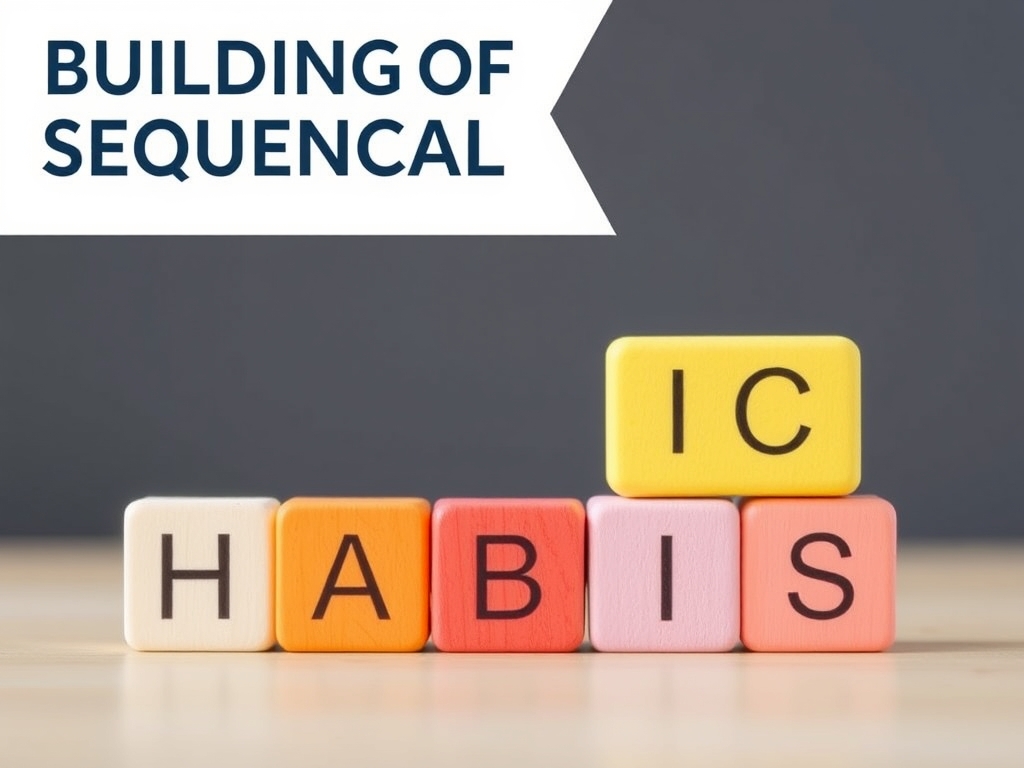
Master Habit Stacking: The Simple Technique for Building Powerful Routines
Are you tired of setting goals and watching them crumble after a few weeks? You’re not alone. Research from the University of Scranton indicates that approximately 80% of New Year's resolutions fail by the second week of February. This staggering statistic underscores a critical problem: many of us struggle to build and maintain healthy habits. The secret lies in a strategy that leverages our existing behaviors. That strategy is Habit Stacking, and it’s about to change the way you approach productivity.
Foundational Context: Market & Trends
The market for self-improvement and productivity tools is booming. Consider the fact that the global wellness market is estimated to reach $7 trillion by 2025. This growth reflects a profound desire for individuals to optimize their lives. Tools like productivity apps, online courses, and personal coaching are exploding in popularity.
Key Trends Driving the Growth:
- Increased Awareness: A greater understanding of the detrimental effects of procrastination and poor habits.
- Technological Advancements: The rise of apps and digital tools makes habit tracking and goal setting easier than ever before.
- Social Influence: The pervasive nature of social media creates opportunities for shared accountability and peer-to-peer inspiration.
The underlying trend is clear: people are investing in themselves, and effective habit-building strategies are in high demand.
Core Mechanisms & Driving Factors
At its core, habit stacking is a straightforward technique. It’s about building new habits by linking them to existing ones.
The primary driving factors:
- Leveraging Existing Behaviors: Capitalizing on the automatic nature of established routines.
- Reducing Friction: Making new habits as simple and easy to start as possible.
- Consistency: The cornerstone for any successful habit-building strategy.
- Accountability: Building a system of self-regulation and external support.
The Actionable Framework
Let’s delve into how to implement the Habit Stacking framework effectively:
Step 1: Identify Your Anchor Habits
These are the things you already do consistently. Think about your daily routine. What are some actions you perform without thinking? For example:
- Brushing your teeth
- Drinking your morning coffee
- Checking emails
Step 2: Choose Your Target Habits
What new habits do you want to implement? For instance:
- Reading for 15 minutes each day
- Exercising for 20 minutes
- Meditating for 5 minutes
Step 3: Stack The Habits
This is the core of the technique. Link your new habits to your anchor habits. For example:
- "After I brush my teeth, I will read for 15 minutes."
- "After I drink my morning coffee, I will meditate for 5 minutes."
- "After I check my emails, I will exercise for 20 minutes."
Step 4: Start Small & Stay Consistent
Don't try to change everything at once. Start with one or two stacks and gradually add more. Consistency is key. Even if you only stick with your new habits for a few minutes each day, that’s better than nothing.
Step 5: Track Your Progress
Use a habit tracker app, a simple journal, or a spreadsheet to monitor your progress. Seeing your success will keep you motivated.
Analytical Deep Dive
Habit stacking taps into our brain's natural tendency to form routines. Studies have shown that when a behavior becomes habitual, it is processed in the basal ganglia, a part of the brain that enables automaticity. A review of the literature on habit formation reveals that it typically takes an average of 66 days to form a new habit (Lally, Phillippa; van Jaarsveld, Cornelia H. M.; Potts, Henry W. W.; Wardle, Jane (2010)). Therefore, consistency over an extended period is a key performance indicator of this method.
Strategic Alternatives & Adaptations
Habit stacking is flexible and can be adapted to various proficiency levels and situations:
- Beginner Implementation: Start with one or two small stacks, focusing on easy-to-achieve habits.
- Intermediate Optimization: Incorporate more complex habits and experiment with different habit sequences.
- Expert Scaling: Combine habit stacking with other productivity techniques, such as time blocking and the Pomodoro method.
For those struggling with motivation, consider adding a reward system after completing each stack. This could be anything from a short break to a small treat. Conversely, if you are struggling with habits that take too long to start, consider combining them into smaller chunks.
Validated Case Studies & Real-World Application
Consider Sarah, a busy professional, who wanted to start exercising regularly. She began by stacking her exercise routine to her already established morning coffee ritual. The strategy? "After I drink my morning coffee, I will exercise for 20 minutes." After a month, she was exercising consistently.
Another example would be John, a writer wanting to increase his daily word count. He decided to stack writing with his afternoon tea routine. "After I have my tea, I will write for one hour." This method allowed him to develop the writing habit without overwhelming him.
Risk Mitigation: Common Errors
- Trying to Do Too Much, Too Soon: Overloading your routine with too many new habits at once.
- Lack of Consistency: Missing days or weeks without following your stacks.
- Choosing Unrealistic Habits: Selecting goals that are too difficult to achieve initially.
- Ignoring Flexibility: Not adapting your stacks when your schedule changes.
Avoid these pitfalls by taking it slowly, being persistent, setting realistic goals, and adjusting as needed.
Performance Optimization & Best Practices
To maximize the effectiveness of habit stacking:
- Keep it Simple: The easier a habit is to initiate, the more likely you will stick with it.
- Use Visual Cues: Place visual reminders near your anchor habits (e.g., leaving your workout clothes out the night before).
- Find Your Time: Experiment with different times of day to see what works best for you.
- Be Patient: Habit formation takes time. Don’t get discouraged by the occasional setback.
Scalability & Longevity Strategy
For sustained success, focus on these elements:
- Regular Review: Periodically assess your stacks. Are they still relevant and effective?
- Automation: Gradually automate elements of your routine where possible (e.g., using a smart coffee maker).
- Integration: Combine habit stacking with other productivity techniques to streamline your days.
- Celebrate Small Wins: Acknowledging the progress you make reinforces positive behaviors and enhances motivation.
Knowledge Enhancement FAQs
Q: How long does it typically take to see results from habit stacking?
A: There's no set timeline, but generally, it takes approximately 66 days for a new habit to become automatic. Consistency is key.
Q: What if I miss a day? Should I restart my habit stack?
A: No, don’t restart. One missed day doesn’t derail your progress. Simply get back on track the next day.
Q: Can I use habit stacking for any type of habit?
A: Yes, habit stacking can be used for most habits.
Q: Is habit stacking different from simply creating a to-do list?
A: Yes, habit stacking focuses on linking new behaviors to existing ones, whereas to-do lists typically don't have this linkage.
Q: How many habits can I stack at once?
A: Start with just one or two and, as you become more comfortable, add new ones gradually.
Q: How do I know if my habit stacking is working?
A: Tracking your progress is crucial. You should feel that the new habits are becoming easier, and you’re experiencing a sense of accomplishment.
Habit stacking is more than a technique; it is a mindset. By understanding its foundational principles and implementing it with precision, you can build powerful routines and unlock your full potential. Embrace the power of habit stacking, and watch your productivity and success soar. Ready to transform your life? Start stacking your habits today!