
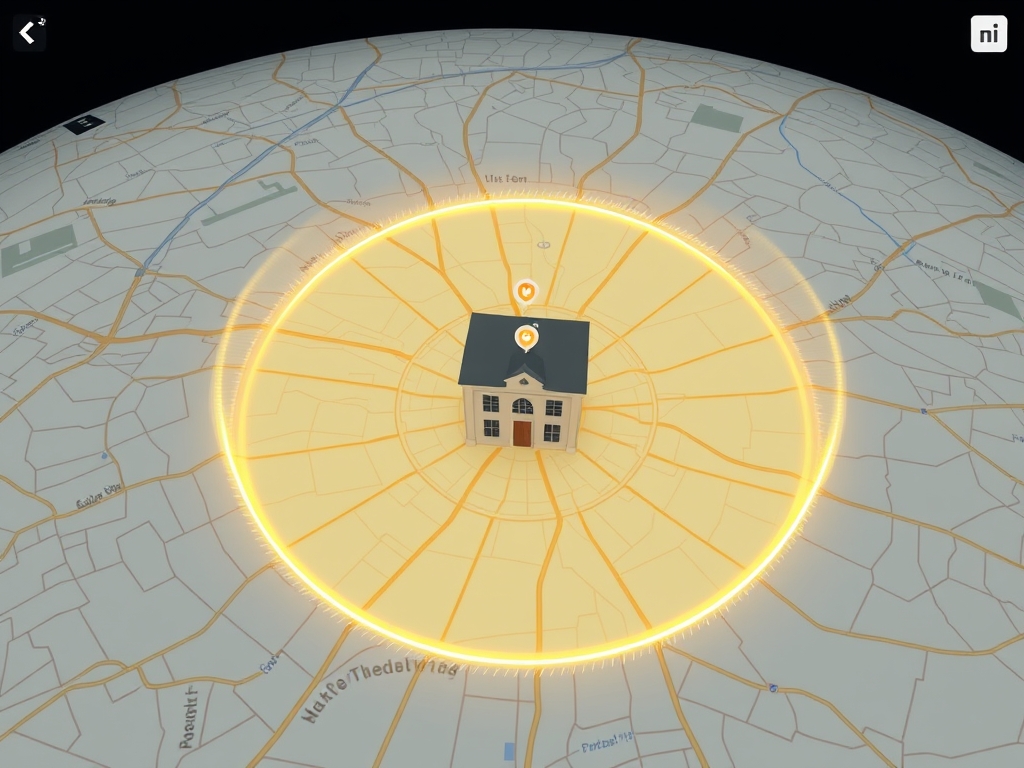
Did you know that mobile users spend roughly 15% more when targeted with location-based advertising? This data point underscores the immense power of geo-fencing marketing, the practice of targeting potential customers within a specific geographic area. Today’s business landscape demands precision, and geo-fencing delivers it by enabling highly relevant and timely marketing messages to reach the right audience, at the right moment, and in the right place.
Foundational Context: Market & Trends
The geo-fencing market is experiencing exponential growth. A recent report by Grand View Research projects the global geo-fencing market to reach $1.8 billion by 2028, expanding at a CAGR of 18.2% from 2021 to 2028. This rapid expansion is fueled by the proliferation of smartphones, the increasing sophistication of location-based services, and the demand for more personalized advertising experiences. The trend is clear: businesses are increasingly turning to geo-fencing to enhance their marketing effectiveness.
Here’s a snapshot of key trends shaping the geo-fencing market:
| Trend | Impact |
|---|---|
| Hyper-Personalization | Drives higher engagement and conversion rates. |
| Integration with IoT Devices | Expands the scope of data collection and targeting possibilities. |
| Emphasis on Privacy Compliance | Increases the need for transparent data practices. |
| Adoption by SMBs | Democratizes location-based marketing, making it accessible to a wider range of businesses. |
Core Mechanisms & Driving Factors
Geo-fencing's power stems from its ability to use GPS, Wi-Fi, and cellular data to identify a device's location. This allows businesses to create virtual boundaries, or "fences," around specific geographic areas. When a mobile device enters or exits this designated zone, a trigger initiates a pre-defined action. This can be anything from sending a push notification to serving a targeted ad. The driving factors behind geo-fencing success can be boiled down to:
- Accuracy of Location Data: Precise location is critical to ensure the correct audience is targeted.
- Relevance of the Message: The message must be directly relevant to the user's location and context.
- Timing of the Trigger: The notification or action should be delivered at the optimal time to maximize engagement.
- Privacy Considerations: Transparency and user consent are paramount.
The Actionable Framework: Setting up Your First Geo-Fencing Campaign
Creating and launching an effective geo-fencing marketing campaign involves several key steps.
Step 1: Define Your Objectives
- What do you want to achieve with this campaign? Increase foot traffic to your store? Drive online sales? Build brand awareness? Clear objectives will help to refine your strategy.
Step 2: Identify Your Target Audience
- Who are you trying to reach? Consider demographics, psychographics, and behaviors.
Step 3: Map Your Fences
- Determine the geographic areas that align with your audience. This could be around your store, a competitor's location, or a relevant event venue.
Step 4: Craft Compelling Messaging
- Your message needs to be relevant and persuasive. Consider special offers, promotions, or informative content tailored to the location.
Step 5: Choose Your Technology & Platforms
- Select the right tools and platforms. Many marketing automation platforms have geo-fencing capabilities.
Step 6: Launch and Monitor
- Launch your campaign and closely monitor its performance. Use analytics to track key metrics such as click-through rates, conversions, and foot traffic.
Analytical Deep Dive
According to a study by Mobile Marketer, location-based ads have a 4.6 times higher click-through rate than standard display ads. Furthermore, geo-fencing campaigns often result in a significant increase in in-store visits and purchases. Research by eMarketer shows that businesses using geo-fencing experienced an average of a 30% increase in store visits. This data confirms the quantifiable value and effectiveness of geo-fencing marketing.
Strategic Alternatives & Adaptations
Adapt your geo-fencing strategy based on your audience. For beginners, focus on simple campaigns around your physical store location with general offers. For intermediate users, try segmenting your audience and sending customized messages. For experts, integrate geo-fencing with other marketing channels and analyze complex data.
Consider these alternative strategies:
- Proximity Marketing: Sending messages when someone is near a specific beacon (e.g., a display in your store).
- Geotargeting Social Media: Running location-specific ad campaigns on platforms like Facebook and Instagram.
- Event-Based Targeting: Targeting users around relevant events, such as conferences or concerts.
Validated Case Studies & Real-World Application
A local coffee shop used geo-fencing to send a coupon to people near a competitor's store, resulting in a 25% increase in foot traffic. A national retailer used geo-fencing around concert venues to advertise limited-edition merchandise, increasing sales by 18%.
Risk Mitigation: Common Errors
Avoid these common pitfalls:
- Ignoring Privacy: Always obtain user consent and comply with privacy regulations.
- Sending Irrelevant Messages: Tailor your messages to the user's location and context.
- Setting Too Small a Geo-Fence: Make sure your fence encompasses a reasonable area for your target audience.
- Failing to Track Performance: Use analytics to assess your campaign's effectiveness.
Performance Optimization & Best Practices
To maximize the impact of your geo-fencing efforts, follow these best practices:
- Optimize Your Message Delivery: Ensure your messages are clear, concise, and visually appealing.
- Test and Iterate: Constantly test different messages, offers, and targeting parameters to find what works best.
- Analyze and Refine: Regularly review your campaign performance and make data-driven adjustments.
- Choose the Right Tools: Utilize reputable geo-fencing platforms and analytics tools.
Scalability & Longevity Strategy
For long-term success, focus on these strategies:
- Expand Your Fences: Gradually expand your geographic reach to target a broader audience.
- Automate Your Campaigns: Use marketing automation to streamline your geo-fencing process.
- Stay Informed: Keep up-to-date with industry trends and technological advancements.
- Consider Data Integration: Integrate geo-fencing data with other customer data to personalize marketing efforts.
Conclusion
Geo-fencing marketing is a powerful tool for modern businesses, offering unparalleled targeting capabilities. By understanding its core mechanisms, implementing an effective framework, and addressing potential pitfalls, you can create highly targeted campaigns that drive engagement, conversions, and growth.
Ready to maximize your marketing impact with geo-fencing?
Knowledge Enhancement FAQs
Q: Is geo-fencing legal?
A: Yes, geo-fencing is legal, provided that user consent is obtained and data privacy regulations are followed.
Q: What are some popular platforms that offer geo-fencing features?
A: Marketing automation platforms such as HubSpot, Marketo, and Salesforce, as well as dedicated geo-fencing platforms like PlotProjects, are frequently used.
Q: Can geo-fencing be used for lead generation?
A: Absolutely. By targeting specific geographic areas and offering relevant incentives, you can generate valuable leads.
Q: How do I measure the success of a geo-fencing campaign?
A: Key metrics include click-through rates, conversion rates, in-store visits, and return on investment (ROI).
Q: What is the difference between geo-fencing and geo-targeting?
A: Geo-fencing targets users within a predefined area, while geo-targeting targets users based on their broader geographic location. Geo-fencing is a more precise form of geo-targeting.