
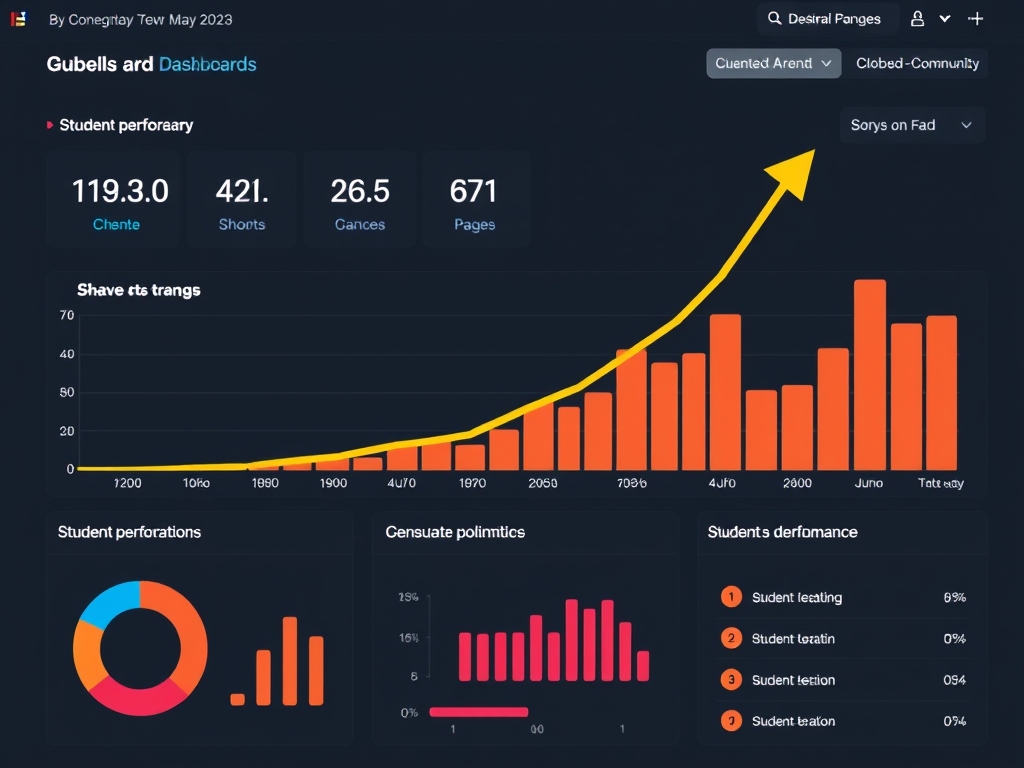
Leveraging E-learning Analytics to Measure and Boost Student Success
Did you know that the global e-learning market is projected to reach over $325 billion by 2025? (Source: Statista). However, simply offering online courses isn't enough. The real challenge, and the future of digital education, lies in understanding how students learn and leveraging e-learning analytics to improve student success. This article will guide you through the process, equipping you with the knowledge and strategies to make data-driven decisions that enhance the effectiveness of your e-learning programs.
Foundational Context: Market & Trends
The e-learning landscape is rapidly evolving. We're seeing a shift from static content to interactive learning experiences driven by personalized learning platforms and data-driven insights. Key trends include:
- Personalized Learning: Tailoring the learning experience to individual student needs and preferences.
- Adaptive Learning: Using AI and analytics to adjust the difficulty and content based on student performance.
- Microlearning: Breaking down content into smaller, easily digestible modules.
- Gamification: Incorporating game-like elements to increase engagement and motivation.
- Mobile Learning: Accessing content on smartphones and tablets.
These trends are all fueled by one thing: the power of data. Without a solid e-learning analytics strategy, you're flying blind, unable to optimize your courses for maximum impact.
Here's a snapshot of the current state:
| Metric | Value (Approximate) | Source |
|---|---|---|
| Market Growth Rate | 10-12% annually | Various Sources |
| User Engagement Increase | 20-30% with Gamification | Research Studies |
| Mobile Learning Usage | 60-70% of Learners | Industry Reports |
Core Mechanisms & Driving Factors
The success of any e-learning program hinges on several critical factors, all of which are influenced by effective e-learning analytics:
- Student Engagement: High engagement is crucial for knowledge retention. Analytics help identify which content and activities are most engaging.
- Course Completion Rates: Low completion rates are a major problem. Analytics can pinpoint where students are dropping off and why.
- Knowledge Retention: The ultimate goal is for students to retain what they learn. Analytics can assess knowledge retention through quizzes, assignments, and long-term performance tracking.
- Learning Outcomes: Do students achieve the learning objectives? Data provides insight into the effectiveness of instructional strategies.
- Instructor Performance: Data-driven feedback can help educators improve their teaching methods.
The Actionable Framework
Implementing an e-learning analytics strategy involves several key steps.
Step 1: Define Your Goals and Metrics
Before you start collecting data, clearly define what you want to achieve. What are your Key Performance Indicators (KPIs)? Common KPIs include:
- Course completion rates
- Student engagement metrics (time on task, click-through rates, participation in discussions)
- Assessment scores
- Learner satisfaction (surveys and feedback)
- Transfer of learning (application of knowledge in real-world scenarios)
Step 2: Choose Your E-learning Analytics Tools
Several tools can help you gather and analyze data. Common platforms include:
- Learning Management Systems (LMS): Most LMS platforms (Moodle, Canvas, etc.) come with built-in analytics dashboards.
- Google Analytics: A powerful tool for tracking user behavior on your website or course platform.
- Specialized Analytics Platforms: Companies like Blackboard, Coursera, and edX offer advanced analytics capabilities.
- Data Visualization Tools: Tools like Tableau or Power BI can help you create insightful dashboards and reports.
Step 3: Collect and Clean Your Data
Once you’ve chosen your tools, start collecting data. Ensure your data is clean, accurate, and consistently formatted. Regularly check for data quality issues, such as missing values or inconsistencies.
Step 4: Analyze Your Data
Analyze the data to identify trends, patterns, and insights. Look for correlations between different metrics. For example, does a high participation rate in discussion forums correlate with higher grades?
Step 5: Implement Changes and Iterate
Based on your analysis, make adjustments to your course content, teaching methods, and platform design. Monitor the impact of these changes and iterate to continuously improve student success.
Analytical Deep Dive
Consider this hypothetical example: You've implemented an e-learning course and are tracking student performance. After analyzing the data, you discover that students are struggling with a specific module on the Pythagorean theorem.
Your analysis reveals:
- Average time spent on the module: Significantly lower than other modules.
- Quiz scores: Substantially lower compared to other topics.
- Discussion forum engagement: Minimal engagement on the topic.
Based on these findings, you might:
- Revise the module content, adding more examples, illustrations, and interactive elements.
- Provide additional resources, such as supplementary videos or practice quizzes.
- Offer extra office hours or tutoring sessions to address student questions.
Strategic Alternatives & Adaptations
The approach you take with e-learning analytics should be tailored to your audience.
- Beginner Implementation: Focus on the basic metrics, such as course completion rates and time spent on task. Utilize built-in LMS dashboards.
- Intermediate Optimization: Dive deeper into student engagement metrics. Use Google Analytics or similar tools to track student behavior. A/B test different content formats.
- Expert Scaling: Implement advanced analytics techniques, such as predictive modeling, to forecast student performance and identify at-risk students. Leverage data visualization tools to create custom dashboards.
Validated Case Studies & Real-World Application
Consider the example of a university that used e-learning analytics to improve its online program. By tracking student engagement and performance data, the university identified that students were struggling with a particular assignment. They revised the assignment instructions, provided additional support, and saw a significant increase in student grades and overall satisfaction.
Another case study involves a corporate training program. By analyzing data on employee performance and completion rates, the company identified areas where training was ineffective. They revamped their training materials, leading to improved employee skills and productivity.
Risk Mitigation: Common Errors
Here are some common pitfalls to avoid when implementing an e-learning analytics strategy:
- Not defining clear goals: Without goals, it's impossible to know what data to collect and how to interpret it.
- Ignoring data privacy: Always comply with data privacy regulations (e.g., GDPR, CCPA).
- Focusing on the wrong metrics: Don't get lost in the numbers; focus on the metrics that truly impact student success.
- Failing to take action based on the data: Collecting data is useless unless you use it to make improvements.
- *Over-reliance on automated data aggregation without context. Always validate the automated data with feedback from students.
Performance Optimization & Best Practices
To maximize the impact of your e-learning analytics efforts, consider these best practices:
- Integrate data from multiple sources: Combine data from your LMS, website analytics, and survey platforms for a holistic view of student behavior.
- Personalize the learning experience: Use the data to tailor content, activities, and feedback to each student's needs.
- Foster a culture of data-driven decision-making: Make sure instructors and administrators are comfortable using data to make informed choices.
- Regularly review and update your analytics strategy: The e-learning landscape is constantly changing, so stay agile and adjust your approach as needed.
- Get feedback on the efficacy of learning tools.
Scalability & Longevity Strategy
To ensure long-term success:
- Automate data collection: Use your LMS and other tools to automate the process of collecting and analyzing data.
- Invest in continuous improvement: Regularly review your data and make adjustments to your courses and platform.
- Stay informed about new trends and technologies: The field of e-learning analytics is constantly evolving, so stay up-to-date with the latest developments.
Key Takeaways:
- E-learning analytics is essential for improving student success.
- Define your goals and choose the right tools.
- Collect, analyze, and use data to make informed decisions.
- Continuously optimize your e-learning programs.
- This structured approach of tracking data is crucial for measuring student success.
Concluding Synthesis
Implementing e-learning analytics isn't just a trend; it's a necessity for any institution or individual aiming to provide effective online learning. By embracing a data-driven approach, you can create more engaging, personalized, and ultimately, more successful learning experiences. From identifying pain points in your course content to predicting student drop-off rates, the insights gained through e-learning analytics are invaluable. The future of online education is bright, and it's powered by data.
Knowledge Enhancement FAQs
Q: What are the biggest challenges in implementing e-learning analytics?
A: Common challenges include data privacy concerns, the complexity of data analysis, and the need for staff training and buy-in.
Q: How can I measure student engagement?
A: Engagement can be measured through various metrics, including time spent on task, click-through rates, participation in discussions, and completion of interactive activities.
Q: What is the difference between descriptive, predictive, and prescriptive analytics?
A: Descriptive analytics summarizes past data; predictive analytics forecasts future outcomes; and prescriptive analytics recommends actions to achieve desired results.
Q: How frequently should I analyze my e-learning data?
A: The frequency of analysis depends on your goals. For some metrics, monthly or quarterly reviews may suffice. For others, real-time or weekly tracking is more appropriate.