
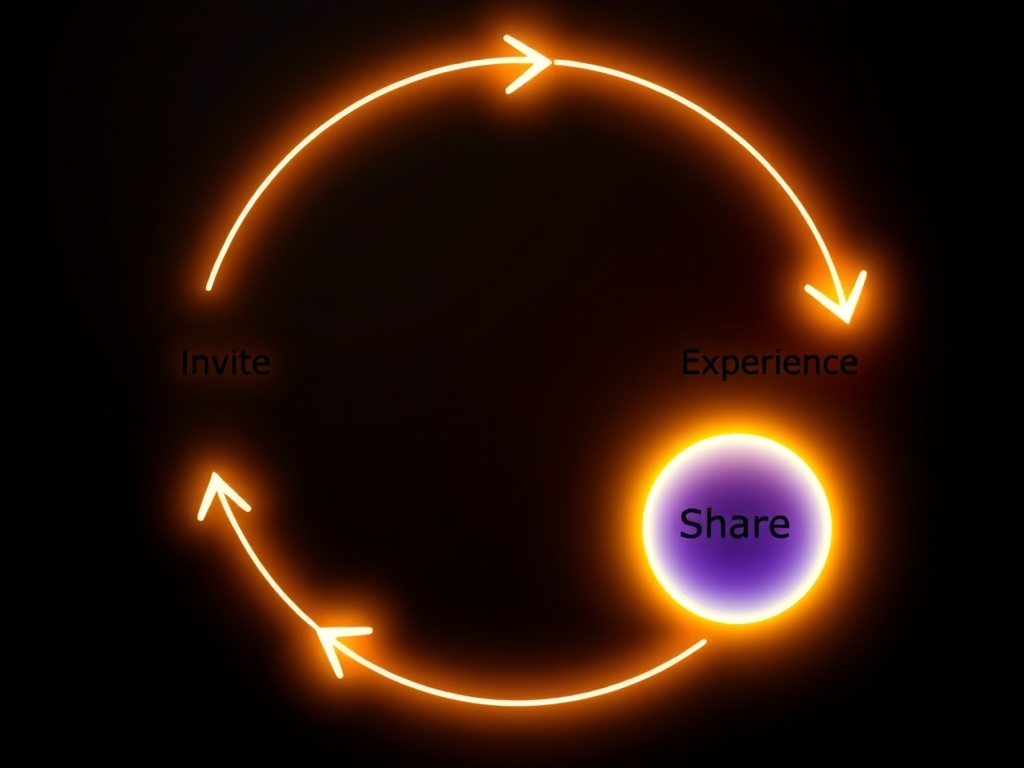
Imagine this: your app takes off like a rocket, not through costly marketing campaigns, but through its users bringing in new users. It’s the dream of every digital entrepreneur: the viral loop in app design. But, is it achievable? The answer is a resounding yes. However, it's not by accident. It is meticulously planned. This blog post unpacks the core strategies and tactics to design a viral loop in app design, helping your application achieve exponential growth.
Foundational Context: Market & Trends
The app market is booming, with mobile app revenue projected to reach over \$613 billion by 2027. However, with millions of apps vying for attention, acquiring users is becoming increasingly expensive. The shift is towards product-led growth (PLG), where the product itself drives user acquisition, retention, and expansion. This is where the viral loop becomes critical.
A recent study showed that apps with effective viral loops experience a 30% higher user growth rate compared to those relying solely on paid acquisition. This shift has changed the market entirely.
Core Mechanisms & Driving Factors
Several factors propel the effectiveness of a viral loop. Success hinges on a well-designed product and a targeted approach.
Here's a breakdown:
- Network Effects: The more users, the more valuable the app becomes.
- Shareability: Easy sharing mechanisms are fundamental.
- Incentives: Encourage users to invite others.
- Accessibility: Smooth and easy onboarding.
*Expert Insight: "A viral loop isn't just about adding a share button; it's about making sharing an integral part of the user experience. Make your product so compelling that users *want* to share it." - Leading Digital Product Strategist.*
The Actionable Framework
Designing a high-performing viral loop involves a strategic approach. Consider these steps:
Step 1: Identify Your Viral Trigger
Every app has a "trigger"—the action that prompts sharing.
Consider:
- User-generated content (e.g., photo edits, playlists).
- Collaborative features (e.g., shared documents, group chats).
- Achievements (e.g., game scores, fitness milestones).
Step 2: Simplify the Sharing Process
Make sharing effortless:
- Provide one-click sharing options (e.g., social media integration).
- Offer pre-filled messages that users can customize.
- Ensure that shared content directs users back to your app.
Step 3: Incentivize Referrals
- Rewards are often effective.
- Offer in-app currency.
- Provide premium features.
- Offer special discounts.
Step 4: Track, Analyze, and Iterate
- Measure your viral coefficient. A coefficient above 1.0 means your app will grow exponentially.
- Analyze your data.
- Test and optimize your strategies.
Analytical Deep Dive
Analyzing your app's performance metrics is crucial.
- Viral Coefficient: This measures how many new users each existing user brings in. A coefficient above 1 means your growth is exponential.
- Conversion Rates: Track the percentage of invited users who become active users.
- Retention Rates: How long users stay active after they are invited.
- Churn Rate: Identify areas to reduce churn.
Here is a short comparison of two different types of sharing tools:
| Feature | Type A | Type B |
|---|---|---|
| Sharing Method | Direct share button | Unique link generation |
| User Experience | Simple, instant sharing | User control |
| Trackable Data | Basic, easy to implement | Detailed, but higher complexity |
| Suitable for | Quick content sharing | Community and team collaboration |
Strategic Alternatives & Adaptations
Different audiences benefit from different approaches.
- Beginner Implementation: Start with simple sharing features. Prioritize social media integration and user-friendly sharing options.
- Intermediate Optimization: Implement referral programs. A/B test different incentives and messaging.
- Expert Scaling: Integrate advanced analytics. Experiment with different viral triggers and sharing mechanisms.
Risk Mitigation: Common Errors
Avoid these common pitfalls:
- Overly Aggressive Referral Programs: Don't annoy users with excessive prompts.
- Poorly Designed User Experience: Make sharing easy. The easier, the better.
- Ignoring Analytics: Track your progress and iterate based on data.
Performance Optimization & Best Practices
- Make sharing native to your app's core value.
- Track user behaviors closely.
- Optimize for mobile users.
- Embrace iteration, because every viral loop has room for improvement.
Conclusion
Designing an effective viral loop is more than just a marketing tactic. It's about designing an experience that encourages organic growth. By focusing on product-led growth, user-friendly sharing, and robust analytics, you can turn your app into a self-sustaining growth machine.
Frequently Asked Questions
Q1: What is the viral coefficient, and why is it important?
A1: The viral coefficient is a metric that measures the rate at which users invite other users. It indicates the potential for exponential growth. A viral coefficient above 1 suggests exponential growth.
Q2: How do I measure my viral coefficient?
A2: Calculate the number of invites sent by each user multiplied by the conversion rate of those invites into new users. A common formula is: *(Invites per User) * (Conversion Rate of Invites)*.
Q3: Can viral loops work for all types of apps?
A3: Not all apps are equally suited for viral loops. It works best for apps with high social interaction or inherent shareability.
Q4: What if my viral loop isn't working?
A4: Analyze the key points in the funnel, track and optimize those points based on the data.
Call to Action: Ready to transform your app into a growth engine? Start today by implementing these strategies. For a more detailed guide on product-led growth and AI tools for optimization, explore our related content.