
Designing the Perfect Viral Loop into Your App for Exponential Growth
Did you know that apps utilizing a viral loop strategy grow, on average, 20% faster than those that don't? In today's hyper-competitive digital landscape, capturing and retaining user attention is paramount. This article delves into how to craft and implement a compelling viral loop in app design, unlocking exponential growth through user acquisition and engagement.
Foundational Context: Market & Trends
The mobile app market is booming. Global app revenue is projected to reach over \$613 billion by 2027, according to Statista. The trend leans heavily towards product-led growth (PLG) where the product itself drives acquisition, conversion, and retention. A well-designed viral loop is the cornerstone of effective PLG. Key indicators suggest that apps incorporating viral mechanics experience higher customer lifetime value (CLTV) and lower customer acquisition cost (CAC). Consider the following:
| Metric | Apps with Viral Loops | Apps Without Viral Loops |
|---|---|---|
| User Acquisition Cost (CAC) | Lower | Higher |
| Customer Lifetime Value (CLTV) | Higher | Lower |
| Monthly Active Users (MAU) | Faster Growth | Slower Growth |
Core Mechanisms & Driving Factors
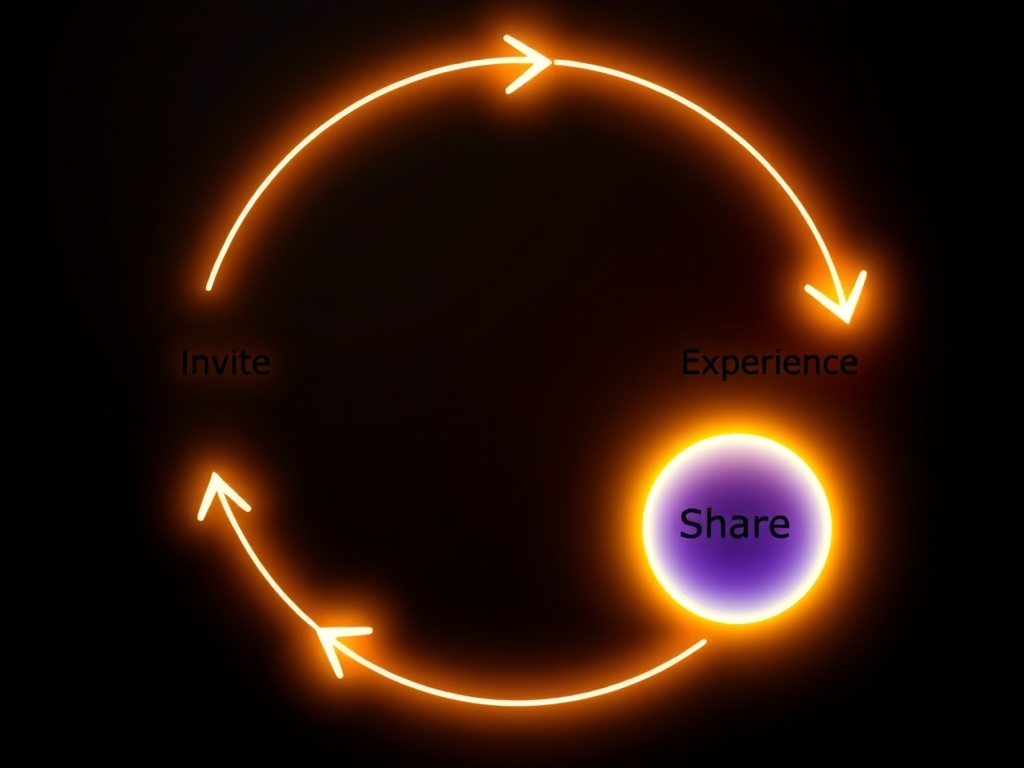
A viral loop is a self-perpetuating cycle where users are incentivized to invite others to use an app. The stronger the loop, the more users you acquire organically. Several core factors fuel a successful viral loop:
- Incentivization: Users must be rewarded for inviting others. This could be in the form of extra features, exclusive content, or in-app currency.
- Ease of Sharing: The process of inviting others must be seamless. This includes providing easy sharing options through social media, email, or direct messaging.
- Compelling Value Proposition: The app must offer substantial value that motivates users to share it with their network.
- Network Effects: The app's value increases as more people use it. This creates a powerful flywheel effect.
The Actionable Framework: Constructing Your Viral Loop
Let's break down the process of building a powerful viral loop, step-by-step:
Step 1: Identify Your Core Value Proposition
What problem does your app solve, and why should people use it? Define the unique value your app provides. Is it a time-saver, a cost-reducer, a form of entertainment, or a productivity enhancer? Make sure this is clearly communicated within the app and easily understood by your users.
Step 2: Design the Invitation Mechanism
Make it easy for users to invite their friends. Offer several invitation options:
- Direct Invite: Provide a referral link or code.
- Social Sharing: Allow users to share content or achievements on social media platforms.
- In-App Contacts: Integrate with the user's contacts to allow for easy invitation.
Step 3: Offer Clear Incentives
What will users receive for inviting others? The reward should be valuable and relevant to the user's experience. Consider:
- Free Premium Features: Give a free trial or access to premium features for a limited time.
- In-App Currency: Reward users with virtual currency they can use within the app.
- Exclusive Content: Grant access to exclusive content or early access to new features.
- Gamified Rewards: Use of a point-based system, such as badges, points, levels or rewards based on their friends' activity
Step 4: Track, Analyze, and Optimize
Use analytics tools to track your viral loop's performance. Monitor:
Sharing Rate: How often users are inviting others.
Conversion Rate: The percentage of invited users who become active users.
Virality Coefficient (k-factor): The average number of new users generated by each existing user. A k-factor above 1 indicates exponential growth.
Monitor: track your performance. Is your rate increasing or decreasing over time?
"Building a successful viral loop is an iterative process. You must continually test, analyze, and optimize to improve its performance." - Sarah Chen, Growth Marketing Expert.
Step 5: Iteration and Refinement
Refine your viral loop based on your data analysis. Experiment with different incentives, invitation mechanisms, and messaging. Iterate frequently to improve your viral coefficient (k-factor).
Analytical Deep Dive
Analyzing the virality coefficient is crucial. The formula is:
k = (Number of invites sent per user) * (Conversion rate of invites)
A k-factor above 1 means your app is growing exponentially. Even a seemingly small increase in the k-factor can translate to massive growth over time. For example, a k-factor of 0.3 can double your user base in about 20 months, whereas a k-factor of 0.6 will do the same in just 8 months. The virality of an app directly correlates to its ability to scale.
Strategic Alternatives & Adaptations
The viral loop framework can be adapted to suit various app types.
- For E-commerce apps: Offer referral discounts or rewards for successful referrals.
- For Social Networking apps: Encourage sharing of user-generated content and easy friend invitations.
- For Productivity apps: Give users additional storage or unlocked features when they invite others.
Beginner users can start with simple referral programs. Intermediate users can optimize sharing flows with A/B testing. Expert users should explore integrating advanced analytics and building multiple, interconnected viral loops.
Validated Case Studies & Real-World Application
Consider the success of Dropbox. By offering free storage for referrals, they saw explosive user growth. Similarly, Airbnb's referral program, which provided travel credit to both referrers and new users, fueled rapid expansion. Both examples highlight the power of targeted incentives and a frictionless invitation process.
Risk Mitigation: Common Errors
Avoid common pitfalls:
- Irrelevant Incentives: Avoid offering incentives that are not valuable or don’t align with your core user base.
- Overly Complex Sharing: Make sharing as easy as possible. If the process is cumbersome, users won't share.
- Ignoring Analytics: Track, measure, and optimize. Without data, you can't improve your viral loop's performance.
- Misunderstanding your Audience: Offering incentives that don’t align with their requirements.
- Failing to Comply: In a few regions, such as some parts of Europe, you will need to comply with specific data and privacy regulations.
Performance Optimization & Best Practices
To maximize performance:
- A/B Test Everything: Experiment with different messaging, incentives, and sharing options.
- Optimize the User Onboarding: Make sure new users quickly understand your app's value.
- Provide Outstanding Customer Support: Happy users are more likely to share your app.
- Incorporate User Feedback: Listen to what your users are saying, and use their feedback to improve your app and viral loop.
- Focus on Mobile Optimization: Your app needs to load quickly, be easy to navigate, and work seamlessly on mobile devices.
Scalability & Longevity Strategy
To sustain long-term growth:
- Continuously Innovate: Keep adding new features and improving the user experience.
- Build a Strong Brand: Develop a unique brand identity and a loyal following.
- Diversify Your Marketing Efforts: Don't rely solely on your viral loop. Use a multi-channel approach to drive user acquisition.
- Regular Updates: Apps must be kept updated to address bugs, offer new features, and boost user experience.
Conclusion
Designing a robust viral loop in app design is not just about increasing user acquisition. It’s about building a sustainable growth engine that cultivates user engagement, reduces acquisition costs, and positions your app for long-term success. By understanding the core mechanics, implementing the right strategies, and continually optimizing, you can unlock exponential growth. The future of app success is intimately tied to the power of the network effect; make sure your app is designed to capitalize on it.
Knowledge Enhancement FAQs
Q1: How do I measure the effectiveness of my viral loop?
A: Track your sharing rate, conversion rate, and virality coefficient (k-factor). Analyze these metrics to understand which elements of your viral loop are performing well and which need improvement.
Q2: What is a good k-factor?
A: A k-factor above 1 signifies exponential growth. While reaching and maintaining a k-factor above 1 is challenging, it’s the ultimate goal. Anything above 0.5 is considered a solid starting point for many app types.
Q3: How important is mobile optimization for viral loops?
A: Mobile optimization is crucial. Many users will share and experience your app on their mobile devices. A poorly optimized mobile experience will hinder your viral loop, reducing sharing and conversion rates.
Q4: Should I offer incentives for both the referrer and the new user?
A: Yes, this is often the most effective approach. Providing incentives to both parties maximizes the likelihood of a successful referral, as it benefits everyone involved.