
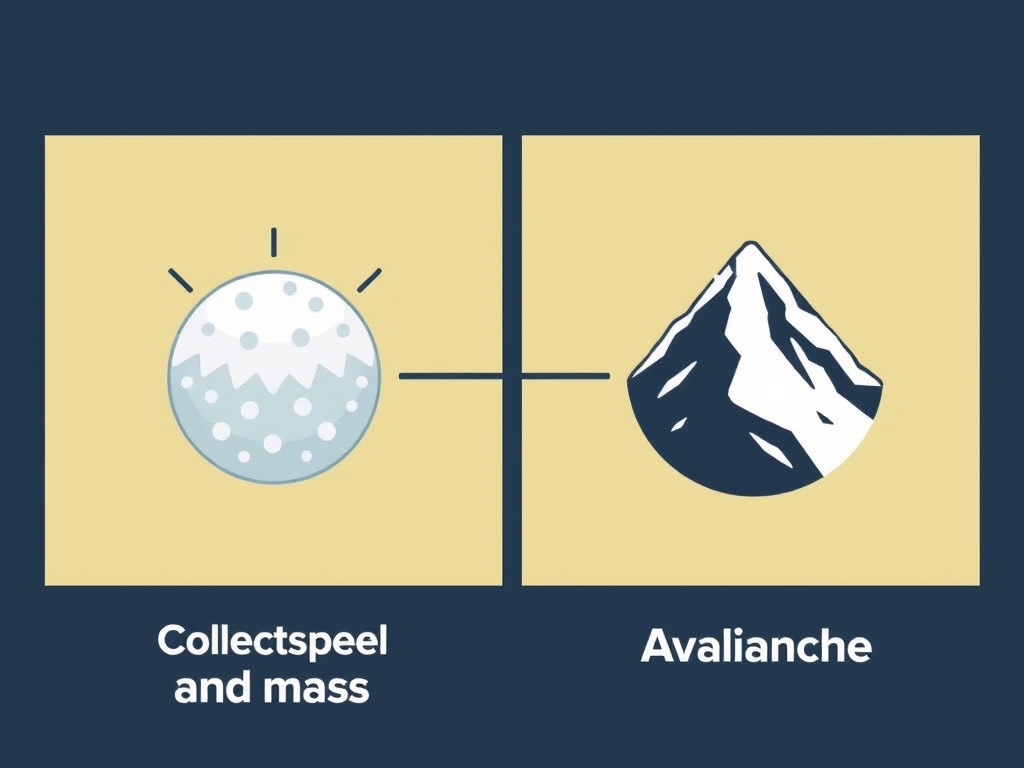
Are you drowning in debt and looking for a way out? In the world of personal finance, choosing the right debt payoff strategy can be the difference between financial freedom and continued struggle. The Debt Snowball vs. Debt Avalanche methods are two of the most popular approaches, and understanding the nuances of each is crucial for making an informed decision. This article will delve deep into the mechanics, benefits, and drawbacks of each, helping you determine which strategy is best suited to your unique financial situation.
Foundational Context: Market & Trends
The consumer debt landscape is constantly evolving. According to recent reports, total US consumer debt (excluding mortgages) hit a staggering $4.6 trillion in the first quarter of 2024. Credit card debt alone accounted for over $1.1 trillion. With rising interest rates and inflation, many individuals are struggling to manage their debt. There is a marked interest in strategies that provide a clear path to debt repayment. This trend highlights the critical need for effective debt management techniques, like the debt snowball and avalanche methods.
Here’s a quick overview of some relevant data:
| Metric | Data Point | Source |
|---|---|---|
| Total US Consumer Debt | $4.6 Trillion (excluding mortgages, Q1 2024) | Federal Reserve |
| Credit Card Debt | Over $1.1 Trillion | Federal Reserve |
| Average Credit Card APR | Roughly 20.3% (as of November 2023) | CreditCards.com |
Core Mechanisms & Driving Factors
Both the Debt Snowball and Debt Avalanche methods are systematic approaches to debt repayment, yet they differ significantly in their focus. Understanding these differences is key:
Debt Snowball:
- Focus: Pay off the smallest debt balance first, regardless of interest rate.
- Motivation: Builds momentum by providing quick wins.
- Emotional Benefit: Creates a sense of accomplishment early in the process.
Debt Avalanche:
- Focus: Pay off the debt with the highest interest rate first, regardless of the balance.
- Financial Benefit: Maximizes savings by minimizing interest paid over time.
- Mathematical Efficiency: Leads to faster overall debt reduction.
The driving factor for each method is quite different. The Debt Snowball prioritizes psychological factors to provide motivation and early wins. The Debt Avalanche leans heavily into financial efficiency to save money and get out of debt more quickly.
The Actionable Framework: Debt Avalanche Implementation
Let's break down how to effectively implement the Debt Avalanche method:
Step 1: List and Prioritize Your Debts
Compile a complete list of all your debts, including credit cards, personal loans, student loans, and any other outstanding balances. For each debt, record the following:
- Outstanding Balance
- Interest Rate
- Minimum Monthly Payment
Step 2: Calculate Interest Rates and Rank Debts
Rank your debts from highest to lowest interest rate. This becomes your repayment order. The debt with the highest interest rate is your primary focus.
Step 3: Make Minimum Payments on All Debts Except the Highest Interest Debt
Pay the minimum required payment on all debts, to avoid late fees and protect your credit score.
Step 4: Attack the Debt with the Highest Interest Rate
Allocate any extra money you have (above your minimum payments) toward the debt with the highest interest rate. This is where the magic of the Debt Avalanche begins.
Step 5: Repeat and Celebrate
Once the highest-interest debt is paid off, move on to the debt with the next highest interest rate. Continue the cycle until all your debts are eliminated.
It’s crucial to automate your payments whenever possible to avoid missed deadlines and late fees.
Analytical Deep Dive
The financial advantage of the Debt Avalanche method is usually clear. Let's compare the impact:
Let's look at a hypothetical scenario:
- Debt 1: $1,000 balance, 5% interest
- Debt 2: $5,000 balance, 15% interest
- Debt 3: $10,000 balance, 8% interest
By using the Debt Avalanche, the individual would pay off Debt 2 first (highest interest). After paying it off, the interest saved would reduce the amount of time in debt.
If we compare it with Debt Snowball: The individual would pay off Debt 1 first (smallest balance). The interest is lower than Debt 2 but the amount of time in debt would be longer.
Strategic Alternatives & Adaptations
- Beginner Implementation: Start small. Instead of a full-blown Debt Avalanche, focus on one high-interest credit card. Once it's paid, move onto the next.
- Intermediate Optimization: Incorporate balance transfers. If you have credit cards with high-interest rates, consider transferring those balances to a 0% APR card, if eligible.
- Expert Scaling: Combine methods. Some individuals use the Debt Snowball to gain initial momentum and then transition to the Debt Avalanche for financial efficiency.
Validated Case Studies & Real-World Application
Consider the example of Sarah, who had $10,000 in student loans at 7% interest and $3,000 in credit card debt at 20% interest. Sarah was getting nowhere.
Sarah, applying the Debt Avalanche, first tackled the credit card debt. After getting rid of the credit card debt, Sarah then focused on the student loans. By focusing on the highest-interest debt first, she would pay off her debts quicker. Sarah reduced the total interest and time she spent in debt.
Risk Mitigation: Common Errors
- Ignoring the Interest Rates: The biggest risk with the Debt Snowball is paying more in interest over time. If you ignore the interest rates, you can end up paying significantly more over the long haul.
- Not Creating a Budget: Success relies on having a budget that allows you to allocate extra money to debt repayment. Failing to budget can derail your progress.
- Giving Up Too Easily: Debt payoff can take time. It is vital to stay persistent.
Performance Optimization & Best Practices
- Negotiate Lower Interest Rates: Call your credit card companies to negotiate lower interest rates on existing debts.
- Automate Payments: Set up automatic payments to avoid missing deadlines.
- Track Your Progress: Monitor your progress monthly to stay motivated and see your results.
Conclusion
Both the Debt Snowball and Debt Avalanche methods have merit. The Debt Avalanche often proves superior for optimizing savings and faster debt clearance. It’s also crucial to remember that financial decisions are intensely personal. Choosing the strategy that aligns best with your financial behaviors and goals is the key to success.
Key Takeaways:
- Prioritize Interest: The Debt Avalanche method targets the highest-interest debts first.
- Budget Matters: A solid budget is essential for successful debt repayment, regardless of the method.
- Long-Term Impact: Debt reduction boosts credit scores and increases financial well-being.
Knowledge Enhancement FAQs
Q: Which method is better for someone who is easily discouraged?
A: The Debt Snowball is often better for those who need instant gratification. It provides quick wins by focusing on the smaller debts, boosting motivation.
Q: Can you use the Debt Avalanche for all types of debt?
A: Yes, the Debt Avalanche can be applied to all debt types – credit cards, student loans, personal loans, etc.
Q: What if I have debts with the same interest rates?
A: If multiple debts have the same interest rate, prioritize the one with the smaller balance to pay off, then focus on your other debts.
Q: What's the main disadvantage of the Debt Avalanche?
A: It might require more discipline and time. If you aren’t motivated by financial efficiency, it might be challenging to maintain.
Ready to gain control over your financial future? For resources and actionable strategies that can help you reduce debt, and improve your overall financial well-being, explore our digital courses and other high-value content. Now, get started today!