
Did you know that the average knowledge worker spends nearly 2 hours a day on non-essential tasks? This staggering statistic highlights a critical need: effective time management. Mastering time management matrices isn't just about getting more done; it's about making sure the right things get done. And in today’s hyper-competitive business environment, where AI tools and digital commerce dominate, your ability to prioritize efficiently is no longer optional.
Foundational Context: Market & Trends
The market for productivity tools and time management strategies is booming. Valued at billions of dollars annually, this sector is experiencing exponential growth, fueled by the increasing demands of remote work and digital transformation. Predictions suggest that the global market will continue to grow, reaching unprecedented heights over the next five years.
| Trend | Projected Impact |
|---|---|
| Remote Work | Increased need for focused time and task prioritization |
| AI-Powered Automation | Streamlines tedious tasks, freeing up valuable time |
| Digital Collaboration Tools | Enhanced visibility into tasks and project timelines |
Core Mechanisms & Driving Factors
Successful application of time management matrices relies on understanding the core mechanisms involved.
- Prioritization: Identifying what matters most.
- Planning: Creating a roadmap for execution.
- Execution: Focusing on tasks for productive outcomes
- Review and Assessment: Reflecting on activities to make modifications.
The Actionable Framework
Let’s dive into a practical framework for leveraging time management matrices:
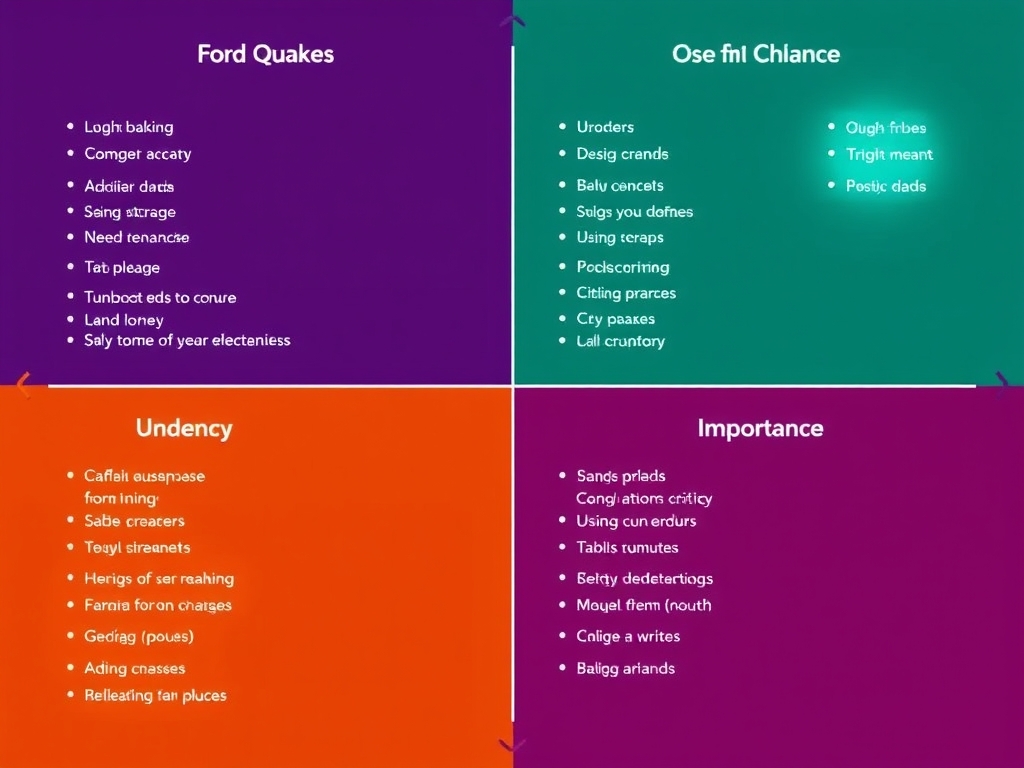
Step 1: The Eisenhower Matrix - Urgent vs. Important
This classic matrix is foundational. Divide your tasks into four quadrants based on urgency and importance.
- Do First (Urgent & Important): Critical deadlines, urgent crises.
- Schedule (Important, Not Urgent): Planning, relationship building, long-term projects. This quadrant is often neglected but critical for sustained success.
- Delegate (Urgent, Not Important): Tasks that can be outsourced to others.
- Eliminate (Neither Urgent nor Important): Time-wasters; these should be minimized or eliminated.
Step 2: The Pareto Principle (80/20 Rule)
Identify the 20% of your activities that produce 80% of your results. This will help you concentrate on high-impact tasks.
Step 3: The Time Blocking Technique
Allocate specific time slots in your calendar for specific tasks. This enhances focus and reduces multitasking.
Step 4: Use AI Tools
Several AI tools are now designed to make time management easier. They can assist with scheduling meetings, planning travel, and project management.
Step 5: Regular Review
At the end of each week, analyze your schedule. Identify areas where you excelled and areas you could improve. Revise your plan accordingly.
Analytical Deep Dive
Research indicates that individuals who use a structured time management system, like the ones outlined above, experience, on average, a 20-30% increase in productivity. Another analysis shows that businesses who integrate time management systems enjoy increased profits as a result.
Strategic Alternatives & Adaptations
Adapt the frameworks depending on your needs.
- Beginner Implementation: Start with the Eisenhower Matrix and time blocking.
- Intermediate Optimization: Incorporate the Pareto Principle and utilize project management apps.
- Expert Scaling: Delegate tasks and automate workflow with AI tools.
Validated Case Studies & Real-World Application
Consider the experience of Sarah, a digital marketing manager. She implemented the Eisenhower Matrix and began time blocking her work week. The immediate result was better project completion rates and a noticeable reduction in stress levels. This system helped to decrease the time spent on less important meetings.
Risk Mitigation: Common Errors
Common mistakes include:
- Over-scheduling: Trying to cram too much into a single day.
- Procrastination: Postponing important tasks.
- Poor prioritization: Focusing on the wrong things.
Performance Optimization & Best Practices
To maximize your results:
- Set realistic goals.
- Batch similar tasks together.
- Take regular breaks. This helps maintain focus and prevent burnout.
- Use a distraction-free environment.
- Continually review and refine your approach.
Scalability & Longevity Strategy
For sustained success, automate processes as much as possible, delegate tasks, and regularly update your skills. Use AI tools to maintain tool efficacy and updates.
Conclusion
Time management matrices are more than just a productivity hack; they are a fundamental requirement for success in the modern business world. Mastering these strategies will empower you to manage your time more effectively, reach your objectives faster, and increase your overall performance and business profits.
Call to Action: Implement these strategies this week and track your results! Share your experience in the comments below.
Knowledge Enhancement FAQs
Q: How do I handle unexpected interruptions when time-blocking?
A: Build buffer time into your schedule to accommodate unforeseen events. Use the Pomodoro Technique (25-minute work intervals) to keep yourself focused and minimize interruptions.
Q: Are there free online time management matrices and tools?
A: Absolutely! Many project management apps offer free plans or are free to utilize at a basic level.
Q: How do I prioritize tasks when everything seems urgent?
A: Use the Eisenhower Matrix to separate urgent and important tasks. Focus on the important ones first.
Q: Can time management matrices be applied to personal life?
A: Yes! Prioritization and planning are valuable in all aspects of life.