
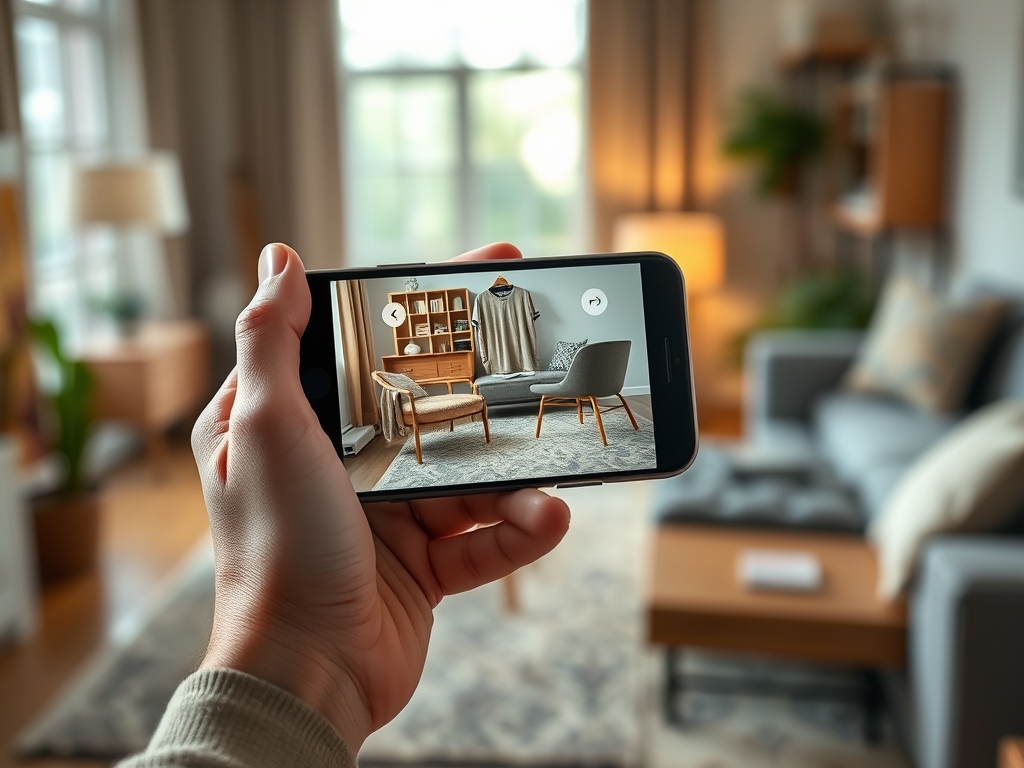
Did you know that by 2025, the global augmented reality (AR) market is projected to reach a staggering $78.3 billion? That's a massive leap fueled by a single, powerful trend: the ability to bring the physical shopping experience directly into your home. This article dives deep into the transformative power of Augmented Reality Shopping, exploring ten key ways it's reshaping how we buy and what we expect from online retail.
Foundational Context: Market & Trends
The rise of immersive e-commerce, driven by AR, isn't just a fleeting trend. It's a fundamental shift in how consumers interact with products. Market research consistently shows increased engagement, conversion rates, and reduced returns when AR is integrated into the shopping journey. Key projections include:
- Growth: An accelerating market trajectory, fueled by technological advancements and wider adoption.
- Adoption: Increasing consumer familiarity and acceptance of AR technologies on various devices.
- Impact: A significant boost in online sales and a redefinition of the shopping experience.
The following data table shows a comparison:
| Feature | Traditional E-Commerce | AR-Enhanced E-Commerce |
|---|---|---|
| Customer Engagement | Lower | Significantly Higher |
| Product Visualization | Limited | High Fidelity |
| Return Rates | Higher | Lower |
| Conversion Rates | Lower | Significantly Higher |
| Overall Experience | Static | Interactive and immersive |
Core Mechanisms & Driving Factors
The success of Augmented Reality Shopping hinges on several key elements:
- Advanced Hardware: Smartphones, tablets, and AR glasses are the primary delivery mechanisms.
- Sophisticated Software: AR apps and platforms that seamlessly integrate product visualizations.
- Product Scanning Capabilities: Accurate measurement tools and 3D product modeling are vital.
- Integration with E-commerce Platforms: A smooth user journey is essential for seamless shopping.
- Content Creation: High-quality, interactive product renderings and AR experiences.
The Actionable Framework: Implementing AR for Your Business
For those ready to embrace this revolutionary technology, here’s a framework for integrating Augmented Reality Shopping into your business:
Step 1: Assess Your Needs and Readiness
Begin by assessing your current e-commerce setup. Are your existing product listings AR-ready, or do you require a complete overhaul of the digital infrastructure?
Step 2: Choose the Right AR Platform
Select an AR platform or development framework that best suits your needs and budget. Options range from free tools, like those offered by Shopify, to specialized, enterprise-grade solutions.
Step 3: Create High-Quality 3D Models
Accurate, photorealistic 3D models of your products are the foundation of any successful AR experience. Partner with a professional 3D modeling service or utilize in-house capabilities.
Step 4: Integrate the AR Experience
Integrate the AR functionalities into your product pages and mobile app. Ensure a seamless user journey and intuitive controls for AR interactions.
Step 5: Test, Refine, and Iterate
Test your AR integration thoroughly across devices, browsers, and operating systems. Gather user feedback and continuously refine the AR experience based on real-world usage.
Step 6: Promote Your AR Features
Promote your new AR capabilities across all marketing channels. Emphasize the interactive benefits and provide how-to guides to encourage adoption.
Analytical Deep Dive
A recent study showed that AR-integrated product pages experienced, on average, a 40% increase in dwell time and a 22% reduction in product returns. Furthermore, businesses implementing AR have shown conversion rate improvements of up to 30%. These metrics underscore AR’s potential for generating substantial growth and improved customer satisfaction.
Strategic Alternatives & Adaptations
The Beginner Implementation focuses on adopting a pre-built platform. For Intermediate Optimization, consider custom integrations and the creation of more complex AR interactions. Expert Scaling involves advanced 3D modeling, personalized AR experiences, and integrating AR into every part of the customer journey, from product discovery to post-purchase support.
Validated Case Studies & Real-World Application
Consider Warby Parker’s virtual try-on feature for glasses, or IKEA’s Place app, that lets you virtually place furniture in your home. These real-world examples show how AR enhances the shopping experience. These are just some real-world examples that are leading the way.
Risk Mitigation: Common Errors
Avoid these common pitfalls:
- Poorly modeled products.
- Complex, confusing user interfaces.
- Lack of mobile-optimization.
- Slow loading times.
- Ignoring user feedback.
Performance Optimization & Best Practices
To maximize the impact of Augmented Reality Shopping:
- Use high-quality product models.
- Provide clear and intuitive user instructions.
- Ensure AR experiences load quickly.
- Gather user feedback.
- Regularly update product models and features.
Scalability & Longevity Strategy
For long-term success, focus on:
- Staying abreast of AR technology advancements.
- Continuous optimization of the user experience.
- Expanding your AR product library.
- Building a dedicated AR content-creation team.
Frequently Asked Questions
Q: What devices are compatible with AR shopping?
A: Most smartphones and tablets released in the last few years have AR capabilities.
Q: Is AR shopping expensive to implement?
A: The initial investment varies widely, but several budget-friendly options are available.
Q: How can AR shopping improve customer satisfaction?
A: AR shopping boosts satisfaction by letting customers interact with products before making a purchase.
Q: What are the main benefits of AR Shopping for Businesses?
A: Businesses benefit through increased sales, reduced returns, and enhanced brand engagement.
Conclusion
Augmented Reality Shopping is no longer a futuristic concept—it's a critical tool for modern e-commerce. By focusing on a well-designed implementation strategy, you can transform your online store into an engaging, interactive, and highly profitable shopping experience. The future of shopping is here, so embrace it!