
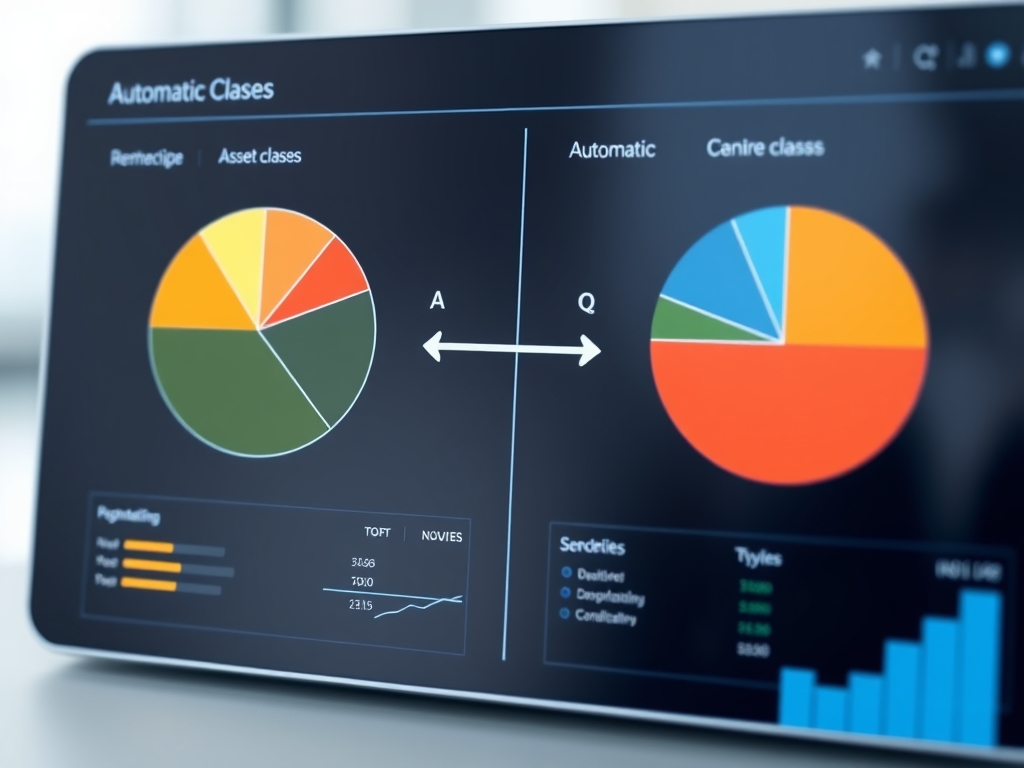
Did you know that consistent portfolio rebalancing can boost long-term investment returns by as much as 1-2% annually? In today’s volatile market, the ability to strategically manage your asset allocation is no longer a luxury, but a necessity. This article delves into the core principles of portfolio rebalancing, exploring how automated strategies are revolutionizing the way investors manage their financial affairs, with a specific focus on maximizing returns and minimizing risk.
Foundational Context: Market & Trends
The financial landscape is constantly evolving. A recent study by Deloitte revealed that nearly 70% of high-net-worth individuals are actively seeking more sophisticated portfolio management solutions. This trend highlights a growing demand for strategies like portfolio rebalancing that can adapt to changing market conditions.
Here's a glimpse into current market trends impacting portfolio management:
Market Trend Data:
| Trend | Impact on Portfolio Rebalancing |
|---|---|
| Increased Market Volatility | Requires more frequent rebalancing |
| Rise of AI-Powered Tools | Enhances precision and automation |
| Growing Demand for ESG Investing | Influences asset allocation decisions |
| Focus on Tax Efficiency | Optimizes tax implications of rebalancing |
Core Mechanisms & Driving Factors
Successful portfolio rebalancing hinges on a few key mechanisms:
- Asset Allocation: Defining the ideal mix of assets (stocks, bonds, real estate, etc.) based on your risk tolerance and financial goals.
- Target Allocation: Establishing the desired percentage for each asset class within your portfolio.
- Thresholds: Setting parameters (e.g., 5% deviation from target) that trigger rebalancing.
- Execution: The act of buying or selling assets to restore your portfolio to its target allocation.
The driving factors here are: discipline, automation, and adherence to your defined investment strategy.
The Actionable Framework
Let’s break down a simplified framework for implementing automated portfolio rebalancing:
Step 1: Define Your Investment Goals
What are you saving for? Retirement? A down payment on a house? Your goals will influence your asset allocation strategy.
Step 2: Establish Your Risk Tolerance
How much risk are you comfortable taking? Your risk tolerance will determine the mix of assets (more aggressive: more stocks, less aggressive: more bonds).
Step 3: Choose Your Automation Method
There are several ways to automate rebalancing, including:
- Robo-Advisors: These platforms offer automated portfolio management, including rebalancing, for a fee.
- Brokerage Account Features: Many brokerage accounts allow you to set up automatic rebalancing.
- Manual Rebalancing: Using a spreadsheet or software to track your portfolio and initiate trades yourself.
Step 4: Set Your Rebalancing Frequency and Thresholds
Decide how often you'll rebalance (e.g., quarterly, semi-annually, annually). Set thresholds (e.g., rebalance if an asset class deviates by more than 5% from its target allocation).
Step 5: Execute the Rebalancing
Once your portfolio drifts outside the established thresholds, execute the trades to bring it back into alignment.
Step 6: Monitor and Review
Regularly review your asset allocation strategy, risk tolerance, and rebalancing parameters. Make adjustments as needed.
Analytical Deep Dive
Data Insight: A study by Vanguard found that investors who rebalanced their portfolios annually saw a higher average annual return compared to those who didn't rebalance. The difference, while often incremental, compounded over time, leading to significant gains.
Performance Benchmark: While market returns fluctuate, portfolio rebalancing often adds to the overall value. For instance, in a portfolio heavily weighted in stocks, regular rebalancing helps to capture profits from overperforming assets and reinvest into undervalued ones, thereby potentially increasing returns with less risk than portfolios without rebalancing features.
Strategic Alternatives & Adaptations
For the beginner, start simple: use a robo-advisor. For the intermediate investor, leverage your brokerage account's automated features. For the expert, consider using sophisticated trading software that offers more granular control and tax-loss harvesting capabilities.
Beginner Implementation:
Beginners should consider using a robo-advisor like Betterment or Wealthfront. These services offer a fully automated, hands-off approach to portfolio management.
Intermediate Optimization:
Intermediate investors can utilize the automated rebalancing features offered by most major brokerages, such as Fidelity or Charles Schwab.
Expert Scaling:
Experts could opt for advanced rebalancing tools with tax-loss harvesting integrated.
Validated Case Studies & Real-World Application
Consider the example of Sarah, a 35-year-old investor. Sarah's initial portfolio consisted of 60% stocks and 40% bonds. During a period of strong stock market growth, her stock allocation swelled to 70%. By rebalancing back to her original allocation, Sarah locked in profits and reinvested in bonds, reducing risk exposure and maintaining her long-term strategy. This disciplined approach helped her stay on track toward her retirement goals.
Risk Mitigation: Common Errors
Here are the most common pitfalls to avoid when rebalancing your portfolio:
- Infrequent Rebalancing: Waiting too long to rebalance can lead to significant deviations from your target allocation.
- Ignoring Transaction Costs: The cost of buying and selling assets can eat into your returns. Factor transaction costs into your calculations.
- Emotional Decisions: Don't let fear or greed drive your rebalancing decisions. Stick to your pre-determined strategy.
- Tax Implications: Pay attention to the tax consequences of selling assets (capital gains tax).
Performance Optimization & Best Practices
To optimize your portfolio rebalancing strategy:
- Automate as much as possible. Automation reduces emotional decision-making.
- Regularly review your asset allocation. Adapt your strategy as your life circumstances or goals change.
- Consider tax-loss harvesting. This strategy can help to offset capital gains and reduce your tax liability.
- Keep it simple. Don't overcomplicate your strategy. A well-defined, easy-to-understand plan is more likely to succeed.
Conclusion
In conclusion, portfolio rebalancing is a critical tool for managing risk and maximizing returns. By understanding the core mechanisms, adopting an actionable framework, and embracing automation, you can significantly enhance the performance of your investment portfolio. Remember, discipline is the key to success in the long term.
Frequently Asked Questions
Q1: How often should I rebalance my portfolio?
A: The optimal frequency depends on your risk tolerance, investment goals, and market conditions. Generally, rebalancing quarterly, semi-annually, or annually is a good starting point.
Q2: Are there tax implications to portfolio rebalancing?
A: Yes, selling assets in a taxable account can trigger capital gains taxes. Consider the tax implications when making rebalancing decisions.
Q3: Is automated rebalancing right for everyone?
A: Automated rebalancing is suitable for most investors. However, those with very complex financial situations or highly specialized portfolios may benefit from a more personalized approach.
Q4: Can I rebalance my portfolio myself, or do I need a professional?
A: You can rebalance your portfolio yourself using tools like spreadsheets or through automated features offered by brokerages. However, if you lack the time, expertise, or discipline, a financial advisor can provide valuable guidance.
Q5: What are some of the benefits of using a robo-advisor?
A: Robo-advisors offer several advantages, including automated rebalancing, low fees, and diversified portfolios tailored to your risk profile.
Q6: Does rebalancing always lead to better returns?
A: While rebalancing aims to improve returns, it's not a guaranteed outcome. It's about reducing risk and maintaining your chosen allocation to achieve long-term investment goals.