
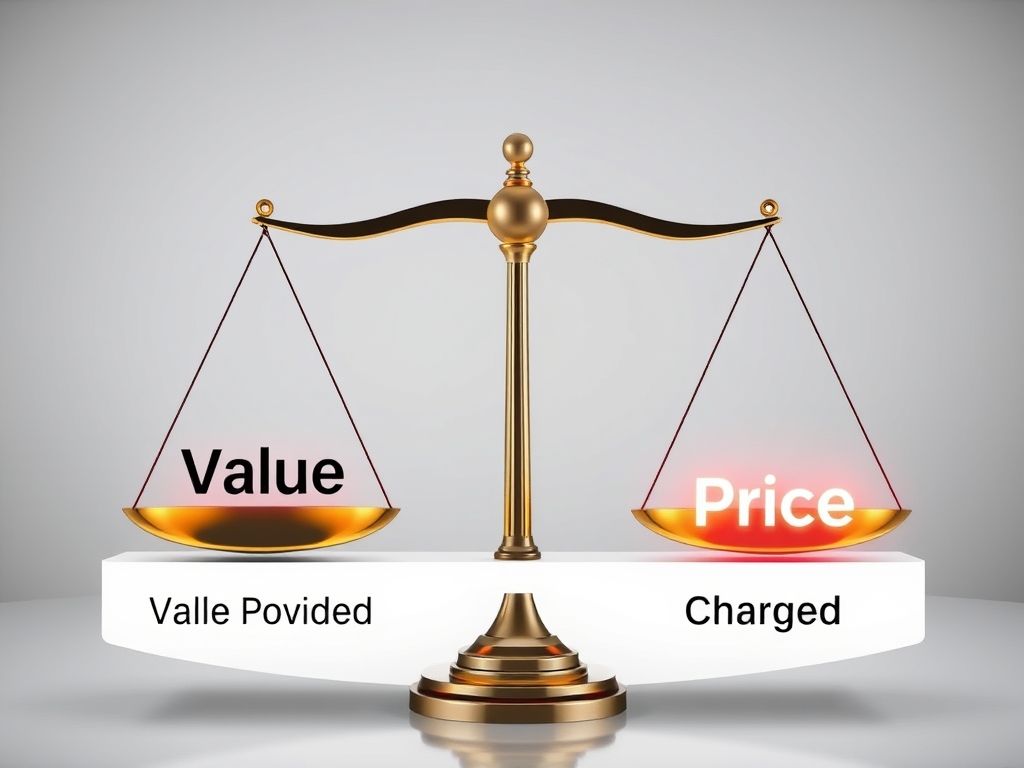
Did you know that 70% of businesses still use a cost-plus pricing model, despite evidence suggesting a significant undervaluation of their services? That’s a staggering statistic, considering the potential profits being left on the table. Are you charging what you're truly worth? This article explores the value-based pricing strategy, empowering you to move beyond hourly rates and cost-based calculations.
Foundational Context: Market & Trends
The current market is witnessing a shift. Clients are increasingly savvy, valuing outcomes over mere hours worked. They’re less concerned with what something costs to produce and more focused on the results it delivers. This trend has accelerated due to the rise of specialized service providers and the readily available information about market rates.
Consider these key trends:
- Outcome-Based Focus: Clients prioritize the impact of your services (e.g., increased revenue, efficiency gains, brand visibility).
- Price Transparency: The Internet facilitates easy price comparisons, making value justification crucial.
- Specialization Premium: Experts in niche areas can command higher prices due to their specialized knowledge.
Projected growth in services industries where value-based pricing is readily adopted is expected to outpace those relying on traditional pricing models by a notable margin.
Core Mechanisms & Driving Factors
Value-based pricing isn't merely about picking a higher number. It involves a fundamental change in how you perceive your services and communicate their worth. Here's a breakdown of the core elements:
- Understanding Client Needs: This requires in-depth research to assess client pain points, goals, and desired outcomes.
- Quantifying Value Delivered: This involves measuring the tangible benefits the client receives (e.g., increased sales, reduced costs, time savings). This step is crucial.
- Communicating Value Effectively: Your proposal needs to clearly articulate the value proposition and justify the price point.
- Developing Flexible Pricing Models: Offering tiered packages or customized pricing options can cater to diverse client budgets.
The Actionable Framework
Let’s create a solid framework to integrate value-based pricing.
Step 1: Client Discovery and Assessment
The initial step involves detailed client discovery. This is more than just a brief conversation; it’s a deep dive into their business.
- Needs Analysis: Ask probing questions to uncover their challenges, goals, and what they consider success.
- Pain Point Identification: Discover where their problems lie. What frustrates them, and what’s holding them back?
- Goal Alignment: Understand their desired outcomes. What are they trying to achieve? How can you help them reach their goals?
Step 2: Quantifying the Value Proposition
This is where you showcase the return on investment.
- Calculate Projected Benefits: Based on your experience and data, estimate how your services will impact the client’s bottom line.
- Use Benchmarks and Data: Refer to industry averages, case studies, and successful projects to support your estimations.
- Create a Value-Driven Proposal: Present your services as an investment, detailing the projected ROI.
Step 3: Structuring Your Pricing
This requires thoughtful consideration of your pricing structure.
- Tiered Packages: Offer different service levels with varying prices and value propositions.
- Performance-Based Pricing: Part of your payment is based on achieving pre-defined results (e.g., a percentage of revenue increase).
- Fixed-Price Contracts: Agree on a price based on the project's scope and projected value.
Step 4: Communicating Value & Justification
When discussing price, justify the cost in terms of value.
- Focus on Outcomes: Emphasize the benefits your client receives, not just the hours or resources.
- Show the ROI: Illustrate how your services will pay for themselves and generate a profit for the client.
- Be Prepared to Explain: Have data, statistics, and examples ready to support your pricing.
Analytical Deep Dive
Consider this: a study by Harvard Business Review found that companies using value-based pricing realized an average of 20% higher profit margins compared to those using cost-plus or competitive pricing. Another study found that firms offering service-based pricing models experienced a 15% increase in annual revenue. This illustrates the potential of value-based pricing.
| Pricing Model | Average Profit Margin Increase | Revenue Increase |
|---|---|---|
| Value-Based Pricing | 20% | 15% |
| Cost-Plus/Competitive | Baseline | Baseline |
Strategic Alternatives & Adaptations
Beginner Implementation: Start by conducting a simple value assessment. Talk to current clients and ask them to specify the value they derive from your service.
Intermediate Optimization: Once you’re comfortable, begin to tie your pricing directly to measurable results. Offer guarantees to increase client confidence.
Expert Scaling: For large-scale service providers, develop a detailed pricing matrix based on market rates, specialization, and projected value.
Validated Case Studies & Real-World Application
A marketing agency transitioned from hourly rates to a value-based pricing model, specifically focusing on SEO services. Their initial focus was on improving a client's website ranking. After switching, their revenue increased by 30% because they were charging based on the value (increased traffic and sales) provided, not the time spent.
Risk Mitigation: Common Errors
Several errors can undermine value-based pricing efforts.
- Undervaluation: Failing to recognize the full value of your services.
- Poor Communication: Ineffectively conveying the value proposition to your clients.
- Lack of Flexibility: Offering only rigid pricing plans.
- Failing to Measure ROI: Inability to demonstrate the value of your services with real data.
Mitigating these errors, ensures better success.
Performance Optimization & Best Practices
To maximize the success of your value-based pricing strategy, consider these steps:
- Regularly Reassess Value: The market evolves. Therefore, always review and update your value assessment.
- Refine Your Client Profiling: The more you understand your target audience, the easier it is to tailor pricing.
- Invest in Effective Communication: Clear, concise communication is crucial for selling your value.
- Track and Analyze Data: Monitoring the impact of your services on client outcomes is key to continuous improvement.
Scalability & Longevity Strategy
For long-term success, focus on these critical actions:
- Establish Key Performance Indicators (KPIs): Define metrics to track success.
- Automate Pricing and Proposal Processes: Implement software tools to streamline quoting.
- Build a Strong Reputation: Collect client testimonials and case studies.
- Adapt and Innovate: Continuously improve your pricing and service offerings.
Knowledge Enhancement FAQs
Q: What if a client balks at a higher price?
A: It is important to emphasize value. Clearly reiterate the ROI and tailor your value proposition to their needs. Consider adjusting the scope or offering different packages.
Q: How do I handle pricing with clients who are used to hourly rates?
A: Begin by explaining the benefits of value-based pricing. Then, showcase your expertise and emphasize the end results. Finally, provide them with data-backed examples.
Q: Is value-based pricing suitable for all types of services?
A: Value-based pricing is highly effective in industries where outcomes are easily quantifiable (e.g., marketing, consulting). While it may not fit every niche, its principles can be adapted.
Q: How do I accurately measure the value I provide?
A: Define clear, measurable outcomes and track them with the client. It can involve sales, lead generation, time savings, or operational efficiencies.
Q: How do I convince clients of my services' value?
A: By using data, case studies, and testimonials that prove you will reach the desired result.
Q: What if I can't guarantee a specific outcome?
A: Provide a clear explanation of what you will do to increase the probability of success.
Conclusion
By implementing a value-based pricing model, service providers can unlock significant revenue growth and improve client relationships. It's about shifting the focus from input to output, from time spent to value delivered. By understanding your client's needs, quantifying your impact, and communicating your worth effectively, you can transform your business from a commodity to a premium service. Embrace this shift, and watch your business thrive.
Ready to transform your revenue? Start implementing value-based pricing today! Explore our range of AI tools to enhance your services, and read our comprehensive guide on digital commerce. Visit our website for more expert insights!